Lore
Killing Curse
Tool of the Dark Arts and was one of the three Unforgivable Curses
There was a flash of blinding green light and a rushing sound, as though a vast, invisible something was soaring through the air — instantaneously the spider rolled over onto its back, unmarked, but unmistakably dead.
The Killing Curse (Avada Kedavra) was a tool of the Dark Arts and was one of the three Unforgivable Curses. When cast successfully on a living person or creature, the curse caused instantaneous and painless death, without causing any injury to the body, and without any trace of violence. The Killing Curse was accompanied by a blinding flash or jet of green light and a distinctive rushing sound when being cast.
The only known counter-spell to this curse was sacrificial protection, which used the power of love. The Killing Curse was a conventionally unblockable curse; therefore shield charms would not be able to defend against it. However, one could dodge the green bolt, block it with a physical barrier, by the use of Priori Incantatem, or Disapparate if they wanted to quickly get away before the curse hit them. An explosion or fire could result if the spell hit something other than a living target. In addition, phoenixes, being semi-immortal, were able to be reborn from their ashes immediately upon death and thus survive a direct hit from the Killing Curse.
Nature

The green light filled the cramped hallway, it lit the pram pushed against the wall, it made the banisters glow like lighting rods, and James Potter fell like a marionette whose strings were cut....
The Killing Curse was recognisable by the flash of green light and the rushing noise emitted from the caster's wand. When the curse hit a living, organic target it invariably killed them instantly without causing any injury or pain. The method the curse kills the victim is unknown; however, Lord Voldemort described the curse as having ripped his soul from his body when he was originally struck with it, resulting in his biological death. It was known by most witches and wizards as Voldemort's signature spell.

Also, while most victims would simply drop dead when struck by the curse, at other times it may carry a force of impact, such as when Snape's casting was able to blast Dumbledore off the Astronomy Tower ramparts. During the Battle of Hogwarts in the Forbidden Forest, Harry described the impact of the curse as an "iron-clad punch", as stated earlier.
When the curse hit an inanimate target, the effect varied: it could produce fires, large greenish explosions, or explosions of such intensity that could blow up an entire cottage. However, certain objects, such as the headless golden wizard statue of the Fountain of Magical Brethren, managed to block the curse without any visible damage to itself. It should be noted that the curse itself did not terminate the animation of (i.e. "kill") the statue, however, as the statue was only animated by magic and so presumably had no real life in it for the curse to take away. However, later in the same duel, the centaur statue, also made of gold, broke into a hundred pieces when hit with the same curse, though this could simply have been caused by the physical force of the bolt striking it.
It was also possible to intercept the curse with other spells, but this was extremely difficult as it required the energy jets of the two spells to collide. As the energy jets of virtually all spells were very small and fast, this had only ever been recorded as occurring by accident.
The Killing Curse did not work on undead creatures such as Inferi, as they were obviously already biologically dead, and so there was no true life within them to take.
Performance

Avada Kedavra's a curse that needs a powerful bit of magic behind it — you could all get your wands out and point them at me and say the words, and I doubt I'd get so much as a nosebleed.
It was stated that the Killing Curse required a high degree of skill and power to be cast correctly, as well as a strongly focused intent. In support of this viewpoint, on 4 September 1994, Bartemius Crouch Junior, disguised as Alastor Moody, claimed that if all of the students before him were to get out their wands and perform it on him at one time, he would likely be completely unaffected as he believed they all lacked the necessary power and desire needed to cast the spell. On 30 June 1997, during the Battle of the Astronomy Tower, Severus Snape also stated that to cast the Unforgivable Curses, one needed both nerve and ability. It was possible to cast the curse nonverbally, as Bellatrix Lestrange killed a fox without an incantation. During his duel with Dumbledore during the Battle of the Department of Mysteries, Voldemort also used this curse several times without an incantation. However, as Vincent Crabbe was capable of casting it (whose magical skills were often lacking), the power and skill needed to perform it may have been somewhat overstated, or also possibly made the effect unreliable.
The Killing Curse, in addition to requiring the caster to be a very powerful and skilled witch or wizard, also required a genuine willingness and at many times deep desire to commit murder. Bellatrix seemingly implied this was true for the curse, and it was also true of the Cruciatus Curse, but not so much with the Imperius Curse.
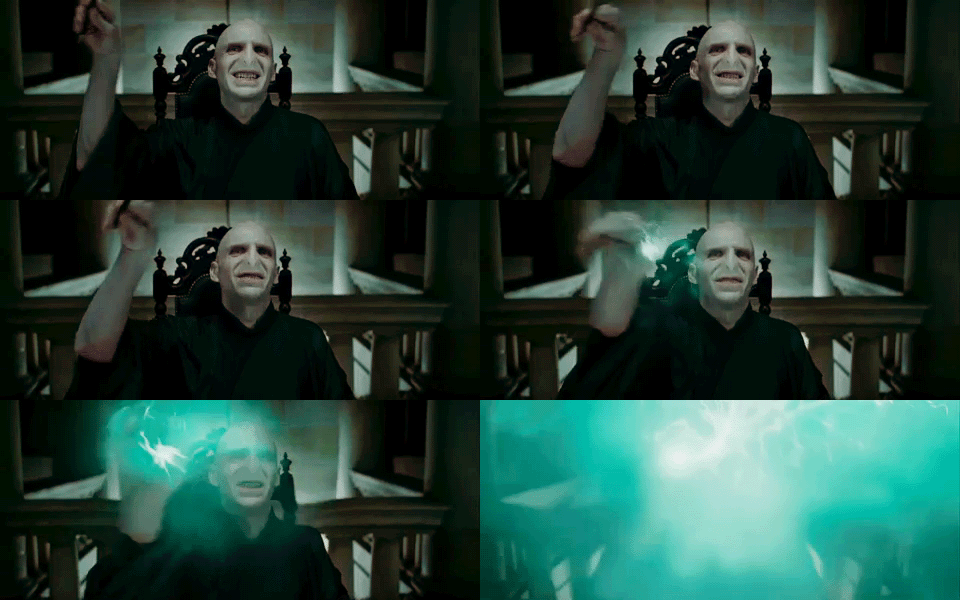
One of the main reasons why Lord Voldemort demonstrated such an affinity for the curse was due to how exceptionally powerful and skilled he was magic-wise, along with his complete and utter lack of remorse or value for the lives of fellow humans. For example, Draco Malfoy despite possessing many undesirable personality traits, found himself unable to murder Albus Dumbledore because he did not want to actually kill him. Voldemort, on the other hand, had no such restraint and murdered countless people without any regret nor remorse in his pursuit of power and immortality; in fact, he was fully prepared to murder one-year old Harry Potter upon deducing him to be a potential threat. He was intending to use this most heinous act to create his final Horcrux. He succeeded, during the act, a piece of Voldemort's soul entered Harry. This effectively turned him into a Horcrux. However, it led to his first downfall and biological death.
That said, despite its sinister reputation and effect, the Killing Curse did not necessarily require evil intentions in order to be performed nor was its use an automatic indication of evil; since it killed instantaneously and painlessly, it could be used in self-defence or out of a sense of mercy. Severus Snape was able to cast it on Albus Dumbledore in spite of stated reluctance to do so after being reminded of this. In further support of this was when the Hogwarts Beasts Professor, San Bakar, known as a kind and compassionate man, nevertheless was able to swiftly cast the curse on Isidora Morganach in defence of his colleagues.
Signs
A team of doctors had examined the bodies and had concluded that none of the Riddles had been poisoned, stabbed, shot, strangled, suffocated, or (as far as they could tell) harmed at all. In fact (the report continued, in a tone of unmistakable bewilderment), the Riddles all appeared to be in perfect health — apart from the fact that they were all dead.
The Killing Curse was described as a jet or flash of blinding green light that "illuminates every corner of the room" followed by a rushing sound, which caused the victim's instant death. Victims of the Killing Curse were identified by the fact that they simply appeared to have dropped dead for no biological reason. Indeed, victims seemed "perfectly healthy" apart from the fact that they were dead.

This lack of visible injuries was one that had confused Muggles throughout the years of its use, requiring many Ministry of Magic officials to modify memories. For example, Muggle authorities were stumped over the death of the Riddles. The only thing about the bodies the doctors noted (determined to find something wrong) was the look of horror on their faces, as though they had been frightened to death. Wizarding authorities, on the other hand, could tell at once the cause of one's death, due to the curse's somewhat unique nature.
Sensation
Presumably, the Killing Curse did not inflict any pain on its target, since it caused instantaneous death. However, Harry Potter, who awoke after a Killing Curse cast by Lord Voldemort hit him, described the sensation as an "iron-clad punch", though this may have been caused by the destruction of the fragment of Voldemort's soul contained within his body. However, when he was initially struck by the curse, it apparently caused him no sensation at all.
However, when Voldemort was struck by his own rebounding Killing Curse after he attempted to kill Harry the first time, he described the sensation of his soul being ripped from his body as being "pain beyond pain". However, given the uniquely mutilated state of his soul at the time and that his soul had not gone to the afterlife, it seems likely that his reaction was atypical.
Survivability
Not nice, Not pleasant. And there's no countercurse. There's no blocking it. Only one known person has ever survived it, and he's sitting right in front of me.
The Killing Curse could be dodged or physically blocked by an object, such as the statues Dumbledore animated to protect Harry during his duel with Voldemort after the Battle of the Department of Mysteries. The Killing Curse was known to be unblockable, as once it struck the living victim, it almost always resulted in immediate death. There was "no counter-curse", since it was impossible to revive the dead. However there were some exceptions:
Sacrificial protection
The most effective method of surviving the Killing Curse was through sacrificial protection; the willing sacrifice of one's life for another, a manifestation of love, which was the most potent defence against the "unblockable" Killing Curse. Love was a powerful and mysterious branch of magic; it gave those who experienced it the ability to do very great things.
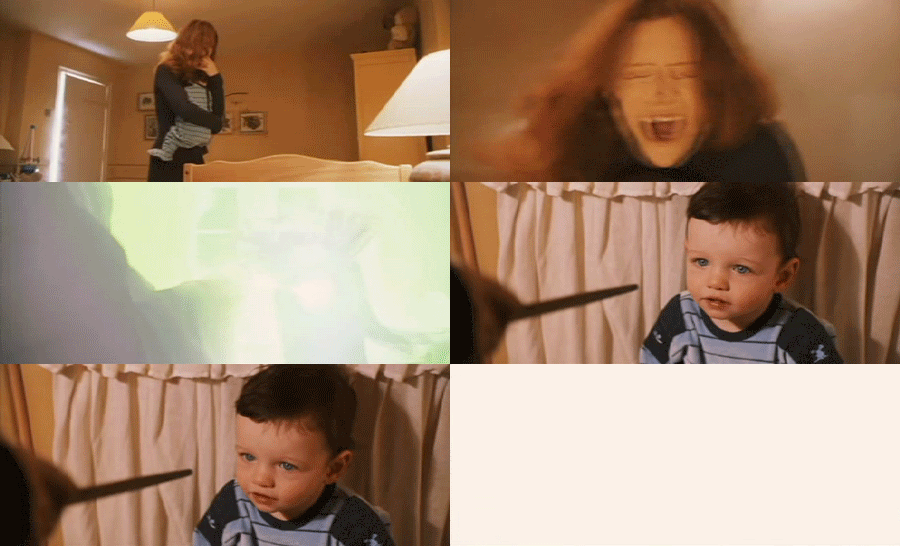
Harry Potter was saved by his mother Lily Potter, when she lovingly sacrificed herself for him after she refused to stop shielding him from Lord Voldemort, despite having been given the choice to live. Harry became the only known survivor of the Killing Curse with no ill effects, aside from attaining a lightning-shaped scar on his forehead.
Horcruxes
Another defence employed against the Killing Curse was the creation of at least one Horcrux. The creation of Horcruxes was a preventive measure, created by a wizard long before he faced an actual Killing Curse attack. However, this was less effective than sacrificial protection, since it only allowed a little more than the soul of the target to live on, while the target's physical body still died. If one had Horcruxes, they would not be dead, but they would barely be alive and would be reduced, as Voldemort was when the Killing Curse backfired with his attempt to murder Harry in 1981, to be living on as a mutilated spirit.
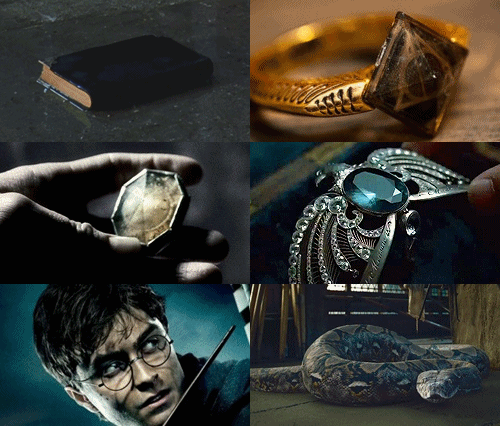
Some of the methods Voldemort used, or planned to use, to survive in this state included living off another, drinking unicorn blood, using the Philosopher's Stone (reduced to a wraith-like state and the stone destroyed soon after before he could) to produce the Elixir of Life, and creating a rudimentary body using unicorn blood and Nagini's venom.
Voldemort's Horcruxes tethered his soul to the world. The Curse drove his mangled soul from his body, leaving him to roam only as a shadowy spirit, unable to move on to the afterlife, but is a less-than-alive life form. If possible, one could make a regeneration potion to return to human form, but it required the bone of the father, the flesh of the servant, and the blood of an enemy. Because Voldemort required a servant to perform the rites of his rebirth, he was forced to spend thirteen years in hiding as he had no one who would come to his aid for such time.
Upon the destruction of all his Horcruxes, Voldemort had no more defences against death, and was finally killed for good by his own rebounding Killing Curse towards the end of the Battle of Hogwarts.
Curse interception
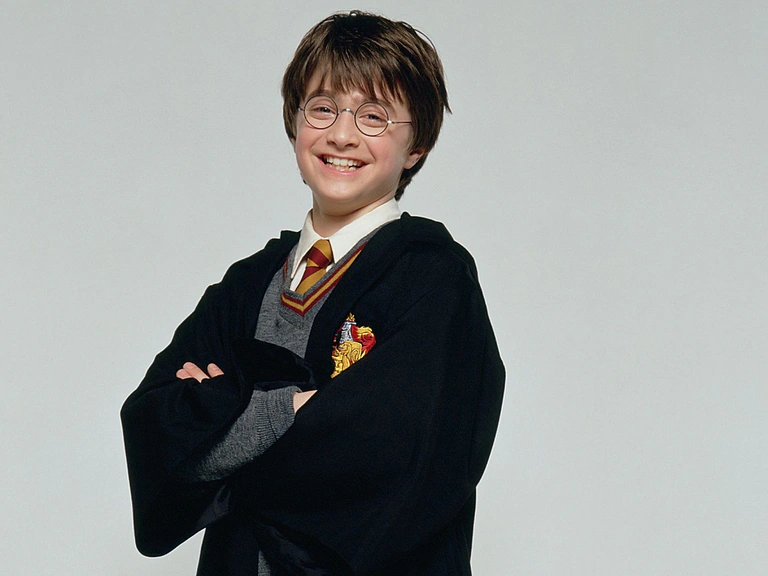
Harry responded with further Stunning Spells: Red and green collided in midair in a shower of multicoloured sparks...
The Priori Incantatem effect was when two wands that shared the same cores were put into battle against each other. One wand would then force the other wand to repeat its previously-cast spells. Because of this, a Killing Curse could be blocked if a wand that shared the killer's wand's core fired a spell at it: both spells would connect and thus the wizard had been spared by the Killing Curse.

Priori Incantatem occurred in the duel between Harry Potter and Lord Voldemort in Little Hangleton graveyard during Harry's fourth year. Voldemort cast the Killing Curse and Harry cast the Disarming Charm, and because their wands had twin cores, Priori Incantatem occurred; Harry was not killed and was able to hold Voldemort off to give him time to escape.
Phoenixes were semi-protected from the Killing Curse, due to them being immortal. In 1996, Fawkes swallowed one intended for Albus Dumbledore, causing him to burst into flame and die instantly. However, he then was reborn from his ashes.
The spell could be directly countered using a Stunning Spell, in which case red and green jets of light would meet and create multi-coloured sparks. Since neither spell was able to reach its intended target, neither would have any effect, as the jets of light basically exploded on each other. However, this was particularly tricky, as it required both jets of light to collide with one another. It is unknown whether this was limited to the Stunning Spell or if it was possible to reflect the Curse with other spells, although during Harry and Voldemort's final duel a similar thing happened when Harry's Disarming Charm collided with Voldemort's Killing Curse, although the Elder Wand's allegiance to Harry had to be taken into consideration in this particular situation.
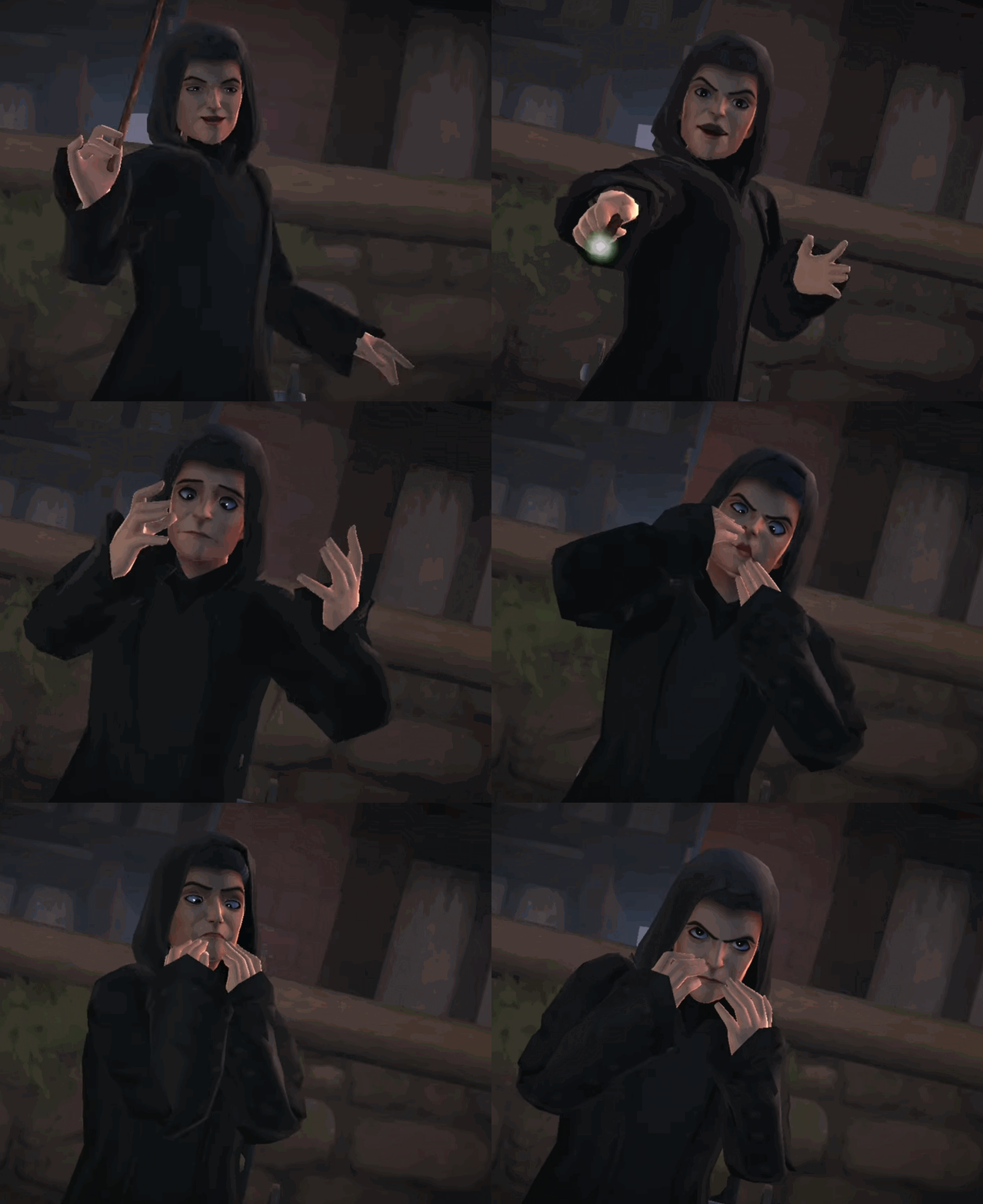
If another target was placed between the caster and the targeted individual, then the new target would take the hit of the Killing Curse, which could simply result in an object being destroyed or damaged in an explosion of flames. One could also avoid the effects simply by dodging or if the caster had poor aim, as with many similar offensive curses, the spell had to be directly targeted at the intended victim. Similarly, if the caster was casting the curse verbally, physically stopping them from talking would interrupt the casting and stop the spell being cast, as Snape demonstrated when he used Langlock to stop Bedilia Grimalkin from killing Jacob's sibling.
Should the caster have used the Elder Wand—or actually any wand—without winning its allegiance, to cast the Killing Curse onto its true master, the wand would refuse to kill its master and therefore the curse would backfire onto the caster, thus killing them instead, as when Voldemort's Killing Curse rebounded on him during his final duel with Harry Potter. The wand would also refuse to kill those under sacrificial protection and thus the same effect would occur.

Under not-specifically known circumstances, great amounts of the dark ancient magic formed by the usage of ancient magic to extract pain from another person had the power to block the Killing Curse. This only occurred once, when the goblin rebel Ranrok absorbed the dark ancient magic contained in the final repository beneath Hogwarts Castle. This allowed him to take on a dragon-like form in the battle, which made him immune to the Killing Curse. As this is the only known instance of dark ancient magic being able to intercept the Killing Curse, the specific requirements for it to block the Killing Curse are unknown.
Middle Ages

The Cruciatus, Imperius, and Killing Curses were first classified as Unforgivable in 1717, with the strictest penalties attached to their use.
The Killing Curse was invented in the early Middle Ages, prior to the 10th century as Salazar Slytherin was known for having practised it (along with the Imperius Curse).

After the Wizards' Council was reformed into the Ministry of Magic, tighter restrictions were placed on the use of certain kinds of magic. The Killing Curse was deemed by the Ministry to be Dark Magic and, along with the Cruciatus and Imperius Curses, was declared "Unforgivable" throughout Great Britain in 1717.
The penalty for the use of this curse (or any Unforgivable Curse) on a human throughout the UK was a life sentence in Azkaban without any possible parole, unless there was sufficient evidence that the caster did so while being under the influence of the Imperius Curse or when legalised in rare circumstances.
Sometime during the Tudor period, Hogwarts Beasts Professor San Bakar was forced to use the Killing Curse to stop his rampaging colleague Isidora Morganach, killing her instantly whilst she was in the midst of duelling two other professors, Percival Rackham and Charles Rookwood.
Late 19th century
The Killing Curse was used several times during the late 19th century, most notably during the 1890–1891 school year. Both Victor Rookwood, leader of the criminal gang known as the Ashwinders, and Theophilus Harlow, his second-in-command, were capable of casting the spell. Rookwood himself would meet his end via his own Killing Curse when he cast it against an unidentified 19th-century Hogwarts student, who was able to block it with a red-coloured spell of their own before using their ancient magic ability to overwhelm Rookwood's cast, causing it to backfire on the Dark wizard and blow him into ashes. Rookwood had earlier tried to use it against his erstwhile ally, Ranrok, but missed by a wide margin. Harlow also attempted to use it on the student and Natsai Onai, much to their horror while they were fleeing on a Hippogriff's back, but missed.
Sebastian Sallow, a Slytherin student at Hogwarts, somehow managed to learn the Killing Curse at some point during or prior to this school year. He most notably used it at the end of a duel against his uncle, Solomon Sallow, casting it out of long-repressed resentment and outrage at the man having destroyed a dark relic that Sebastian hoped could have been used to cure his cursed sister, Anne Sallow. Solomon was hit by the curse and killed instantly, though it is not known if Sebastian was turned in to the authorities for using it or if his friends remained silent about it.
Sebastian may also have possibly taught an unidentified student, and one of his friends, how to perform the Killing Curse, though it is also possible that they declined to learn it after the murder of Solomon Sallow. If they did opt to learn it, they may have attempted to use it during the battle for the final repository against Ranrok, though the curse proved ineffective on the goblin due to the corrupted ancient magic he had infused himself with.
Global Wizarding War
The Killing Curse was also used in 1927 by the Magical Congress of the United States of America on magical beasts considered dangerous.
This curse was used during the Global Wizarding War, both by Aurors and supporters of the Dark wizard Gellert Grindelwald. At one point during the height of the Global Wizarding War, Auror Cassius Bell used this curse to kill a red-haired young witch in the Lestrange Mausoleum.
First Wizarding War
How Voldemort had killed Harry's father first. How James Potter had tried to hold him off, while he shouted at his wife to take Harry and run... Voldemort had advanced on Lily Potter, told her to move aside so that he could kill Harry... how she had begged him to kill her instead, refused to stop shielding her son... and so Voldemort had murdered her too, before turning his wand on Harry.
During the First Wizarding War, when Barty Crouch Snr was in charge of the Department of Magical Law Enforcement, he fought violence with violence, legalising the three Unforgivable Curses for Aurors against the Death Eaters in order to win the war. This was repealed once the war was over, as it was no longer necessary.

One of the most infamous events involving this curse happened on Hallowe'en (31 October) in 1981. Voldemort arrived at the Potter cottage in Godric's Hollow, after being told of its location by Peter Pettigrew, the Secret-Keeper of its Fidelius Charm, and murdered James and Lily Potter while they attempted to protect their infant son Harry. He cast the Killing Curse on Harry as well, but it backfired, destroying Voldemort's body. This event led to Voldemort's first downfall, the end of the First Wizarding War, and Harry's fate being sealed as "The Boy Who Lived".
It should be noted that despite the curse being illegal, Aurors were allowed to use deadly force and the Unforgivable Curses against opponents during the First Wizarding War in order to win.
Shortly before their imprisonment in Azkaban for being Death Eaters, Merula Snyde's mother and father taught her the Killing Curse, in order to teach her the necessary self-defence she would need without them around to protect her.
Between the wars
So that was how his parents had died... exactly like that spider. Had they been unblemished and unmarked too? Had they simply seen the flash of green light and heard the rush of speeding death, before life was wiped from their bodies?
During the 1988–1989 school year, Merula Snyde tried to teach Jacob's sibling this spell, but they refused.
On 1 September 1991, Harry Potter had a nightmare during his first night at Hogwarts, in which he was wearing Quirinus Quirrell's turban (which was concealing Voldemort) which told him to transfer to Slytherin as it was his destiny, which ended with a flash of green light, the Killing Curse. He had no recollection of the dream afterwards.
When disguised as Alastor Moody using Polyjuice Potion during the 1994–1995 school year, Bartemius Crouch Junior performed each Unforgivable Curse on a spider as a demonstration for his fourth-year students while teaching Defence Against the Dark Arts in September 1994. He told his class the penalty for using an Unforgivable Curse on another human being was life imprisonment in Azkaban. The Ministry did not approve of this because "Professor Moody" was showing these curses to those who did not truly need to see it (i.e., a class of 14-15-year-olds), but it did not appear to have been illegal. Harry Potter had always wondered how his parents have died, and witnessing the curse that killed them was very clearly unpleasant.
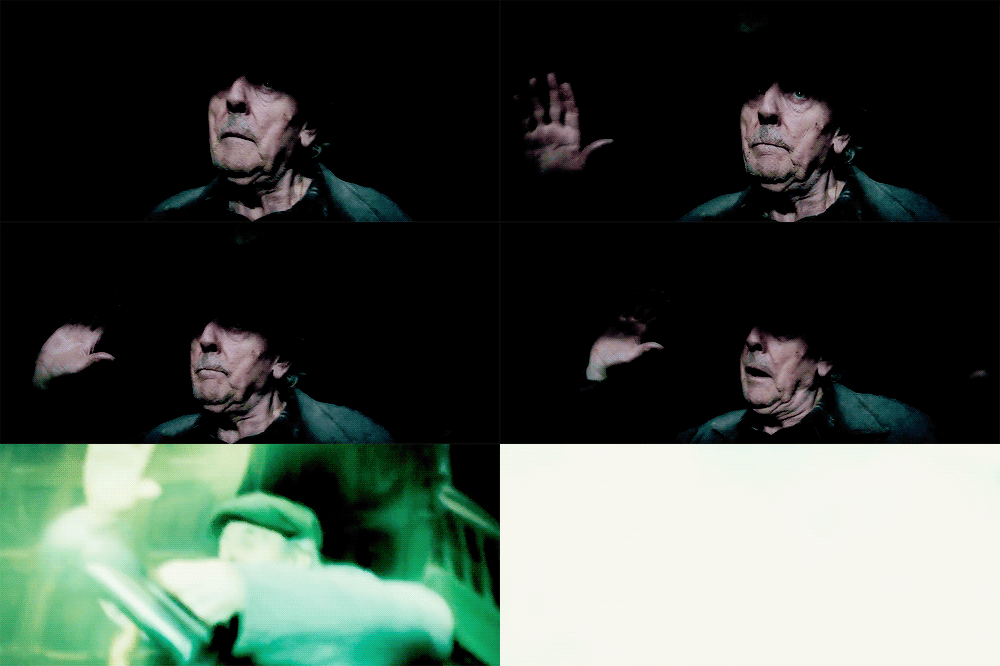
Lord Voldemort also used the curse in 1994 to murder Frank Bryce, the Muggle caretaker who looked after the Riddle House, after secretly eavesdropping on his plan to kill Harry Potter with Pettigrew.
Second Wizarding War

The Elder Wand slashed through the air and green light erupted through the room; the kneeling goblin rolled over, dead; the watching wizards scattered before him, terrified: Bellatrix and Lucius Malfoy threw others behind them in their race for the door, and again and again his wand fell, and those who were left were slain, all of them, for bringing him this news, for hearing about the golden cup —
The Killing Curse was known throughout most of the wizarding world to be Lord Voldemort's signature spell. Voldemort was a prolific user of the Killing Curse throughout his life. He used the curse excessively throughout the First and Second Wizarding Wars. He also used the curse outside of warfare, having killed Charity Burbage, an outspoken Muggle supporter, simply to satisfy the pure-blood supremacy of both himself and his supporters. His first known usage of the curse was at age 16, murdering his father, paternal grandfather and paternal grandmother. He used it to murder the famous wandmaker Mykew Gregorovitch and notorious Dark wizard Gellert Grindelwald, while searching abroad for the Elder Wand.
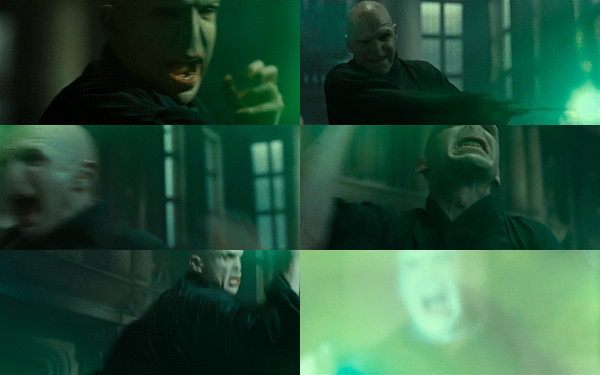
When he learned of Harry Potter's successful Gringotts break-in and retrieval of Hufflepuff's Cup, he murdered several goblins and other Gringotts employees, including Griphook, in a fit of rage. Ironically, the Killing Curse, Voldemort's signature spell, was ultimately the very spell that led to his own defeat. On 2 May, during the Battle of Hogwarts, Harry willingly let Voldemort hit him with the Killing Curse, in order to be rid of the piece of Voldemort's soul he harboured at the time. In his final duel against Harry Potter, Voldemort would not realise that the curse would backfire (because the Elder Wand would not kill its true master), thereby finally putting an end to the Dark Lord. Harry thought surviving the Killing Curse for a second time felt like an "iron-clad punch".
When Voldemort took over the British Ministry of Magic, the three curses were once again legalised; this time every wizard and witch had the right to use them as they pleased. In fact, they were practised in Hogwarts as part of the curriculum of the Dark Arts class under the cruel tutelage of Professor Amycus Carrow, a Death Eater. After Voldemort's final death and the reform of the Ministry under the newly appointed Minister Kingsley Shacklebolt, the three curses were made forbidden once again and their original penalties were restored.
Successful
- bgcolor="#cccccc" Caster(s) Victim(s) Date Note - San Bakar Isidora Morganach 15th century Hogwarts Legacy - Victor Rookwood Victor Rookwood (backfired) 1891 Hogwarts Legacy - Sebastian Sallow Solomon Sallow Hogwarts Legacy - Gellert Grindelwald's acolytes Non-Magique mother September 1927 Fantastic Beasts: The Crimes of Grindelwald - The Original Screenplay - Non-Magique father - Carrow Non-Magique toddler - Gunnar Grimmson Irma Dugard Fantastic Beasts: The Crimes of Grindelwald - The Original Screenplay - Cassius Bell Red-haired young witch Fantastic Beasts: The Crimes of Grindelwald - The Original Screenplay - Lord Voldemort Tom Riddle Snr Summer 1943 Merope and for being a Muggle. - Thomas Riddle Harry Potter and the Half-Blood Prince - Mary Riddle - James Potter 31 October 1981 Harry Potter and the Deathly Hallows - Lily Potter For refusing to stop shielding Harry from him, despite him giving her the choice to live. - Harry Potter (survived both) For being his enemy. - 31 October 1981; 2 May 1998 - Bertha Jorkins Summer 1994 Harry Potter and the Goblet of Fire - Frank Bryce August 1994 For overhearing his plan to kill Harry Potter and for being a Muggle. - resurrected) 18 June 1996 Harry Potter and the Order of the Phoenix - Charity Burbage July 1997 Harry Potter and the Deathly Hallows - Alastor Moody 27 July 1997 Harry Potter and the Deathly Hallows - two children) 1 September 1997 Harry Potter and the Deathly Hallows - Mykew Gregorovitch 2 September 1997 Harry Potter and the Deathly Hallows - Gellert Grindelwald March 1998 Harry Potter and the Deathly Hallows - Unnamed goblin 1 May 1998 Harry Potter and the Deathly Hallows - Griphook - Death Eaters - Gringotts guards - Goblins - Unnamed Death Eater 2 May 1998 Battle of Hogwarts - Lord Voldemort (backfired) 31 October 1981 - 2 May 1998 - Patricia Rakepick Rowan Khanna 1990 Harry Potter: Hogwarts Mystery - disguised as Alastor Moody) Spider 4 September 1994 fourth-year Gryffindor students in Defence Against the Dark Arts class. - Peter Pettigrew Cedric Diggory 24 June 1995 Used it on Lord Voldemort's orders to murder Cedric. - Bellatrix Lestrange Fox near Spinner's End July 1996 Harry Potter and the Half-Blood Prince - Thorfinn Rowle Gibbon 30 June 1997 Harry Potter and the Half-Blood Prince - Harry Potter and the Half-Blood Prince Albus Dumbledore Harry Potter and the Deathly Hallows - Death Eater Hedwig 27 July 1997 Harry Potter and the Deathly Hallows - Corban Yaxley second of Umbridge's guards After 3 May 1998 url=https://youtu.be/LyjSdpHV75A?t=3788 - Zara Fishlock Kellen Carrion 2010s Harry Potter: Magic Awakened - Delphini Craig Bowker Junior 2020 Harry Potter and the Cursed Child
Unsuccessful

Crabbe wheeled around and screamed, AVADA KEDAVRA! again. Ron leaped out of sight to avoid the jet of green light.
- bgcolor="#cccccc" Caster(s) Victim(s) Date - Theophilus Harlow Hogwarts Legacy 1890 - Natsai Onai - Unidentified 19th-century Hogwarts student - Victor Rookwood Hogwarts Legacy 1891 - Hogwarts Legacy - Bedilia Grimalkin Jacob's sibling Harry Potter: Hogwarts Mystery - Death Eater Harry Potter and the Order of the Phoenix 18 June 1996 - Lord Voldemort Harry Potter 27 July 1997 - Death Eater Rubeus Hagrid - Order of the Phoenix - Vincent Crabbe Harry Potter and the Deathly Hallows 2 May 1998 - Ron Weasley - Bellatrix Lestrange Ginny Weasley - Harry Potter and the Cursed Child Albus Potter 31 October 1981 (time-travelled)
Sources
Adapted from the original article, under CC BY-SA 3.0.