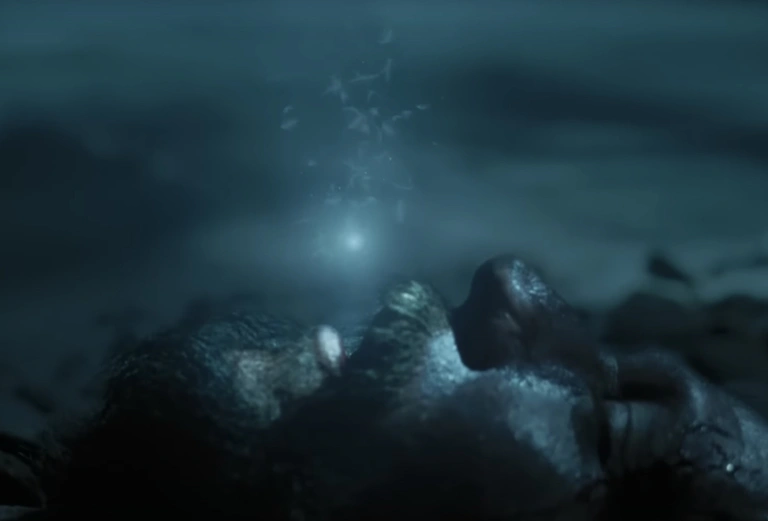
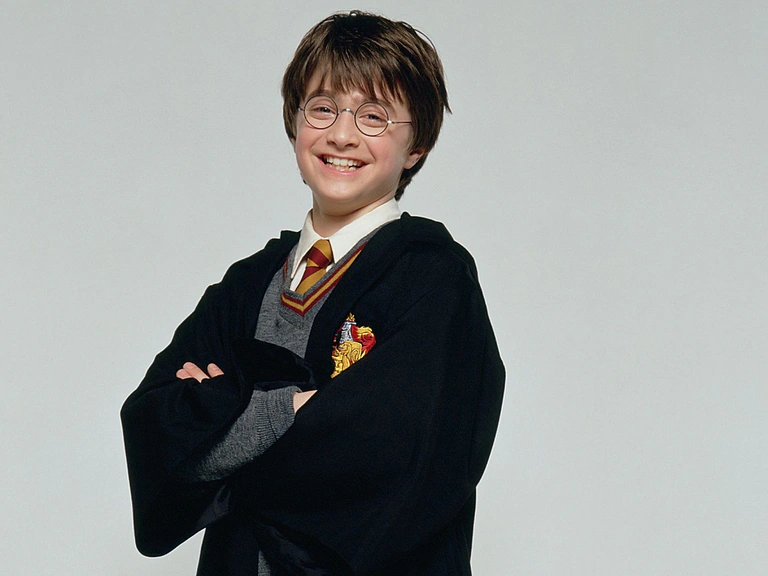
Thing
Horcrux
A Horcrux was an object in which a Dark wizard or witch had hidden a detached…
Of the Horcrux, wickedest of magical inventions, we shall not speak nor give direction —
A Horcrux was an object in which a Dark wizard or witch had hidden a detached fragment of his or her soul in order to become immortal. As long as the receptacle remained intact, so too did the soul fragment inside it, keeping the maker anchored to the world of the living, even if their body suffered fatal damage. The Horcrux was considered to be by far the most terrible of all Dark Magic.
Horcruxes could only be created after committing murder, the most supreme act of evil, as a means to tear the soul. The process for the creation of a Horcrux involved a spell and a horrific act of some sort was performed soon after the murder had been committed.
Given that Horcruxes were utterly precious to those who made them, protective measures were taken to prevent them from being stolen or destroyed, such as counter-charms and curses. Horcruxes were also extremely durable, and therefore only the most powerful and potent elements and magical spells of the wizarding world could truly destroy them, such as Basilisk venom and Fiendfyre.
Origins and documentation
The first known Horcrux was created by Herpo the Foul in Ancient Greece. The only other known creator of a Horcrux was Lord Voldemort, who was very likely the only person to have successfully created more than one.
Horcruxes were originally conceived of as being a singular act. As such, it was unknown for many centuries what the attempted creation of multiple Horcruxes would result in, as nobody thought it to be possible ever to accomplish such an act. However, Voldemort planned to create six Horcruxes in the hope that splitting his soul into seven pieces would make him stronger than just creating one, due to his belief in the power of the number seven.
The nature and concept of Horcruxes were so terrible that they were kept secret from most of the wizarding world, and very few people were ever made aware of their existence. Hogwarts School of Witchcraft and Wizardry banned any study of the subject of Horcruxes; Albus Dumbledore was especially adamant and fiercely strict in enforcing this rule.

Very few books, even those revolving around the Dark Arts, would mention Horcruxes even in the slightest detail: Magick Moste Evile, a book that contained much information of the most advanced Dark Arts, barely skimmed over the subject of Horcruxes, stating them to be a subject so evil that it should not ever be spoken of, showing that even many Dark wizards and witches were terribly horrified by them. In fact, only one book was known to provide specific, detailed instructions on the creation, nature, and consequences of a Horcrux: Secrets of the Darkest Art.
Secrets of the Darkest Art was once held in the Restricted Section of Hogwarts Library; however, due to the book's extremely dark and dangerous nature, Albus Dumbledore later hid it away in his office when he became the Headmaster of Hogwarts. It was believed that Tom Riddle had found all the required and necessary information in this book to successfully make a Horcrux before Dumbledore eventually managed to get hold of it.
No document in existence has information regarding a single individual creating multiple Horcruxes, as no wizard before Voldemort even thought of attempting such a feat; he only dared to when he asked the experienced Horace Slughorn for an expert opinion, under the guise of the idea of creating more than one Horcrux being only in theory.
Nature and creation

A Horcrux is the word used for an object in which a person has concealed part of their soul... Well, you split your soul, you see, and hide part of it in an object outside the body. Then, even if one's body is attacked or destroyed, one cannot die, for part of the soul remains earthbound and undamaged.
To create a Horcrux, a wizard first had to damage their soul. This could only be achieved by deliberately and willingly committing a murder. This act, said to be the most supreme act of evil, resulted in the metaphysical sundering of their own soul. Only a true, deliberate, and conscious act of murder against another person without any regret or remorse would suffice to rend the soul; killing out of self-defence, to protect another, by accident, or under some kind of mind control such as the Imperius Curse, would not work, and neither would a mercy kill or the victim committing suicide.
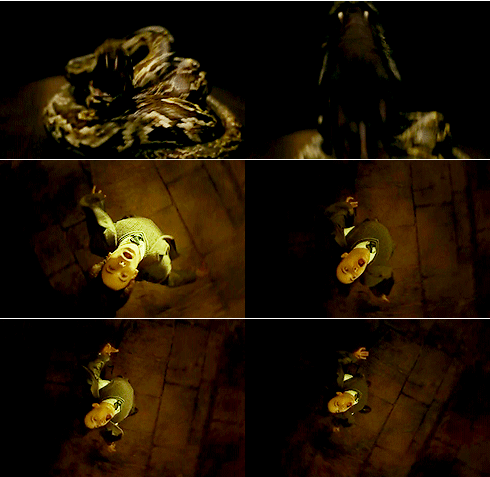
A wizard who wished to create a Horcrux would then use that damage to their advantage by casting a spell which would sever the damaged portion of the soul and encase it in a designated object. The object used to contain the soul fragment could be just about anything; even a living being or creature could be made into a Horcrux. However, creating a Horcrux out of an inanimate object was preferable, as it substantially decreased the chances of it wandering away as well as being destroyed.
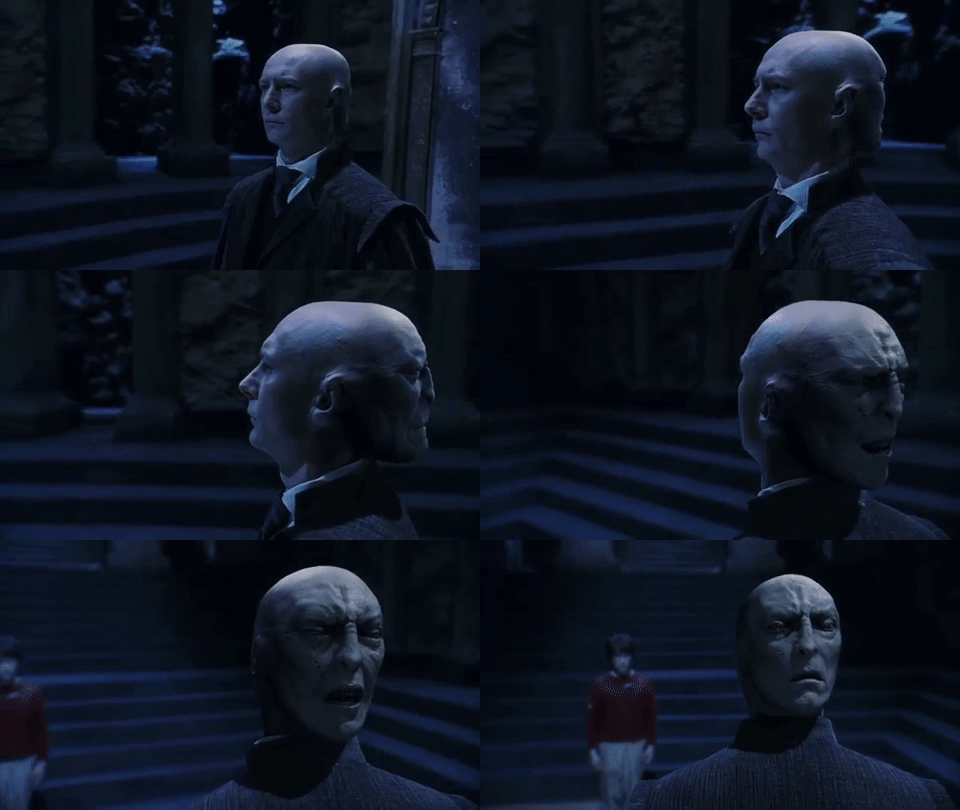
As long as that object remained intact, the soul fragment inside it would live on, keeping the maker anchored to the living world, even if their body were to take fatal damage. If the maker's body was subjected to fatal conditions, they would continue to exist in the living world in a non-corporeal shade form, somewhat similar to a ghost, but technically still alive. According to Horace Slughorn, very few would want to live in such a form, and death would be much more preferable to most. He personally found the concept so dreadful that he wished not to know the process of creating such a vile object. Although, there were methods of regaining a physical body, such as by using the Philosopher's Stone to produce the Elixir of Life, or by brewing a rudimentary body potion followed by a regeneration potion.
According to Secrets of the Darkest Art, the only known way to truly reunite the pieces of soul contained inside one or more Horcruxes was for the creator to feel genuine regret and remorse for what they had done to make them. The process of reuniting the broken pieces of a soul was said to have been extremely painful, and even potentially fatal, to any who did so.
Horcruxes were said to be essentially the opposite of a person. Where a person's container, their body, could be destroyed without any damage to their soul, the fragment of soul contained inside a Horcrux was dependent on the container for its existence. If the container was destroyed, so too would the fragment of soul within it be.
As a fragment of the maker's soul, a Horcrux seemed to retain the identity of its creator at the time of its creation. Voldemort, for instance, created a Horcrux (his diary) during what was presumably his fifth year at Hogwarts. As such, the fragment of soul contained within the Horcrux took on the appearance and mannerisms of Voldemort as he had been when he was sixteen years old.
Multiple Horcruxes
The creation of a Horcrux was originally meant to be a singular act, only done once, as splitting one's soul even once was an appalling fate to inflict upon oneself. For thousands of years, ever since the idea of Horcruxes was originally conceived, it was unknown if it was possible for any individual to create more than one Horcrux, since no one would have even pondered, let alone dare to try, such a feat. As such, no document exists on the details of creating multiple Horcruxes.
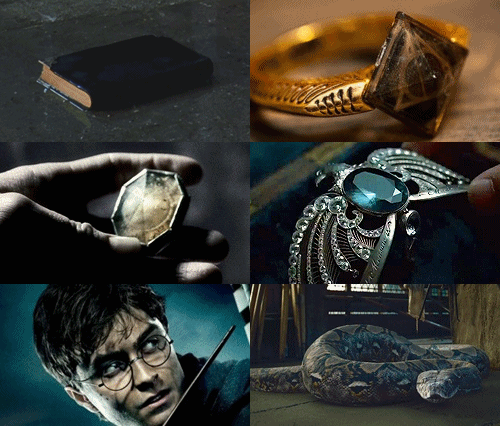
However, sometime between 1943 to 1944, a Hogwarts student by the name of Tom Riddle was so completely obsessed with immortality that he sought to create multiple Horcruxes to ensure his continued survival. Specifically, he wanted six Horcruxes so that his soul would be in seven pieces, including the main piece inside his body, since seven is the most magical number. Despite exhaustive research, he could not find anything about the possibility of creating multiple Horcruxes, so he asked the experienced Horace Slughorn for an opinion before venturing into the unknown. Riddle proved that it was indeed possible to make more than one Horcrux, and as long as at least one was intact, then the maker would remain unable to die. However, creating multiple Horcruxes rendered the soul so unstable and liable to break apart on its own if the creator of the Horcruxes was subjected to what would normally be fatal conditions and lost their physical form. For instance, Albus Dumbledore explicitly stated that Voldemort's soul had become so unstable that it simply "broke apart" when he tried to murder Harry Potter for the first time on 31 October 1981 in Godric's Hollow. This resulted in a piece of him latching on to Harry.
It was stated at one point that Voldemort had already "pushed his soul to the limit" in creating his multiple Horcruxes. This implied a finite number of Horcruxes any one person may create before the process became too dangerous to attempt again. It also implied that the creation of a Horcrux used a set amount of soul and that this amount had to be the same every time the process was undertaken. However, it should also be noted that Voldemort unintentionally split his soul into eight pieces when he had intended to render it into only seven, so what the true limit is on the number of Horcruxes one can create is not truly known.
Destruction
If all Horcruxes were destroyed, the anchor that kept the maker bound to the living world would be gone, and the maker would be mortal and killable again.

Destroying a Horcrux required that the object containing the soul fragment had to be damaged to the point beyond any and all possible means of physical or magical repair, which in the case of living receptacles, meant that they had to be killed. However, Horcruxes, by their very nature, appeared to be extraordinarily durable, and seemed completely impervious to most known physical destruction methods and magical spells. Only the most powerful and potently destructive magic and processes could truly destroy them. Furthermore, as a safety measure to protect one's immortality and precious soul fragment, the creator would usually place powerful enchantments onto the artefact to help prevent damage.
The only things known to be capable of destroying a Horcrux were the venom of a Basilisk, the most fearsome and deadly creature in the Wizarding world, and Fiendfyre, a dangerous and advanced curse that produced powerful enchanted flames that required extreme skill and concentration to control. The Killing Curse could also be used to remove the foreign soul fragment from its vessel, though this was only seen used on a living Horcrux, so it is unknown if the Killing Curse would also work on an inanimate object Horcrux, like Marvolo Gaunt's Ring for instance. The touch of sacrificial love was also effective in destroying a pseudo-Horcrux, Professor Quirrell, who at the time was being used as a vessel to house Voldemort's main soul piece.
Although, it should be noted that Harry Potter was never an intentional Horcrux and so the Killing Curse may not work on a proper animate Horcrux (like Nagini). One should also consider that Harry had previously been exposed to Basilisk venom (and saved through the speedy administration of phoenix tears, resulting in the soul fragment within him also being saved) and was under the protection of sacrificial love.
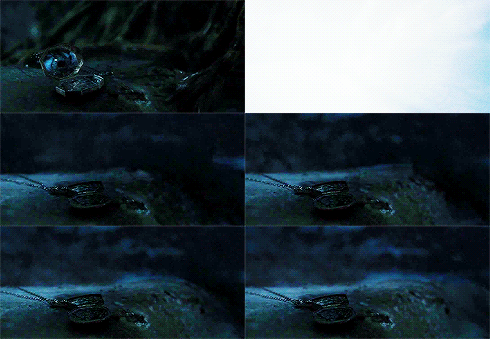
When a Horcrux was damaged to the point of destruction, it may appear to "bleed" (ink in the case of Tom Riddle's diary and a "dark blood-like substance" in the case of Ravenclaw's Diadem) and a ghostly scream of pain may be heard as the soul fragment perished.
It was unknown if the creator of the Horcrux would be able to sense that their soul fragment was destroyed, although Dumbledore stated that in the particular case of Voldemort, he would not feel their loss because his soul had been split too many times and had been in that state for so long that he simply got used to it.
Powers
The main purpose and power of a Horcrux was to anchor the creator to the mortal realm for the sake of achieving immortality. As long as at least one Horcrux existed, the creator's soul would be bound to the world of the living. Hence, if the body was destroyed, the soul would remain as a lingering spirit instead of passing through to the other side. Though being in such a state of existence was what very few would prefer over death, the soul could possess other victims to regain physical form, which shortened the victim's lifespan drastically, as seen when Ginny Weasley lay unconscious in the main chamber of the Chamber of Secrets. It was also possible (through a second party) to use certain potions to create a rudimentary body or even the true body of the Horcrux creator's soul to possess. Because of this purpose, a Horcrux was usually kept hidden and dormant, and its other powers were rarely explored or utilised.
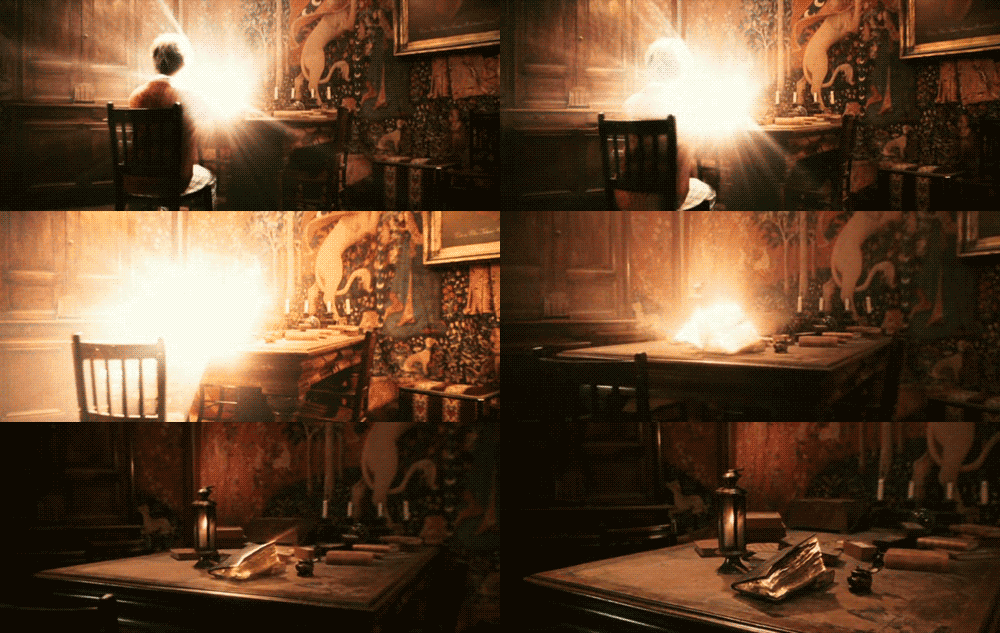
The fragment of a person's soul within a Horcrux was capable of thinking for itself and had certain magical abilities, including the ability to influence those in their vicinity and affect them mentally. When Harry, Ron, and Hermione were carrying Salazar Slytherin's locket around their necks in 1997, it brought out the worst in the trio by rapidly making them angrier and moodier, more prone to fighting, and darker aspects of them began to appear, especially Ron as he carried the locket much longer than his friends.
However, when away from a Horcrux, its influence and effects would slowly begin to wane and then disappear and those influenced would return to their normal selves, as soon after leaving Ron in particular came back to his senses and regretted his actions. They were also unable to summon their Patronuses while wearing the locket since the soul fragment inside was darkening their thoughts. A person with an affinity for the Dark Arts and having a malicious disposition, on the other hand, would be greatly strengthened by the influence of a Horcrux, as Dolores Umbridge was when wearing Salazar Slytherin's locket.
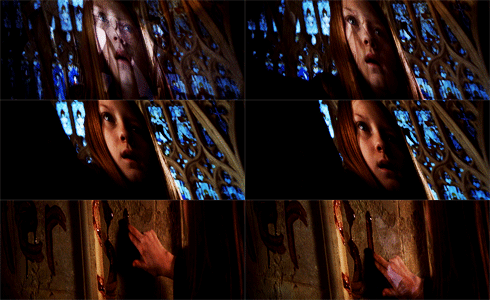
If a person was more emotionally vulnerable and was in emotional contact with it for long enough, it was possible for the soul inside the Horcrux to take control of them, as when Ginny Weasley was put in a trance-like state during her first year at Hogwarts while in possession of Tom Riddle's diary, similar to being under the effects of the Imperius Curse. In fact, Voldemort took advantage of this possessive power over Ginny to reopen the Chamber of Secrets, using the diary as a weapon rather than a safeguard. If given enough time and opportunity, the Horcrux would drain enough of the victim's life-force and soul to manifest itself into a more physical form, at the cost of killing the victim should it continue to completion. This quasi-sentient entity that was capable of depleting life-force to create a physical form differed from a "mere memory", which the diary's manifestation claimed itself to be, as no mere charmed object could achieve such a feat, though Lucius Malfoy thought that was what the diary simply was.
In this way, a Horcrux could gradually feed on another person's life and negative emotions to strengthen itself and increase the ability of the soul fragment within to act independently in the physical world, to the point that not even the user of the Horcrux would notice, nor its destruction. The best example of this was in the case of T. M. Riddle's Diary. For decades, the diary lay dormant in Lucius Malfoy's possession, doing nothing other than safeguarding the soul fragment of Tom Riddle. When Ginny Weasley began to transcribe her fears and insecurities into the pages of the diary, the fragment of Tom Riddle's soul contained within was not only able to write back to Ginny but eventually drained enough life out of her to actually manifest itself in a semi-corporeal form and work magic with Harry Potter's wand.

Likewise, Slytherin's Locket gradually gained power when it was in the possession of Harry, Ron, and Hermione in the months prior to its destruction. It can be theorised that the locket gained somewhat less power from them (not enough for Riddle to fully manifest but still enough to speak and create illusions) because Harry, Ron, and Hermione were actively resisting the locket's influence instead of embracing it as Ginny had done with the diary.
On the other hand, Horcruxes which had been isolated for long periods of time (such as Hufflepuff's Cup and Ravenclaw's Diadem) were passive by comparison and took no real measures to protect themselves. Even Slytherin's locket was fairly inert when it was initially discovered in a cabinet in the drawing-room at 12 Grimmauld Place. It displayed no powers and gave no indication that it possessed superior magical properties.
Horcruxes also possessed some last line of defence against destruction. The fragment of soul within the Horcrux seems to be able to sense impending threats and can act to defend itself. For instance, Slytherin's locket viciously taunted Ron Weasley with visions of his deepest fears, hoping not only to prevent him from stabbing it with the Sword of Gryffindor but also to manipulate him into killing Harry Potter instead. It even attempted to strangle Harry when he was close to obtaining the Sword with the intent of piercing the locket.
However, this form of defence may not be viable if the soul fragment in question is not given enough strength or chance to retaliate, as while Harry opened the locket using Parseltongue before allowing Ron to attack it, both Hufflepuff's Cup and Ravenclaw's Diadem were swiftly destroyed the moment the trio were given an opportunity.
Aside from its self-defence mechanism from the soul fragment, a Horcrux is usually enchanted by the creator to have other forms of defences to prevent destruction. Marvolo Gaunt's Ring contained a deadly curse that would kill anyone who dared touch it. At least Salazar Slytherin's Locket was unbreakable by even house-elf magic, and the locket itself could not be taken without drinking a dangerous potion. T. M. Riddle's Diary was completely waterproof and impervious to spilled ink.
Consequences
Tamper with the deepest mysteries — the source of life, the essence of self — only if prepared for consequences of the most extreme and dangerous kind.
To create a Horcrux was to divide one's soul— the "essence of self" — and it was therefore in the creation of a Horcrux that one fell prey to Adalbert Waffling's first Fundamental Laws of Magic, which essentially stated that tampering with one's soul inevitably resulted in grave side effects. Creating Horcruxes was considered perhaps by far the most dreadful act possible.
Dehumanisation

Voldemort had entered the room. His features were not those Harry had seen emerge from the great stone cauldron almost two years ago: They were not as snakelike, the eyes were not yet scarlet, the face not yet masklike, and yet he was no longer handsome Tom Riddle. It was as though his features had been burned and blurred; they were waxy and oddly distorted, and the whites of the eyes now had a permanently bloody look, though the pupils were not yet the slits that Harry knew they would become.
One of these such side-effects was the "dehumanising" effect the mutilation of one's soul was said to have. The more Horcruxes one created, the less human they became, both emotionally and physically; for example, in the house-elf Hokey's memory, Tom Riddle was initially shown to be hollow-cheeked and pale-skinned but otherwise normal, though ten years later, after making Horcruxes and becoming Voldemort, his features looked as if they had been burned and blurred, and his skin was extremely white.

One should note that it is unclear whether the red eyes and slit-like nostrils that Voldemort had after he was reborn were caused by having more Horcruxes than he did than when he applied for the Defence Against the Dark Arts position a second time, whether they were characteristics of a person who had been resurrected with the help of serpents (which had continued to play key roles in his revival), or whether due to any other alterations he had made to himself. Dumbledore speculated that Voldemort underwent other dangerous transformations as well as creating Horcruxes and that it was a mixture of these, rather than just one thing, that resulted in Voldemort's hideous appearance.
Instability

You were the seventh Horcrux, Harry, the Horcrux he never meant to make. He had rendered his soul so unstable that it broke apart when he committed those acts of unspeakable evil, the murder of your parents, the attempted killing of a child. But what escaped from that room was even less than he knew. He left more than his body behind.
A third side effect of Horcrux creation was that the master soul itself became abundantly unstable (even with creating just one Horcrux).

For example, the creation of Voldemort's sixth "Horcrux" (of seven) — Harry Potter — is known to be the direct result of this. When Voldemort was hit by his own back-fired Killing Curse at the Potters' home in Godric's Hollow, it caused Voldemort's soul to split yet again, with a seventh fragment immediately seeking out the only other living thing in the room and latching onto it — Harry Potter himself. Due to such instability, neither Lord Voldemort nor Harry himself ever realised that Voldemort had created yet another Horcrux accidentally and unintentionally in his own prophesied archenemy. While Lord Voldemort's intention had indeed been to create seven Horcruxes, he was completely oblivious to Harry being the unintentional seventh for seventeen long years. Dumbledore informed Harry in limbo that Harry himself had been the Horcrux Lord Voldemort had never meant to make.
The rest of Voldemort's mutilated soul fled. However, this parasitic fragment of Voldemort's soul that attached to Harry did not make him a true Horcrux, since it was not created intentionally and the necessary parts of the Horcrux creation process were not carried out.
Notably, Voldemort appeared to be entirely unaware of this split, as he later created a seventh Horcrux in his quest to have six, and continued to target Harry Potter despite him now holding part of Voldemort’s own soul.
Limbo
Something that is beyond either of our help...
The final known side-effect of Horcrux creation was the inability to move on from limbo after death. This was seen when Voldemort's Killing Curse destroyed the part of his soul that resided in Harry Potter. This broken and mangled piece of soul was forced to exist in the stunted form of a flayed and mutilated baby that Harry saw in King's Cross during his visit to limbo, unable to return to the land of the living as a ghost, and unable to move on to the afterlife because his soul was maimed and corrupted. The creature also appeared to be in constant agony and struggling merely to exist, as it was said to have been gasping raggedly for breath and crying in pain when Harry observed it.

The same fate was implied to have been suffered by Voldemort's "main" soul piece, the one that inhabited his body; it is unknown if this was a standard fate meted out for all Horcrux creators, or if it was unique to Voldemort due to the number of his Horcruxes. Regardless, reconciliation apparently cannot occur after death, as the Horcrux-bound fragments of Voldemort's soul did not recombine with the primary fragment in his body when they were destroyed. As such, the greatest of all consequences incurred by Horcrux creation may be the possibility of eternal limbo of the soul. Voldemort's soul fragments also appeared to possess only the awareness and intelligence of the infant they appeared to be.
Lord Voldemort's Horcruxes
I, who have gone further than anybody along the path that leads to immortality....
Lord Voldemort, obsessed with immortality and unable or unwilling to understand the importance of the soul's well-being, went further than any wizard known to history, creating seven Horcruxes — although he planned only six of them, as his intention was to split his soul in seven, the most magical number. He accidentally created a pseudo-Horcrux when he failed to murder Harry Potter in 1981, and later made his pet snake Nagini into his seventh Horcrux. As a student named Tom Riddle at Hogwarts in the 1940s, he learned of Horcruxes through books in the Restricted Section at Hogwarts Library, including Secrets of the Darkest Art, and sought out Potions Master Horace Slughorn for further information about creating more than one, of which no book would have any record.

Albus Dumbledore removed all of those books from the Hogwarts Library soon afterwards, although later he suspected that Slughorn had given information to Riddle about Horcruxes, as Slughorn refused to reveal the true account of what really happened. Voldemort seemed to understand that his soul had a limit to how many times he could split it, as he ceased creating any more Horcruxes once he intentionally reached his desired six and refused to create any replacements for the ones that were destroyed. This held true even for the diary, the destruction of which he became aware of nearly two years before his eventual death, and which he could have replaced during that time. That being said however, Voldemort was able to split his soul into eight fragments without noticing any ill effects despite thinking at the time that his primary soul fragment was a sixth of a soul, not a seventh.

Dumbledore later assigned Harry to retrieve the stored memory of Slughorn and Riddle's conversation during the 1996-1997 school year, in which Harry was able to get it through the use of Felix Felicis. Although Voldemort had been warned that the usage of Horcruxes would render one's soul to live a miserable existence should their living flesh be destroyed, and Voldemort even experienced this first hand for fourteen years, he nevertheless preferred to live in such a state when the alternative was death, which he feared the most because he regarded it as a shameful and ignominious human weakness, since he was willing to continue his creation of his sixth true Horcrux even in his crippled form. Voldemort's streak of independence made it intolerable for him to utilise any other methods to obtain his immortality (such as the Elixir of Life); he chose to rely on Horcruxes because they were magical extensions of himself.
Having split his soul multiple times, it became extremely unstable that upon his Killing Curse's first rebound on him, Voldemort's already maimed soul split apart and attached to the only living being in the room at the time: Harry Potter. It was also the creation of so many Horcruxes that led Voldemort's humanity to deteriorate severely. As Voldemort's soul fragments had been separated from him for so long, he could no longer feel them should they be destroyed.

This was part of Dumbledore and Harry's quest to determine, locate, and destroy, in secret, what they believed to be as many as four of Voldemort's remaining Horcruxes (two had already been destroyed). After Dumbledore's death, Harry took up the quest with his friends Ron Weasley and Hermione Granger. Hermione was able to summon the books on the subject to her from the Headmaster's office at the end of the 1996–1997 school year to aid them in their research on Horcruxes.
Although Voldemort had six true Horcruxes (not including Harry) in total, no more than five existed at one time because T. M. Riddle's Diary was destroyed before Nagini was turned into a Horcrux. Concerning Horcrux Nagini, it is not known if she had to have been killed by the Sword of Gryffindor or if any other means, such as a regular sword killing her, would truly destroy the soul fragment along with her. However, as Albus Dumbledore stated, using a living being as a Horcrux was a risky business, due to it being able to move around and think for itself. It is unknown if any method that would normally kill Nagini would also destroy the Horcrux. It is also unknown what would happen if Nagini had died a natural death, or if that was even possible, since Horcruxes had mechanisms in place to prevent destruction.
All of Voldemort's Horcruxes were made from objects that had extreme monetary, historical or (in as much as he could feel) sentimental value, in his desire to secure his position as the greatest sorcerer in history, and that only noteworthy items could live up to his standards and have the honour of housing a fragment of his precious soul. As such, he had originally made it his desire to collect four items of the four founders of Hogwarts; he found only three, and gave up after failing to find the Sword of Gryffindor, but made Horcruxes out of other items that had sentimental value to himself, if not as a priceless artefact of the Wizarding world. Believing that the number seven is the most powerful number when it comes to magic, Voldemort intended to split his soul into seven pieces, with six Horcruxes housing one fragment each and his body containing the seventh.

He hid these Horcruxes in special locations and kept their existence and purposes from absolutely everyone. However, his arrogance had also inadvertently let him leave behind subtle hints of their whereabouts, leading to their destruction. Because Voldemort was the first (and by far, the only) known wizard to have created more than one Horcrux, both Dumbledore and Voldemort himself believed that he was the closest to true immortality than any other wizard or witch before him.
A secondary reason why Voldemort chose to create multiple Horcruxes is to utilise the effects of having a soul fragment to weaponise some of these artefacts, as opposed to keeping them as hidden safeguards. Voldemort felt more comfortable placing these few Horcruxes in the risk of destruction knowing he had more hidden safely to maintain his immortality. It was for this reason he chose to use his diary to reopen the Chamber of Secrets, and sending Nagini on missions from time to time. Although Voldemort created multiple Horcruxes so that it would not be as detrimental to him in case one was destroyed, he would nevertheless be furious if any one of them were destroyed. He was wrathful at Lucius Malfoy for indirectly causing the destruction of the diary Horcrux, despite intending for it to be a weapon rather than a safeguard, due to Lucius acting without instruction. When Voldemort found out that Hufflepuff's Cup was stolen, he massacred many of the goblins and Gringotts employees, including Griphook, all of whom failed to protect the cup. Discovering that Slytherin's Locket and the Gaunt family ring were taken from their hiding places infuriated him even more, though it became more understandable as he was aware that he was losing more Horcruxes as time went on.
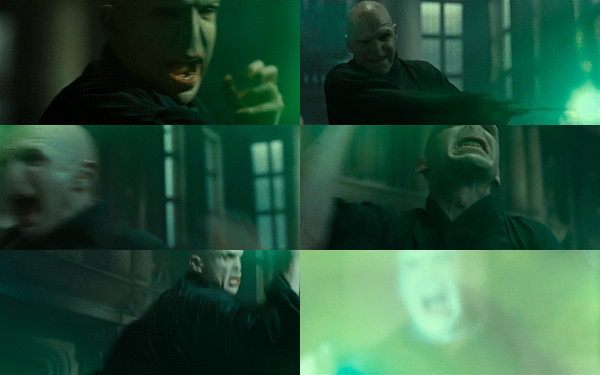
Time constraints and his arrogance prevented him from adding more protection for the Lost Diadem of Ravenclaw, which led to its destruction. He went out of his way to protect his last Horcrux, Nagini, and was totally horrified and angered beyond words when she was killed by Neville Longbottom with the Sword of Gryffindor, thus finally stripping him of his immortality.
In an alternate reality where Cedric Diggory became a Death Eater and killed Neville during Voldemort's Last Stand, Nagini was not killed as a result, thereby allowing Voldemort to keep his immortality and successfully kill Harry Potter while also conquering the entire wizarding community. This timeline event was eventually undone by Albus Potter and Scorpius Malfoy.
List of Voldemort's Horcruxes
- style="text-align:center; background: #ccc" T. M. Riddle's Diary - style="text-align:center; background: #ccc" - Hiding place Created with the murder of Location of murder Date created - Harry Potter and the Chamber of Secrets and eventually found by Harry Potter in the girls lavatory on the second floor Myrtle Warren by the Serpent of Slytherin Second-floor girls' lavatory, Hogwarts Castle June 1943 - Destroyed by Destruction method Destruction site Date destroyed - Harry Potter Basilisk's fangs Chamber of Secrets, Hogwarts Castle 29 May 1993 - style="text-align:center; background: #ccc" Marvolo Gaunt's Ring - style="text-align:center; background: #ccc" - Hiding place Created with the murder of Location of murder Date created - Harry Potter and the Half-Blood Prince Tom Riddle Senior with Morfin Gaunt's wand Riddle House, Little Hangleton c. August 1943 - Destroyed by Destruction method Destruction site Date destroyed - Albus Dumbledore Cut with the Sword of Gryffindor Headmaster's office, Hogwarts Castle July 1996 - style="text-align:center; background: #ccc" Slytherin's Locket - style="text-align:center; background: #ccc" - Hiding place Created with the murder of Location of murder Date created - Harry Potter and the Deathly Hallows tramp Unknown c. 1955 or later, but before 1979 - Destroyed by Destruction method Destruction site Date destroyed - Ron Weasley Stabbed with the Sword of Gryffindor Forest of Dean, Gloucestershire 28 December 1997 - style="text-align:center; background: #ccc" Hufflepuff's Cup - style="text-align:center; background: #ccc" - Hiding place Created with the murder of Location of murder Date created - vault at Gringotts Wizarding Bank Hepzibah Smith Hepzibah Smith's home Harry Potter and the Half-Blood Prince Tom Riddle visited Headmaster Dumbledore ten years after his acquisition of the Cup and Locket. POA chapter 18 suggests that the earliest date Dumbledore could have become head was March 1965, making 1955 the earliest possible creation date. - Destroyed by Destruction method Destruction site Date destroyed - Hermione Granger Basilisk fang Chamber of Secrets, Hogwarts Castle Battle of Hogwarts, 2 May 1998 - style="text-align:center; background: #ccc" Ravenclaw's Diadem - style="text-align:center; background: #ccc" - Hiding place Created with the murder of Location of murder Date created - In the Room of Requirement at Hogwarts Castle An Albanian peasant Albania Talk) - Destroyed by Destruction method Destruction site Date destroyed - Vincent Crabbe Fiendfyre Room of Requirement, Hogwarts Castle Battle of Hogwarts, 2 May 1998 - Nagini - style="text-align:center; background: #ccc" - Hiding place Created with the murder of Location of murder Date created - Lord Voldemort after the cup was stolen Bertha Jorkins Albania Summer 1994 - Destroyed by Destruction method Destruction site Date destroyed - Neville Longbottom Beheaded with the Sword of Gryffindor Hogwarts Battle of Hogwarts, 2 May 1998
Pseudo-Horcruxes
While he did not fit the definition of a Horcrux, as he was not created intentionally using the Horcrux-making spell for the purpose of obtaining immortality, Harry Potter essentially became a Horcrux. After Voldemort's curse rebounded on him, a piece of his mangled soul split off and latched onto Harry. He didn’t have curses upon him that the other Horcruxes had. Dumbledore explained that for simplicity's sake, Harry was a Horcrux. In an interview, J. K. Rowling was asked why the Horcrux within Harry wasn't destroyed after he was poisoned by the Basilisk in Harry Potter and the Chamber of Secrets. She replied that Fawkes's tears "mended" him before he could be destroyed beyond repair.
- style="text-align:center; background: #ccc" Harry Potter - style="text-align:center; background: #ccc" - Hiding place Created with the murder of Location of creation Date created - Harry Potter N/A Godric's Hollow, West Country 31 October 1981 - Destroyed by Destruction method Destruction site Date destroyed - Lord Voldemort Killing Curse Forbidden Forest, Hogwarts School of Witchcraft and Wizardry 2 May 1998
Observations
Each Horcrux was destroyed by a different person. In the film adaptation, however, the Diadem is stabbed with a Basilisk's fang by Harry and then kicked by Ron into the oncoming Fiendfyre, thus Harry and Ron take credit for its destruction, not Crabbe.
Four Horcruxes were destroyed during the Battle of Hogwarts, along with Voldemort himself.
All but one Horcrux (Salazar Slytherin's Locket) were destroyed within Hogwarts grounds.
Three Horcruxes (Ring, Locket, and Cup) were destroyed by those who knew they're Horcurxes. The destroyers of the other three (Diary, Nagini, and Harry's fragment) were unaware of their Horcrux nature at the time of their destruction. The remaining one (Diadem) belongs in the latter category in the book series, and the former category in the film adaptations.
According to Dumbledore, Voldemort was preserving the creation of his Horcruxes for significant deaths. In that Dumbledore was wrong, as Voldemort has used a Muggle tramp and Albanian peasant to create two of his Horcruxes, with no known significance for the two. To be fair however, during his and Harry's private lessons in investigating Lord Voldemort's background and how to defeat him once and for all, Dumbledore himself pointed out that they had to rely on guesswork in deducting certain parts to get around limited leads they had, citing that some of them might be inaccurate as expected. Dumbledore only knew for certain of two of the murders committed to create Voldemort's Horcruxes: the murder of Moaning Myrtle (his very first killing) to create the diary, and murder of Tom Riddle Snr, his father, for the Gaunt Ring Horcrux. Both of these murders were very significant. However, Dumbledore also incorrectly believed that Voldemort used the killing of "an old Muggle man" to turn Nagini into the final Horcrux when it was in fact Bertha Jorkins.
Differences between the books and the film adaptation
There has been controversy of the fact that, in the films, Harry, Ron and Hermione do not have any leads to find the remaining Horcruxes, apart from the locket. In Harry Potter and the Half-Blood Prince (film), the only Horcruxes mentioned are the diary, the ring, and the locket, leaving Harry with no direction in Harry Potter and the Deathly Hallows: Part 1 and Harry Potter and the Deathly Hallows: Part 2. In addition, Ginny hides Harry's potion book while Harry closes his eyes (as well as kissing him for the very first time), and there is no indication that Harry sees the diadem.
However, in Harry Potter and the Half-Blood Prince (film), it is shown that a Horcrux will leave a trace of Dark magic - this gives the person who touches the Horcrux visions of associated events and other related Horcruxes. A scene in the sixth film shows Harry touching Marvolo Gaunt's Ring and experiencing a flow of high speed visions including Tom Riddle screaming in agony (possibly due to the method of ripping his soul) and Nagini, one of Lord Voldemort's Horcruxes. This is also stated in Steve Klove's script for the film. This would ultimately lead Harry, Ron, and Hermione to know most (if not all) of the Horcruxes in Harry Potter and the Deathly Hallows: Part 1 and Harry Potter and the Deathly Hallows: Part 2.
The books establish that Voldemort cannot feel when a Horcrux is destroyed. However, this was completely reversed in the movies. That is the reason he starts on the journey of seeing if all the Horcruxes are safe in the books, but in the movies it is unclear if he even checks his hiding spots. When Hermione destroys Hufflepuff's Cup, Voldemort, Harry and Nagini all seem to be momentarily incapacitated by pain. This also happens when Ravenclaw's Diadem and Nagini are destroyed, clearly showing that all Horcruxes and the Master Soul feel the destruction of the others. This only starts to happen when the cup is destroyed, as Harry does not react to the locket's destruction and Voldemort remains oblivious when both it and the ring are destroyed.
Sources
Adapted from the original article, under CC BY-SA 3.0.