Creature
Ghost
A ghost was the imprint of the soul of a once-living wizard or witch, and as…
A ghost, as I trust that you are all aware by now, is the imprint of a departed soul left upon the earth...
A ghost was the imprint of the soul of a once-living wizard or witch, and as such, a type of spirit. These fleshless spirits were either afraid of death or had some extraordinarily strong connection to the locations they haunt.
Ghosts were visible, and appeared as a greyish-silver apparition of their former (living) selves. However, they were unable to have much physical influence; they passed through solid objects without damaging themselves or the material, but created disturbances in water, fire and air. The temperature dropped in the immediate vicinity of a ghost. Their presence could also turn flames blue.
Muggles could not become ghosts, nor could they see ghosts clearly. In some instances, animals may have also become ghosts upon death.
Nature

Wizards can leave an imprint of themselves upon the earth, to walk palely where their living selves once trod... But very few wizards choose that path.
A ghost was the transparent, three-dimensional imprint of a deceased witch or wizard, which continued to exist in the mortal world. Muggles could not come back as ghosts, and the wisest witches and wizards chose not to. It was those with "unfinished business", whether in the form of fear, guilt, regrets or overt attachment to the material world who refused to move on to the next dimension. As a result, ghosts knew nothing about the afterlife and some later came to regret that they became ghosts instead of moving on.
Having chosen a feeble simulacrum of mortal life, ghosts were limited in what they could experience. Without a body, no physical pleasure remained to them, and their knowledge and outlook remained at the level it had attained during life, so that old resentments (for instance, at having an incompletely severed neck) continued to rankle after several centuries. For this reason, ghosts tended to be poor company, on the whole. They were especially disappointing on the one subject that fascinated most people: ghosts couldn't return a very sensible answer on what it was like to die, because they had chosen an impoverished version of life instead.
Ghosts were known for gravitating around a specific area, often the location of their death. In such a case, it is said that the ghost "haunted" that location. They appeared to have a particular connection to that location, as it was apparently possible to bind them there magically. Such was apparently done to Myrtle Warren in the 1940s, although it is plausible that she was simply coerced by other means into staying in the bathroom in question. A ghost's form also reflected the condition of their body from the moment of their death. For example, if someone died from being beheaded, then their ghost's head would be detachable. Some ghosts, such as the members of the Headless Hunt, took advantage of this condition for their own amusement.
Ghosts could be repelled by magical light, and therefore would retreat from a Wand-Lighting Charm. Ghosts could also be frightened away with a Skurge Charm, which would also clean up any ectoplasm that they had precipitated. Depending on the conditions of the person's soul, they might have been unable to return, as Tom Riddle's self-mutilated soul was trapped in limbo for eternity and couldn't become a ghost.
Abilities
Since ghosts were already dead, they couldn't die a second time or be destroyed (not to be confused with Immortality). For example, a person would have died if they met the gaze of a Basilisk, but since ghosts couldn't die again, they would have been petrified instead. This could be reversed by a Mandrake Restorative Draught, although the method of administration is unclear.

Ghosts were also weightless and could fly in any direction. Due to not having a physical form, they were totally untouchable and could not be pushed physically. However, they could be moved with air and water currents. In passing through a living creature, ghosts gave the sensation of plunging into ice-cold water.
Ghosts also secreted ectoplasm over time in places that they frequented. They were capable of "almost" tasting things, which was amplified with the use of pungent, rotting food. According to Rubeus Hagrid, many ghosts liked lily flowers.
Goblin ghosts
Unlike the ghosts of human witches and wizards, the ghosts of goblins, such as Ragnuk, were still able to use magic.
Ghosts in the wizarding world
And then she saw my body... ooooh, she didn't forget it until her dying day, I made sure of that... followed her around and reminded her, I did. I remember at her brother's wedding — and then, of course, she went to the Ministry of Magic to stop me stalking her, so I had to come back here and live in my toilet.
Wizardkind were much more susceptible to what Muggles call paranormal activity, and would see (and hear) ghosts plainly where a Muggle might only feel that a haunted place is cold or "creepy". Muggles who insist that they see ghosts in perfect focus are either a) lying or b) wizards showing off — and in flagrant breach of the International Statute of Secrecy.
Burdock Muldoon made the first attempt to create a proper definition of Being, "any creature that walks on two legs"; ghosts were originally ineligible to be classified as Beings under this definition, since they glided instead of walked. Muldoon's successor, Elfrida Clagg, attempted to redefine Beings as "any creature capable of speaking human language". Ghosts were eligible for Being status under this revised definition. However, the Wizards' Council that existed at the time shamelessly emphasised the matters of the living over the matters of the dead. In 1811, Minister for Magic Grogan Stump revised the definition of Being to "any creature intelligent enough to understand the law". Ghosts were eligible for Being status under this definition, but felt that it was insensitive to classify them as "Beings" when they were clearly "has-beens". Because of this, the Spirit category was established, along with the Spirit Division of the Department for the Regulation and Control of Magical Creatures.
The Ministry of Magic seemed to have at least a degree of power and jurisdiction over ghosts, as Moaning Myrtle was forced to return to her place of death, which was Hogwarts School of Witchcraft and Wizardry, when she disrupted the wedding of the brother of Olive Hornby. The Spirit Division was the division of the Department for the Regulation and Control of Magical Creatures that dealt with ghost welfare.

Ghosts also appeared to celebrate their deathday, as Nearly Headless Nick did so on 31 October in 1992. They tended to be very sensitive concerning the circumstances of their death, often showing great hesitancy when asked by others how they had died. What seemed to be a typical Deathday Party entailed a candlelit dinner of rancid, mouldy food, the smell of which would cause a normal living creature to gag. Normally, only people who were no longer living were invited to a Deathday Party.
Ghosts could also send each other letters that were transparent to the living, but readable to ghosts.
House ghosts
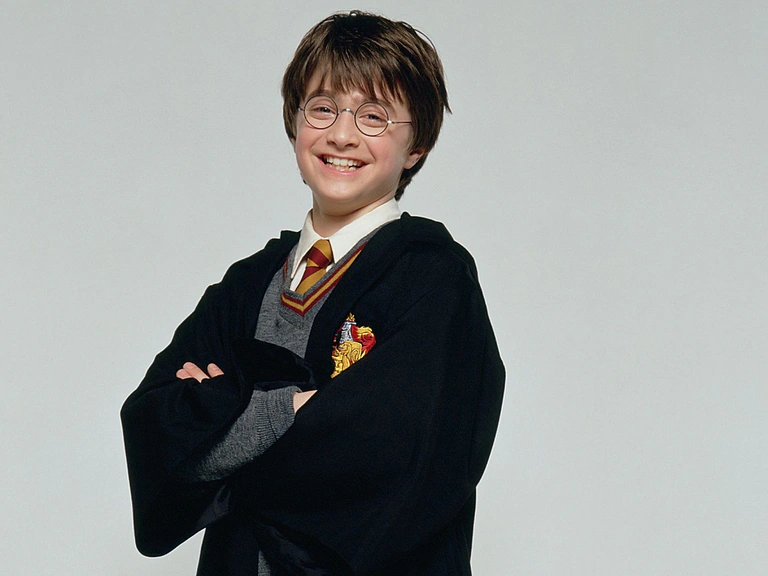
About twenty ghosts had just streamed through the back wall. Pearly-white and slightly transparent, they glided across the room talking to one another and hardly glancing at the first-years.
Many ghosts took up residence within Hogwarts Castle and each House at Hogwarts had a patron ghost. Each of these ghosts once belonged to their corresponding House. They apparently served as a representative to their House, as well as serving the role of messenger or guide to those who were still unfamiliar with the House they were sorted into. Hogwarts Castle was the most haunted building in Great Britain. It is unknown for how long they might have retained this title.

They also seemed to enjoy a certain level of authority, as Sir Nicholas de Mimsy-Porpington apparently outranked the Caretaker at the school, bidding Argus Filch to award Jacob's sibling ten house points before ordering him to leave the Potions Classroom, where they were caught snooping while, unbeknownst to Filch, researching the Cursed Vaults despite not being allowed to.
Gryffindor House

I know nothing of the secrets of death, Harry, for I chose my feeble imitation of life instead...
The Gryffindor House ghost was Nearly Headless Nick. He was known as a friendly ghost who was beheaded, but the job was poorly executed, leaving a small strand of flesh keeping his head attached, which was how he obtained the nickname of "Nearly Headless Nick". He preferred to be addressed as "Sir Nicholas".
His real name was Sir Nicholas De Mimsy-Porpington. Something of a snob, and a less accomplished wizard than he believed, Sir Nicholas lounged around the court of Henry VII in life. He was sentenced to death after he failed to cast a beautification spell on a woman in the court and accidentally gave her tusks instead.
Hufflepuff House

The table on the right cheered and clapped as Hannah went to sit down at the Hufflepuff table. Harry saw the ghost of the Fat Friar waving merrily at her.
The Hufflepuff House ghost was the Fat Friar, who was executed because senior churchmen had grown suspicious of his ability to cure the pox merely by poking peasants with a stick, and his ill-advised habit of pulling rabbits out of the communion cup. Though a genial character in general, the Fat Friar still resented the fact that he was never made a cardinal.
He also frequently suggested to the other Hogwarts ghosts that Peeves should have had a second chance, whether or not he deserved it.
Ravenclaw House

Oh yes, our house ghost is the Grey Lady. The rest of the school thinks she never speaks, but she'll talk to Ravenclaws. She's particularly useful if you're lost, or you've mislaid something.
The Ravenclaw House ghost was the Grey Lady, also known as Helena Ravenclaw. The least talkative of the house ghosts, she was long-haired and beautiful. She was the daughter of Hogwarts founder Rowena Ravenclaw, making her the only house ghost to be directly related to one of the four Hogwarts founders.
She was murdered by the man now known as the Bloody Baron, who was enraged by her rejection of his affection. She was renowned for being instrumental in assisting Harry Potter in the search for the Horcruxes.
Slytherin House

The Bloody Baron was the Slytherin ghost, a gaunt and silent spectre covered in silver bloodstains.
The Slytherin House ghost was the Bloody Baron. He was well known for being extremely unsocial and many students, including those of his own House, were known to be slightly afraid of him. The Baron was also the only one known to be able to control Peeves.
The Bloody Baron committed suicide out of remorse for murdering Helena Ravenclaw, taking his own life with the same weapon he used on her. He wore robes covered in silver bloodstains, which was how he obtained the nickname of "The Bloody Baron", and he had been remorseful of the murder ever since and carried heavy chains as a sign of penance. He was known for having a highly volatile temper when he was alive.

Known ghosts
• Ragged man wearing chains
• Portly ghost
• Unidentified ghost (VII)
• Unidentified ghost horse (II)
Sources
Adapted from the original article, under CC BY-SA 3.0.