Lore
Soul
The soul was the immaterial essential principle or the animating force of all…
Lord Voldemort's soul, maimed as it is, cannot bear close contact with a soul like Harry's.
The soul was the immaterial essential principle or the animating force of all life, which in many belief systems was held to live on after the biological death of the physical being's body or form. Wizards and witches, like Muggles, had sought to uncover the nature of the soul, particularly its role in magic. Tampering with the soul was to break the "deepest laws of magic" according to Albus Dumbledore.

The soul was the sense of self of the individual, residing inside the materialistic body. It served as the memory, awareness, and individuality mindset. It was supposed to remain intact and unharmed, as ripping it was considered a violation of the laws of nature.
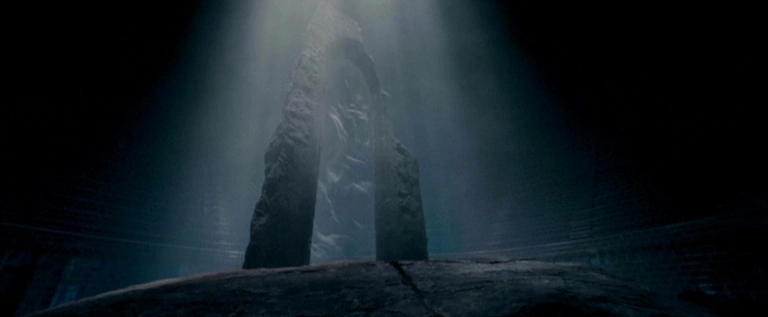
Even when the human body died, the soul would continue to exist, able to either move on beyond the Veil to the afterlife or return as a ghost. However the soul had to be undamaged to achieve either. A damaged soul would be trapped in Limbo forever.
A single body usually couldn't host more than one sentient soul without taking a heavy toll, as many animal hosts to Voldemort's fragmented soul had their lifespan drastically reduced, and Quirinus Quirrell, the only known human host, had to drink Unicorn blood to sustain his own body's ailing health. This might be inapplicable to a non-sentient soul fragment used for Horcrux purposes such as Nagini, who showed no side effects from housing her master's soul and even possessed a powerful psychic bond with him.
The healthy state of Harry Potter's soul kept Voldemort from trying to possess him after the attempt at the Ministry of Magic, because it was too painful for Voldemort's tortured maimed soul to share a body with Harry's complete soul, as Dumbledore explained to Snape in a Pensieve memory.
A Fidelius Charm implanted a secret into a person's very soul, which would give the secret the highest level of security, unless the Secret-Keeper chose to divulge it. Bewitchment and torture couldn't force the secret out of the Keeper, as it had to be done so voluntarily.
The beauty of the Phoenix Lament was such that it was able to touch the souls of those who listened to it, affecting them emotionally.
The Resurrection Stone was capable of summoning the souls of the deceased back to the world of living as more than ghosts, but less than bodies.
A Qilin was capable of seeing into an individual's soul and judging if they were of pure heart; this unique trait was used in ancient times to determine worthiness of candidates to lead the wizarding world as a whole.
Alchemy was often mistaken by outside observers to be a material journey for wealth and immortality, when in fact it was a spiritual journey, a discipline that pursued the full and complete enlightenment of the human soul through the process of transmutation. This was the first thing a student alchemist had to understand.
Horcrux-related
There was a spell that allowed one to take a piece of their soul out of their body and implant it inside an object. As long as the object remained intact, the soul fragment inside would keep their soul bound to the world of the living, even if their body took fatal damage. The object containing the soul fragments was called a Horcrux.

While the human body relied on the soul to have their own unique mindsets, a torn soul that was encased in a Horcrux was dependent on the object's well being. If a Horcrux was destroyed, the soul within would die away and disappear. This seemed different for the "main" portion of the soul that remained within the body, as it served as the sense of awareness and psyche for the person, meaning that only one portion could maintain such full attributes despite being in multiple pieces, and this piece could retain existence without any container.
It was possible for a wizard to create more than one Horcrux. However, only one wizard, Voldemort, had ever been recorded as having done so. Due to his willingness to create multiple Horcruxes and committing many murders in doing so, Voldemort was widely considered the most evil wizard on record. Most Dark wizards who use Horcruxes only ripped their soul once.
Any portion of a soul encased into a Horcrux could gain a sense of sentience, by sapping away the life-force of any unfortunate person to come into possession of such an item, and in turn that portion of soul could gain a solid human form for itself. This was best shown when T. M. Riddle's Diary started draining Ginny Weasley's life over a year of spilling her secrets into it. On the other hand, if a possessor of such an item was inclined to malice, such a person might be strengthened by the evil fragment within. Such was the case with Dolores Umbridge, who was able to create a Patronus due to her wearing Slytherin's Locket.
Ripping
The act of committing murder, which was said by some to be an act of supreme evil, caused the murderer's soul to become damaged. However it had to be an act of genuine and remorseless murder; a mercy kill, killing for self defence, by accident or under mind control would not damage the soul. When Dumbledore requested that Snape kill him, he implied that the act would not harm Snape's soul due to the circumstances of the killing.
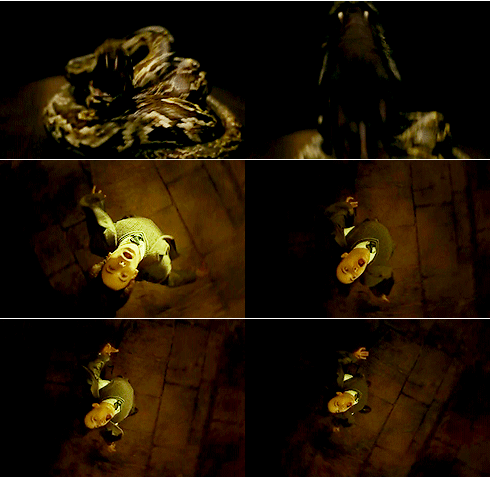
It seemed that the murder could be committed indirectly and soul would still be damaged, as long as the murderer had the intent, seeing as how Tom Riddle used the Serpent of Slytherin to kill Myrtle Warren to create his first Horcrux rather than kill her himself.
If a soul was in an unstable state, it could be torn by a certain degree of magical impact as opposed to genuine murder, as Voldemort's highly unstable soul from repeatedly ripping and separation was torn once more when his Killing Curse rebounded, without him knowing.
Fracturing the soul in this manner was a prerequisite for the creation of a Horcrux.
Partial removal
Well, you must understand that the soul is supposed to remain intact and whole. Splitting it is an act of violation, it is against nature.
Wizards and witches who had committed murder could use a spell to place a torn fragment of their soul inside an external object called a Horcrux, which anchored their soul to the living world, thus rendering them immortal. Creating a Horcrux made the part of the soul left inside one's body unstable, and, for obvious reasons, it was widely considered the most wicked of all the Dark Arts as well as a violation of the first of the Fundamental Laws of Magic. Existing as an earthbound disembodied soul was a fate that few would prefer over death.

If the soul fragment had been detached from the body for a long time, the destruction of a Horcrux containing such a fragment might not be felt by the owner.
A person who created a Horcrux could only reverse the damage by experiencing genuine remorse, but the process was extremely painful, and could even be lethal.
Harry Potter's soul was whole and unblemished, but he shared a body with a fragment of Voldemort's soul, a state of being which Dumbledore's silver instrument described as "in essence divided". That is why Harry could sometimes view things from Voldemort's point of view or even Nagini the snake, since the creature was also a Horcrux.

A soul that had been torn apart and partially removed from the body would of course become lesser in substance. This was shown to cause the soul to experience some form of mental and physical regression. In extreme cases, this regression could be so severe that the individual's soul essentially became sub-human and remained in Limbo, unable to leave and unable to become a ghost.
However, there seemed to be a limit as to how many times one could separate the soul before doing any more attempts, as going further seemed to be dangerous, which was exemplified by how Voldemort ceased creating any more Horcruxes once he intentionally reached his desired six and refused to create any replacements for the ones that were destroyed. In fact, Voldemort's soul was so unstable that by the time he created five Horcruxes, it split on its own when his Killing Curse rebounded the first time, which caused the fragment to be removed from him and attached to Harry.
Complete removal
You can exist without your soul, you know, as long as your brain and heart are still working. But you'll have no sense of self any more, no memory, no...anything. There's no chance at all of recovery. You just — exist. As an empty shell. And your soul is gone forever...lost.
It was possible for a person to live without any soul at all so long as their heart and brain were still functioning. However, without a soul, a person was left in an incurable vegetative state — they had no awareness of themselves or the world around them. The soul couldn't be recovered once it had been lost. This was a fate that was considered by many to be worse than death.
Dementor's Kiss
One known method of removing the soul from the body intact was the Dementor's Kiss. The Dementor — a creature which was itself soulless — locked its mouth over that of its victim and sucked out his or her soul. The British Ministry of Magic had, in the past, used the Dementor's Kiss as a form of extreme capital punishment. The Dementor's Kiss was a punishment suffered by Bartemius Crouch Junior, when he was caught masquerading as Mad-Eye Moody. The first two times a Dementor attacked him, Harry Potter heard his mother screaming as she died.
The third time, when both Harry and Dudley were attacked on Privet Drive, Harry was able to summon enough happy memories to keep the creature at bay and cast his Patronus to chase it away, although Dudley Dursley was in the process of being attacked. Harry told Vernon that if Dudley's soul had been sucked out by a Dementor, they would know since he would not be functioning anymore. A Patronus was a "soul guardian" which could chase away a Dementor and keep the soul safe from harm.
Ghosts
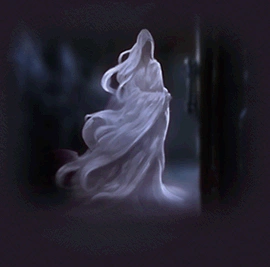
A ghost was the three-dimensional imprint of a deceased wizard or witch who chose to linger in the world of the living after death, though ghosts commonly identified themselves with their living selves. According to Nearly Headless Nick, few people actually chose this fate, because it meant they would never move beyond the Veil as most did. This couldn't be achieved if the soul was damaged or completely removed.
Sources
Adapted from the original article, under CC BY-SA 3.0.