

Group
Non-magic people
Non-magic people, commonly known as Muggles in Great Britain, No-Maj(e)s in the…

Non-magic people (more commonly known as Muggles) were particularly afraid of magic in medieval times, but not very good at recognising it.
Non-magic people, commonly known as Muggles in Great Britain, No-Maj(e)s in the Americas, Non-Magiques in France among other names (see below), were humans who were born to two non-magical parents and were incapable of performing magic. Non-magic people were not to be confused with Squibs, who also lacked magic but were born to at least one magical parent.
Most non-magic people had been unaware that magic and the wizarding world existed since the establishment of the International Statute of Wizarding Secrecy in 1692, as wizards had organised their own society largely separate from the non-magic world. Exceptions included close relatives of wizards and witches and heads of government (such as the British Prime Minister).
Naming
Non-magic people were known by different denominations and nicknames across nations.
In the British wizarding world, the term "Muggle" was widely used to refer to a non-magic person. Some might consider it derogatory, but it was in fact often used affectionately. Arthur Weasley, for example, who had great fondness for Muggles and learning about them and their way of life, often used that term. "Mudblood" was an extremely offensive and derogatory term referring to Muggle-borns and Muggles.
In the United States, they were known by the clipping No-Maj, whose plural may be either No-Majs or No-Majes. Other English-language terms for non-magic people included Can't-Spells and Non-Wizards.
In France, they were known as Non-Magiques, which was a simple translation of the term "non-magic".
Wizarding law
Each wizarding governing body will be responsible for the concealment, care and control of all magical beasts, beings, and spirits dwelling within its territory's borders. Should any such creature cause harm to, or draw the notice of, the Muggle community, that nation's wizarding governing body will be subject to discipline by the International Confederation of Wizards.
Since the International Statute of Wizarding Secrecy was enacted in 1692, wizards and witches had hidden the existence of magic from Muggles. Thus, in the modern age, most Muggles believed magic to be nothing but a childish fantasy. Wizards and witches hid their world with Muggle-Repelling Charms, and if a Muggle witnessed a magical event or saw a magical creature such as a dragon, their memories were erased. Confundus Charms were also occasionally employed to encourage Muggles to ignore any magic they witnessed. Violations of the Statute of Secrecy were prosecuted by the Improper Use of Magic Office, and the Misuse of Muggle Artefacts Office tried to keep bewitched items away from Muggles.

The Muggle Liaison Office was a division of the Department of Magical Accidents and Catastrophes presumably responsible for wizard-Muggle relations. Given the lack of Muggle awareness of the wizarding world, in accordance with the International Statute of Wizarding Secrecy of 1692, it can be presumed that the Muggle Liaison Office fulfilled its duties in a very one-sided manner. Those who worked in Muggle Relations presumably worked with this office.

Wizards and witches thus organised their own society, known as the wizarding world, distinct from that of Muggles. There were some exclusively magical settlements, such as Hogsmeade, but also magical communities hidden within largely Muggle ones, such as in Ottery St Catchpole and even in London. Magical people also had a separate currency system and government. The British Ministry of Magic maintained relations with the Muggle Prime Minister, but they did not appear to be subordinate to the Muggle government.
Overlapping of worlds
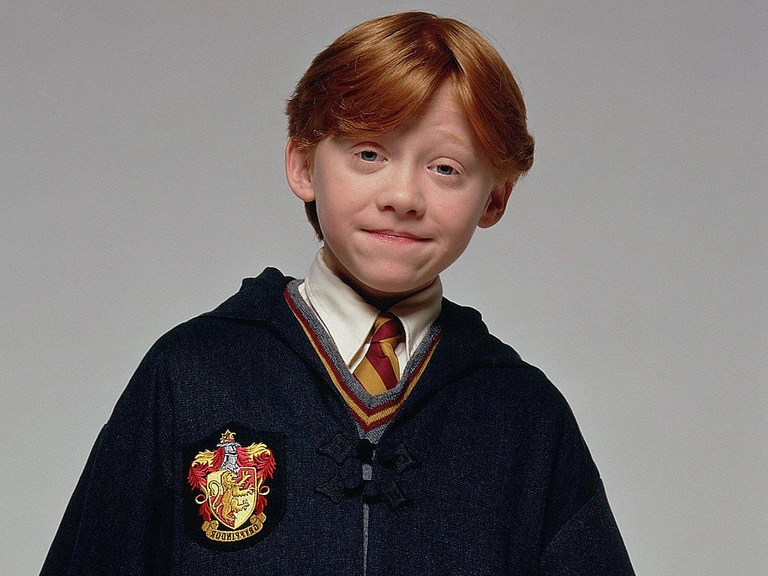
Most wizards these days are half-blood anyway. If we hadn't married Muggles we'd've died out.
However, the Muggle and magical worlds were tied together in some ways. For instance, Muggles sometimes married wizards or witches and thus became aware of the wizarding world, as occurred with Mr Finnigan when he married a witch, or Hope Howell when she married Lyall Lupin.

Muggles also occasionally produced a magical child. It was generally believed that this occurred due to a Squib having married into the family at some point in the past, thus introducing the potential for magic into the bloodline. This potential often surfaced many generations later.
In Britain, these Muggle-born wizards and witches would often join the wizarding world when they were invited to attend Hogwarts School of Witchcraft and Wizardry. The Muggle parents would thus be informed of the existence of the wizarding world, and might even enter it on occasion, as Hermione Granger's parents did when they accompanied their daughter and the Weasley family to Diagon Alley to shop for school supplies in 1992. It is unknown if Muggle parents were allowed to visit Hogwarts Hospital Wing or St Mungo's when serious illness befell their child. However, Muggle parents were allowed to see wizarding pictures of the school, as Muggle-born Colin Creevey was known to take numerous pictures and sent them home to his father.

Some Muggles were aware of the magical world but chose to ignore it, such as Vernon Dursley, who was aware his sister-in-law was a witch but otherwise remained intentionally ignorant of the wizarding world until he was forced to recognise it with the arrival of his nephew, Harry Potter.
In addition, there were secret connections maintained between the two societies at the governmental level; for example, the Minister for Magic occasionally consulted with the Prime Minister of Great Britain on issues affecting both societies, and it is clear that the Prime Minister was aware of the wizarding world. Each Prime Minister, on the day they were appointed to office, got a visit from the current Minister for Magic. The visit encompassed telling the Prime Minister of the existence of magic and that they would only ever need to meet when there was something going on in the wizarding world that might affect the Muggle world.
Muggle attitude towards magic
Wizards represent all that the true 'Muggle' most fears: They are plainly outcasts and comfortable with being so. Nothing is more unnerving to the truly conventional than the unashamed misfit!
Historically, Muggles tended to consider those who practised magic to be evil, leading to the burning of witches during the Middle Ages. In response, some wizards and witches managed to use Flame-Freezing Charms to render the fire harmless. Thus, most considered the Muggle efforts completely useless. Some innocent Muggles were being burned as witches, magical children born to Muggles were often persecuted when their magical abilities surfaced, and some Muggles tried to make magical people perform magic for their own ends. These witch burnings, the Salem Witch Trials, and other incidents between Muggles and wizards ultimately would lead to the International Statute of Secrecy being created.

Magical creatures left the Muggle world too, as many of them were extinguished, probably because of over-hunting and ecosystem destruction. In addition to Muggles being a threat to magical creatures, it was also vice versa, with magical creatures being a threat to Muggles as well. Giants for example were responsible for some of the First Wizarding War's worst atrocities against the Muggle community. Also Muggles believed that dragons were a mere myth, but had been known on occasion to glimpse these beasts. To prevent dragons from being seen by Muggles, the beasts were kept on dragon reserves around the world, most of which were far from human habitation. If they did see any, they would most likely be Obliviated.

In the modern world, few Muggles believed in magic to actually know of its existence and were rather ambivalent with that knowledge. Some who were aware of the wizarding world were accepting of and even fascinated by it, such as Hermione Granger's parents and Jacob Kowalski. These people ended up helping wizardkind on occasion, for example Jacob Kowalski helping out Dumbledore and his allies during the Global Wizarding War.
Others, however, responded negatively. For instance, the Dursley family had a "very medieval" attitude towards magic. Petunia Dursley considered her sister Lily Potter a "freak" for her abilities, although this was originally prompted by envy of them. She would not have thought of her sister like this if she too had those powers. Petunia, her husband, and son were suspicious of magic, thus they treated their wizard nephew Harry Potter badly and distrusted anyone associated with magic. They also tried to prevent him from learning of his magical heritage, without success.

In the United States, the Barebone family (who were a No-Maj family that descended from one of the Scourers who escaped justice during the 17th century) were marked by a profound belief in the existence of magic and an equally deep hatred of it, which they passed down the generations. Bartholomew Barebone had an intensely deep hatred of witches and wizards that caused his desire to expose the existence of the wizarding world, which propelled one of the largest ever breaches of the International Statute of Secrecy. In the 1920s, his descendant Mary Lou Barebone was the leader of the "fanatical" anti-witchcraft group the New Salem Philanthropic Society, also known as the Second Salemers, which sought to expose and destroy wizardkind. , however MACUSA turned a blind eye to most of these incidents.
Ariana Dumbledore was attacked and severely traumatised by Muggle boys after they saw her use magic and she was unable to show them how to do it. Tom Marvolo Riddle also once suggested that his Muggle father abandoned Merope Gaunt, his pregnant wife because he discovered that she was a witch.
It had been suggested by some wizards and witches that Muggles chose, on some level, not to believe in magic, since there were inevitably some occasions at which they were exposed to magic but seemed to ignore it or attribute it to other causes.
Negative views
Alecto... teaches Muggle Studies, which is compulsory for everyone. We've all got to listen to her explain how Muggles are like animals, stupid and dirty, and how they drive wizards into hiding by being vicious toward them, and how the natural order is being re-established.
Many magical people, particularly pure-bloods, considered their own world superior to that of Muggles. Some considered Muggles little better than animals and hated them. For example, Araminta Meliflua Black once proposed that the British Ministry of Magic make Muggle hunting legal. The Gaunts, another pure-blood family, also frequently attacked Muggles.

The Dark wizard Gellert Grindelwald originally intended to conquer the world and make Muggles subservient to wizards. He did not have any hostility towards Muggles as a whole but, due to his abilities as a Seer, foresaw a major Muggle war involving catastrophic weapons that could be used against wizards. He would reveal this to his followers at a rally, using it as an example of the kind of violence that could be checked if Muggles were under wizard guidance, under the banner of "For the Greater Good".
Lord Voldemort and his Death Eaters had a far more extreme ideology. They tortured and killed Muggles for amusement during the First and Second Wizarding Wars. They often extend this hatred to Muggle-borns as well, considering them to be unworthy of magic and not "real" wizards or witches. During the Second Wizarding War, Muggle-borns were rounded up by the Ministry of Magic (on Voldemort's orders) and accused of stealing magic from wizards; a way of thoroughly humiliating them instead of killing them outright. In 1997 during the height of the Second Wizarding War a statue was created that illustrated Muggles in their "rightful place", crushed by the might that is magic. This statue resided in the Ministry Atrium and acted as a symbol of Lord Voldemort's new regime.
Pure-bloods who had such prejudices, such as many members of the Malfoy and Black families, considered those sympathetic to Muggles "blood traitors" for their belief in Muggle equality and attempts to protect them. Brutus Malfoy once claimed that it was a sign of weak magic to enjoy the company of Muggles, and his descendant Lucius Malfoy tried to sabotage Arthur Weasley's career after he proposed the Muggle Protection Act in 1992.
Muggle-baiting

Muggle-baiting was activity which used magic to confuse or humiliate Muggles without the Muggles realising that magic was involved. When Willy Widdershins enchanted regurgitating toilets, he and others were referred to as "Anti-Muggle pranksters".
Shrinking keys were an example of a mundane object enchanted by unscrupulous wizards for "Muggle-baiting". The keys were sold to unsuspecting Muggles, who then couldn't find them and, being unaware of magic, believed that they kept misplacing them. Similarly, a biting kettle was an enchanted object which looked like an ordinary teakettle, until an unwary person attempted to use it, in which case it bit the user. Arthur Weasley turned up one of these on one of his nighttime raids, which indicates that they were Muggle items enchanted illegally as opposed to joke items one might purchase at Zonko's Joke Shop.
In more serious cases, such objects might cause serious harm to their victims. In 1995, two Muggles had to be admitted to St Mungo's after losing fingers to biting doorknobs that they had purchased from Widdershins. Their bones were regrown and their memories were modified, after which they were presumably released. Arthur Weasley believed the incident would result in legal consequences for Widdershins.
United States of America

In the United States, Non-magic people were known as No-Maj(e)s. Unlike in Europe, where a degree of covert cooperation and communication between No-Maj governments and their magical counterparts was common, MACUSA acted totally independently of the No-Maj government, working diligently to keep the wizarding world a secret. While culturally, wizarding America did not hold supremacist views against No-Majs over blood purity, their fear of exposure led to further divide.
Rappaport's Law was instituted by Emily Rappaport, the 15th President of MACUSA, in 1790 after one of the most catastrophic breaches of the International Statute of Secrecy of all time occurred that year. This event caused the No-Maj population in America to become as a whole unusually suspicious of magic. As a result, unlike the European culture of witches and wizards often underestimating the intelligence of Muggles, seeing them as incapable of comprehending the existence of magic, American witches and wizards came to regard No-Majs as a major threat. This led to Rappaport's Law completely segregating the No-Maj and magical communities in the United States. Mixed marriage between magical and non-magical folk was illegal under this law until 1965, when the law was repealed.
Interaction with the No-Maj population was only allowed for everyday activities. Due to the law, students from Ilvermorny were not allowed wands before they entered the school, nor to take them home during vacations. By the 1920s, MACUSA had several special offices responsible for enforcing Rappaport's Law. Among these were a sub-division focusing on No-Maj Fraternisation and an office that issued and verified wand permits for every witch and wizard in the United States. Fortunately, this law would be repealed in 1965.
Positive views

Fascinating. Ingenious, really, how many ways Muggles have found of getting along without magic.
Others, however, had more favourable opinions. The Ministry also tried to protect Muggles from the Dark Arts and other potentially harmful magic things with its Misuse of Muggle Artefacts Office. Muggle Studies was also an optional subject at Hogwarts School of Witchcraft and Wizardry that strove to educate magical children about the Muggle world and to foster understanding of it. One witch, Carlotta Pinkstone, famously advocated for the repeal of the International Statute of Wizarding Secrecy. She believed in the idea that Muggles should know about magic, and performed magic publicly on several occasions.

Arthur Weasley was very interested in how Muggles functioned without the aid of magic, and he collected Muggle items, though he often got their names and other facts wrong. He had a large collection of batteries and electric plugs. He was ecstatic to meet Hermione Granger's Muggle parents, inviting them to have a drink with him at the Leaky Cauldron. During Harry Potter's stays at the Burrow, Arthur often sat next to Harry to ask him questions about Muggles. He was also interested to learn how the Muggle post office and telephone worked, and his greatest ambition was to learn how aeroplanes stayed up. Whenever he got the chance to use Muggle artefacts, he enjoyed himself immensely.
Some Muggle pastimes had also found favour with those in the wizarding world. Famously, Albus Dumbledore's Chocolate Frog Card proclaimed his liking of the Muggle sport of ten-pin bowling, and he also developed a fondness for a Muggle sweet called sherbet lemons. Some elements of Muggle pop culture had also bled over into wizarding culture, such as rock and roll music, which was performed by groups such as the Weird Sisters. The concept of "tabloid journalism" was also alive in the wizarding world.
Studying Muggles
The Institute of Muggle Studies was a wizarding institute that studied and researched about Muggles. Recently, the Institute of Muggle Studies had made research about Muggle-born wizards' wizarding ancestry and Muggles' knowledge and perception of magic.
The Museum of Muggle Curiosities was a museum in Carkitt Market, in the wizarding quarter of London. Items on display included several Muggle electronics, such as microwaves, old televisions, radios, electric fans, and desk lamps. It was located between Dr Filibuster's Fireworks and Cogg and Bell Clockmakers.
Published works

A long-awaited Ministry for Magic report made public today warns against the dangers of underestimating Muggles.
There had been various pieces of media that revolved around Muggle studies. For example, there had been many different published works and there was an entire class of the same name at Hogwarts School of Witchcraft and Wizardry that devolved into the subject.

Home Life and Social Habits of British Muggles was a book written by Wilhelm Wigworthy and a guide to Muggle life. It was also a required textbook for third-year Muggle Studies. The book was published by Little Red Books in 1987 and, among other things, it explained what electricity was.
A Study into Muggle Suspicions about Magic was a Ministry of Magic report warning against the dangers of underestimating how much magic Muggles noticed. Professor Phoebus Penrose headed a committee which produced this report about Muggle suspicions about magic. Among other magical examples, it noted that Muggles had noticed, and had suspicions about, mysterious flying objects, the Loch Ness monster, and crop circles left behind after the Contorting Cereals class of the Annual Wizard Gardening Competition. The report concluded that Muggles were more observant than wizards thought.
Muggles Not as Stupid as We Think was a Ministry report and headline for the lead article in the Daily Prophet. This article outlined the findings of a report by a committee, headed by Professor Phoebus Penrose, entitled A Study into Muggle Suspicions about Magic.
Other works
Professor Mordicus Egg
My Life as a Muggle by Daisy Hookum
The Muggle Conspiracy by Sinistra Lowe
When Muggles Attack by Barrett Fay
Moronic Muggles
Muggles Who Notice by Blenheim Stalk
Easy Spells to Fool Muggles
The Adventures of Martin Miggs, the Mad Muggle by L. C. A. Comics
Hogwarts elective

People say Muggle Studies is a soft option, but I personally think wizards should have a thorough understanding of the non-magical community, particularly if they're thinking of working in close contact with them — look at my father, he has to deal with Muggle business all the time.
Muggle Studies was a course in the history, culture, science, technology and psychology of non-magical people. The class attempted to help young witches and wizards understand the difference between the way Muggles thought and the way wizards thought. When Ron Weasley called a telephone a "fellytone", Hermione Granger told him he should consider taking Muggle Studies.

Students typically began taking Muggle Studies in their third year. Muggle Studies was a prerequisite for jobs in Muggle relations. According to Percy Weasley, many students considered Muggle Studies to be a "soft option", meaning that it was an easy class. However, he went on to say that he personally thought "wizards should have a thorough understanding of the non-magical community, particularly if they're thinking of working in close contact with them".
Ernie Macmillan apparently took Muggle Studies in his third year and Hermione passed Muggle Studies with a 312% grade in her third year, but dropped the course to give herself a more reasonable schedule in her fourth. Muggle Studies was offered through O.W.L. level, and there was an O.W.L. examination in the subject. There also were N.E.W.T.-level Muggle Studies classes.
Characteristics
Although Muggles had no magical abilities, they had technology to make up for it. But many forms of sophisticated Muggle technology, such as electricity, naturally did not work well inside the wizarding world. The technology in question had to be magically powered, such as Arthur Weasley's Ford Anglia. Muggles very rarely understood magic, even going to extreme lengths (and sometimes making themselves seem rather foolish to wizards) to ignore obvious occurrences of magic, and wizards very rarely understood technology.

Even though the Muggles lacked magic, they still posed a threat to the wizarding world. For instance, Muggle weapons, such as firearms, were considered to be as dangerous to an unwary witch or wizard as wands were (possibly even more so, since many in the wizarding world were completely oblivious to the weapons and may not recognise the danger), as demonstrated when writers of the Daily Prophet once warned their readers of a wizard fugitive considered to be a threat to Muggle and wizarding world citizens alike due to the possibility of him carrying a gun. During the 17th century, as wizard-Muggle relations hit their lowest point, the newly-created British Ministry of Magic enacted the International Statute of Secrecy to attempt to permanently separate the wizarding and Muggle communities. In the modern day, the Minister for Magic and the Prime Minister maintained a good relationship to ensure the safety of both worlds.
Muggle families
- Family Known individuals Notes - Babatola Michael Babatola Nurse who worked at St. David's Hospital - Barebone Bartholomew Barebone 18th-century No-Maj who tricked the witch Dorcus Twelvetrees into revealing many details about the wizarding world - Mary Lou Barebone No-Maj woman who led the "fanatical" anti-Magic group the Society New Salem Philanthropic Society in the 1920s - Chastity Barebone Adopted daughters of Mary Lou - Modesty Barebone - Bryce Frank Bryce Lord Voldemort - Chalk Howard Chalk A farmer - Creevey Mr Creevey Colin and Dennis Creevey - Dursley Mrs Dursley Mother of Vernon and Marjorie Dursley - Vernon Dursley Husband of Petunia, father of Dudley, and director of a drill making company called Grunnings - Marjorie Dursley Sister of Vernon and a breeder of bulldogs - Dudley Dursley Only child of Vernon and Petunia - Dudley's children The two children of Dudley Dursley and his wife - Evans Mr Evans Lily Evans - Mrs Evans - Petunia Evans-Dursley Older sister of Lily, wife of Vernon Dursley, and mother of Dudley Dursley - Granger Mr Granger Dentists and parents of Hermione Granger - Mrs Granger - Harrison Don Harrison A construction foreman - Bethany Harrison Daughter of Don Harrison - Kowalski Jacob Kowalski Newt Scamander - Mr Kowalski World War I - Mason Mr Mason A rich builder - Mrs Mason Wife of Mr Mason - McGonagall William McGonagall A Scottish poet - Mr McGonagall Parents of Reverend Robert McGonagall Snr and grandparents of Minerva, Malcolm, and Robert McGonagall Jnr - Mrs McGonagall - Robert McGonagall Snr Robert Jnr - McGregor Dougal McGregor The son of a farmer - Monk Dave Monk Tilly Tom - Pepper Mr Pepper Parents of Hugo and Janice - Mrs Pepper - Hugo Pepper Brother of Janice Pepper - Riddle Thomas Riddle Parents of Tom Riddle Snr and grandparents of Tom Marvolo Riddle, murdered by their grandson in 1943 - Mary Riddle - Tom Riddle Snr Lord Voldemort - Roberts Mr Roberts A campground manager - Mrs Roberts Mr Roberts's wife - Roberts children The couple's children - Scott Megan Scott Found unconscious in a Yorkshire graveyard by Mathilda Grimblehawk and her partner after she was attacked. - Shaw Henry Shaw Senior An American newspaper magnate and owner of Shaw News; father of Henry Shaw Junior and Langdon - Henry Shaw Junior U.S. Senator for the State of New York in the 1920s; oldest son of Henry Shaw Senior and brother of Langdon - Langdon Shaw Younger son of Henry Shaw Senior - Snape Tobias Snape Husband of Eileen Prince and father of Severus Snape - Steward Martha Steward Mother of James Steward - James Steward Martha and Rionach Steward - Thomas Mrs Thomas Mother of Dean Thomas - Dean Thomas's stepfather Married to Mrs Thomas and the father of several children - Dean Thomas's half-siblings The children of Mr Thomas and Mrs Thomas - Thorn Laura Thorn Professional monster hunter and author. She wrote at least one book, Hoax and Dreams - Tudor Henry VII King of England from 1485 to 1509; father of King Henry VIII and grandfather of Queens Mary I and Elizabeth I - Henry VIII King of England from 1509 to 1547; father of Elizabeth I by Anne Boleyn and Mary I by Catherine of Aragon - Elizabeth I Queen regnant of England and Ireland from 1558 to 1603 - Tyler Catherine Tyler Megan Scott's grandmother - Tonks Ted Tonks's parents Ted Tonks's parents were Muggles
Muggle inventions
Muggles had found many fascinating ways to make up for their lack of magic, using technology to perform tasks for which wizards used magic. Examples of such inventions included:
Commerical inventions: Ron Weasley): devices which could transmit sound between two or more points, sometimes even without wires. Recent advances in Muggle technology have made the devices small enough to fit in one's pocket and able to call another telephone from almost anywhere in the world, and able to send and receive pictures and written words as well as sound. One bus was even utilised by the Ministry of Magic to pick up stranded members of the magical community and take them to their chosen destination. one train which existed within the wizarding world which was used exclusively by witches and wizards. some complained that the trains were not accommodating to all magical beings who travelled upon it. War/combat inventions: Firearms/Guns: the weapon of choice for Muggles in the 20th and 21st centuries; often called "firelegs" or "metal wands" by some Ministry officials and journalists. The devices made use of small, self-contained cartridges of an explosive powder, which, when detonated, would propel a shard of metal at high speed down the "barrel" and at the intended target; while there were ways for a member of the magical community to defend themselves against them, they could still be dangerous to the unwary and should have been regarded with caution nonetheless.
Electricity (misunderstood and mispronounced by some wizards, including Head of the Misuse of Muggle Artefacts Office, Arthur Weasley): a type of energy created using charged particles, which is integral to modern Muggle technology. Despite its utility and ubiquity, it was distinctly different from magic itself.
Television: boxes which used electricity to produce moving pictures with sound. Interactive versions of television programmes existed, which were called "video games".
Escalators (mispronounced by Arthur Weasley as "escapators"): moving, mechanical stairs allowing one to traverse from one floor to another without having to walk.
Bus stops: A location along the side of the road where one could wait for a bus to pick them up and carry them to their destination.
Planes: Large, winged vehicles which Muggles used to reach faraway destinations, in lieu of utilising the flying mounts and broomsticks which are unavailable to them.
Pens: A writing instrument that dispensed ink automatically.
Dishwasher: A cabinet-like machine that washed dirty plates, cups, and silverware.
Washing machine and Dryer: A machine that washed dirty clothes with soap and water, and a machine that dried the wet clothes with heated air.
Computers: An electronic device used to assist with work and keeping records, among other applications.
Internet: A world wide interconnected network of computer systems that allowed anyone with a computer to look up specific information, shop from home, play games, and countless other applications.
Cannons: Larger versions of firearms that apparently operated on the same basic principles, often lobbing explosive or fragmenting projectiles over larger distance than their smaller cousins. Upon their discovery by wizards, many assumed that Muggles would attempt to wield these weapons as they would a regular firearm, and were baffled at how they would have the strength to do so. In truth, such weapons were instead mounted upon a wheeled carriage or emplaced on a permanent foundation, and operated by a crew of several Muggles working in concert to aim and fire it.
Tanks: Large armoured vehicles typically outfitted with cannons on an enclosed, rotating pedestal.
Bombs: Metal devices packed with explosive materials, using a chemical reaction to cause an explosion once it hit a surface or when its fuse was lit and expended. Their sizes could vary from being small enough to carry and toss by hand, to so large that they could only be dropped from a plane upon its intended target.
Nuclear bombs: The most powerful and terrible weapons invented by Muggles; single bombs capable of destroying an entire city and poisoning the land with harmful energy. Despite, or perhaps because of their incredible destructive power, Muggles were hesitant to use them, and only deployed them in war twice, during the Second World War.
Sources
Adapted from the original article, under CC BY-SA 3.0.


