Person
Langdon Shaw
American No-Maj who lived in the early 20th century
There’s strange things going on all over the city. The people behind this—they are not like you and me. This is witchcraft, don’t you see.
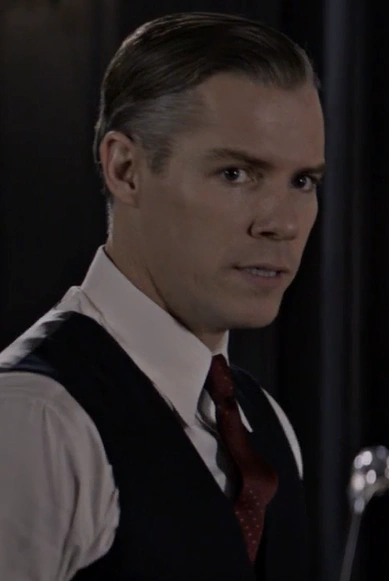
Langdon Shaw was an American No-Maj who lived in the early 20th century. He was the younger son of newspaper magnate Henry Shaw Senior. He had at least one sibling, an older brother Henry Shaw Junior who was elected to the United States Senate in 1920. Chafing beneath the shadow of his older sibling, Shaw was also a supporter of the New Salem Philanthropic Society who tried to assist Mary Lou Barebone with her efforts to solicit the influence of Shaw News in their efforts to expose wizardkind.
Early life
While his older brother, the senator Henry Shaw Junior, was Shaw Senior's pride and joy, Langdon was viewed as something of a failure and disappointment. This did not stop him from constantly trying to seek his father's approval.
The Obscurus
Meeting the Barebones
On 6 December 1926, Langdon brought Mary Lou Barebone from the New Salem Philanthropic Society and her adopted children Credence, Chastity and Modesty to Shaw News meet with his father. Barging into Shaw Senior's office, Langdon laid out a portfolio filled with a series of photographic evidence of witchcraft and told his father of his belief that "strange things [were] going on all over" New York and that the people behind these incidents were "not like [them]," certain that he was giving him the scoop of the century. His father and brother both dismissed his claims.
Henry Shaw Senior refused to give Mary Lou the support of his newspaper company and his elder son's re-election platform, and asked the Barebone family to leave. While they were departing, Mary Lou's adopted son Credence dropped a leaflet, which Henry Shaw Junior handed back to him, while unashamedly and cruelly calling him a freak.
Attack on the Fundraising Dinner Hall

Langdon later attended his brother's fundraising dinner with his father. While his brother was in the middle of his speech, an invisible force burst forth from beneath the organ. It soared across the hall, sending tables flying, and throwing people around as it carved a line toward the stage where Shaw Junior was still standing. Langdon watched as the invisible force threw his brother backwards against his poster, and then raised him up high where he was suspended for just a moment in midair before being thrown violently back down onto the stage, dead. In the midst of sounds of anguish and panic from the crowd, his father crouched beside his slain son. Langdon, who was slightly drunk, determinedly and triumphantly stated that this was the work of witchcraft.
Obscurial attack on New York
Langdon, drunk, stares, enthralled and amazed with the spectacle.
On the next night, 7 December 1926, Langdon was present when Credence Barebone unleashed his Obscurus on New York, and MACUSA began magically sealing off the subway entrance where Credence had taken refuge. Having seen magic first-hand, Langdon revelled in the spectacle as Shaw Senior vowed to expose the wizarding kind. When the dawn of 8 December came, Newton Scamander unleashed Frank the Thunderbird, who created a rainstorm laced with Swooping Evil venom, Obliviating all No-Majs' memories of magic, including Langdon's, who stood in the rain as his expression grew blank.
Personality and traits
Shaw Senior and the senator look dubious—all too used to Langdon’s harebrained little projects and interests.
Langdon Shaw was an excitable young man with a proclivity for wild ideas. He was frustrated by living in his elder brother’s shadow, and constantly tried to seek his father's approval and attention. He was also excited to try to show he had authority or power. Langdon appeared to have a tendency to drink too much alcohol.
Family
Langdon's relationship with his father and brother seemed to be quite poor. His father Henry Shaw Senior saw him as a disappointment and was rather contemptuous of him, constantly dismissing Langdon and even refusing to listen to anything he said, including his belief in witchcraft, all the while favouring and praising his brother Henry Shaw Junior.
Sources
Adapted from the original article, under CC BY-SA 3.0.