Creature
Dragon
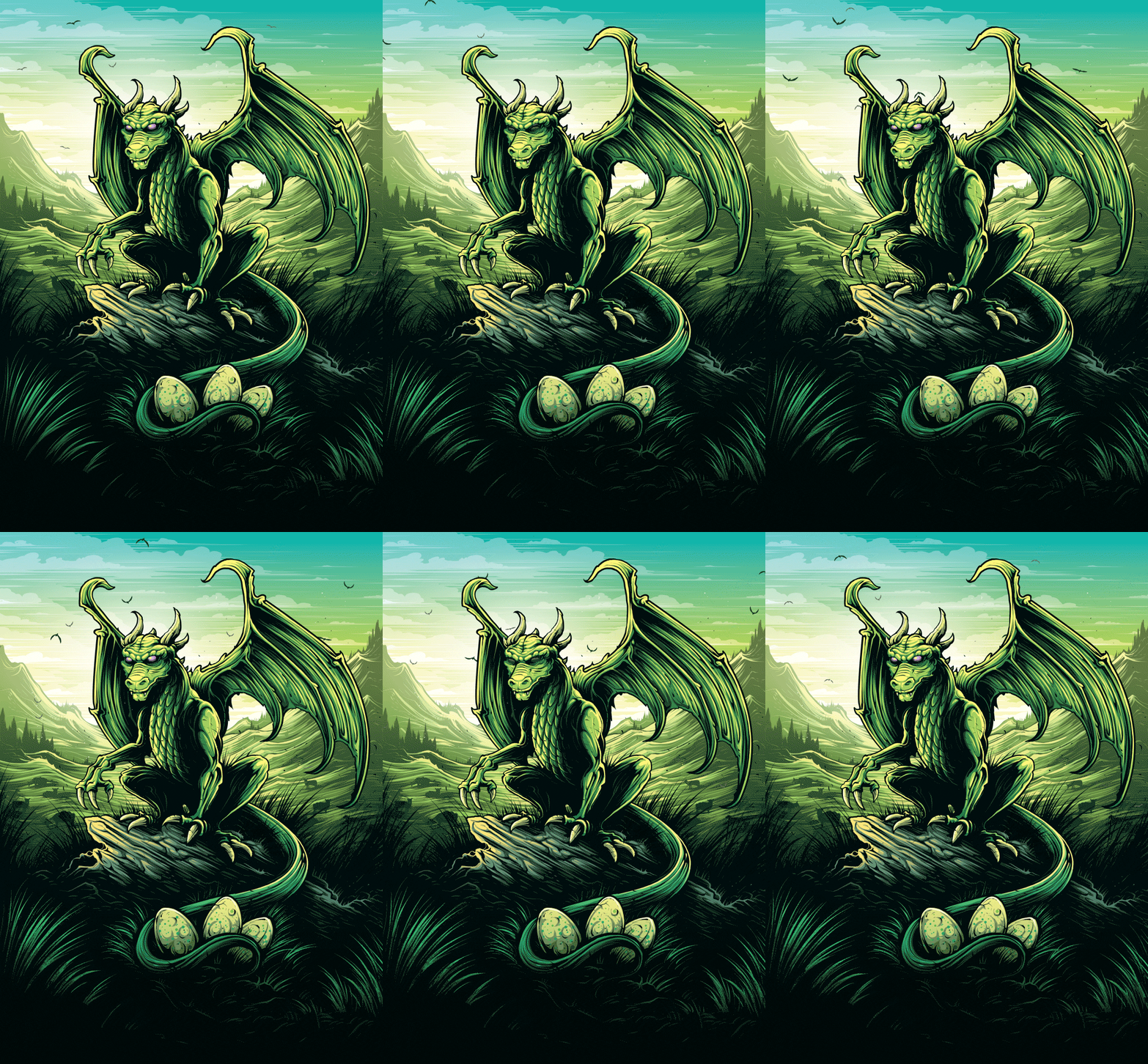
Dragons were giant winged, fire-breathing reptilian beasts
Four fully grown, enormous, vicious-looking dragons were rearing on their hind legs inside an enclosure fenced with thick planks of wood, roaring and snorting torrents of fire were shooting into the dark sky from their open, fanged mouths, fifty feet above the ground on their outstretched necks.
Dragons were giant winged, fire-breathing reptilian beasts. Widely regarded as terrifying yet awe-inspiring, they could be found all over the world and were frequently referred to in Asian and medieval European folklore. Able to fly and breathe fire through their nostrils and mouths, they were one of the most dangerous and hardest to conceal creatures in the wizarding world.
One of their body parts, the heartstring, could be used as the core of a wand and was designated by Garrick Ollivander as one of the "Supreme Cores", which was a distinction shared by only two other beasts. Wandmakers in the past have also tried to make wand cores out of other parts of dragons but these wands were generally less powerful and so the practice was abandoned.
The British Ministry of Magic classified them as XXXXX, known wizard killers that were impossible to train or domesticate. Despite how dangerous they were, there were people who were trained to work with them, called dragon keepers, or dragonologists. A wizard or witch who traded and sold dragon eggs (which was an illegal activity) was referred to as a dragon dealer. It was also a possible, yet rare, corporeal form of the Patronus Charm.
Early life
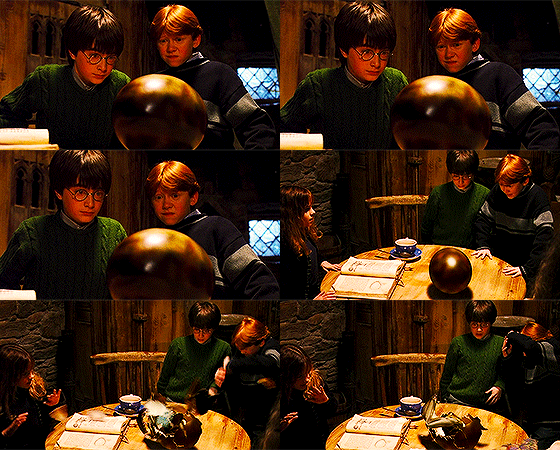
Your dragon requires a lot of care during these first few months.
Dragon mothers breathed fire on their eggs to keep them warm. They did not keep their eggs in nests. Newly born dragons were referred to as chicks. The dragon's first fire breaths, usually accompanied by thick grey smoke, appeared when the dragon was around six months old. However, they were known to produce involuntary sparks when they were newly hatched.

However, the ability to fly was normally developed later, at around twelve months, and the dragon would not be fully mature until it was two years old, having developed both of these abilities, and ready to live on its own. Dragon Breeding for Pleasure and Profit stated that you were to feed a baby dragon a bucket of brandy mixed with chicken blood every half hour. This apparently served as a replacement for dragon milk.
A human caring for a dragon egg needed to maintain the right temperature in place of its mother's breath. Fresh air influenced the length of its head and tail, while the mood that the area provides influenced the size of its body. Playing music was particularly helpful. If any of these three things were not adequately achieved, the egg did not hatch.
Social behaviour
Not much is known about dragon behaviour, however it seemed that, at least with the Chinese Fireball breed of dragons, females were generally larger and dominant over males, while female Norwegian Ridgebacks were generally more ferocious than the males. Fantastic Beasts and Where to Find Them stated that sometimes females ousted males from their territories, at least with the Antipodean Opaleye.
It also stated that Fireballs were unusual in that they were willing to share territory with one another, although when it came to other species of dragon, no more than three dragons would share the same territory. This indicated that dragons were highly territorial. Dragons were generally highly aggressive towards anything, even wizards, and would sometimes attack humans without provocation, such as in the case of the Ilfracombe Incident. However, there were some dragons that actually seemed perfectly friendly towards humans.
According to Amaru Bravo, a world-renowned dragonologist from Peru, dragons got hungry, tired, lonely, and more, just like any creature in the world. They were either all complex creatures or as simple as one another. Dragons, despite their ferocity and propensity to attack seemingly without cause, could be calmed to the point where they might not attack unless provoked. With careful study and a lot of patience, one could learn to understand their true nature.
History
The Great Fire of London in 1666 was probably started by a young Welsh Green Dragon kept in the basement of the house in Puddling Lane.
Dragon breeding was outlawed by the Warlocks' Convention of 1709. In 1799, a Ukrainian Ironbelly dragon carried off a Muggle sailing ship. Fortunately, there was no one aboard the ship at the time. In 1802, according to an unsubstantiated report, off the coast of Norway, a Norwegian Ridgeback dragon (supposedly) carried off a whale calf.
At some point by the 1890s, a group of poachers organised an illegal dragon fight club. After Hufflepuff student Poppy Sweeting and her friend freed the captive dragons, they also reclaimed an egg that belonged to a Hebridean Black that they freed, tracked her down, and returned the egg. Poppy's friend had experienced dragons before. During their flight on a flying carriage with Professor Fig and George Osric to Hogwarts before the school year started, Ranrok's Hebridean Black launched an attack on them. It ripped through the carriage, killing George, though Fig and the student were able to escape.
Newt Scamander worked for a time in the Dragon Research and Restraint Bureau at the British Ministry of Magic. He also spent World War I working with Ukrainian Ironbelly dragons on the Eastern Front.

A rogue Welsh Green dragon descended on a beach full of Muggle holidaymakers in 1932. Tilly Toke and her family happened to be there, and her family cast the largest mass of Memory Charms of the century on all the Muggles of Ilfracombe. She was later awarded the Order of Merlin, First Class for her quick action to avoid breaking the International Statute of Secrecy. The Muggles later remember nothing of the incident, with the exception of an old fellow known as Dodgy Dirk, who continued to claim that a "dirty great flying lizard" attacked him on the beach. However, Muggles did not believe him and considered him to be crazy.
In the 1970s, a rogue Antipodean Opaleye dragon killed several kangaroos in Australia. It was a male, believed to have come to Australia in search of a place to live after being ousted from its territory in New Zealand by a female.
In 1992, Harry Potter, Ron Weasley, and Hermione Granger arrived just in time to see a baby Norwegian Ridgeback emerge from its egg, which had been under the care of Rubeus Hagrid. The baby dragon sneezed some sparks and almost bit Hagrid (who was delighted). The first signs of hatching must have begun by breakfast time, since it was then that Harry, Ron, and Hermione received a note from Hagrid informing them of it. They went to his hut right after their morning Herbology class.
Dragons in the wizarding world
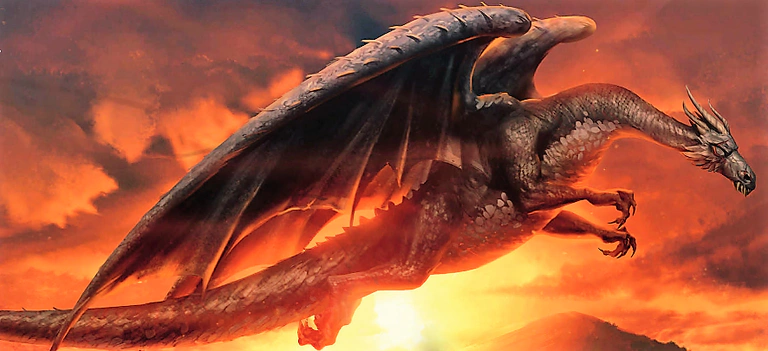
Draco Malfoy's first name came from the constellation The Dragon ("Draco" in Latin). The motto of Hogwarts School of Witchcraft and Wizardry was Draco dormiens numquam titillandus; Latin for Never tickle a sleeping dragon.
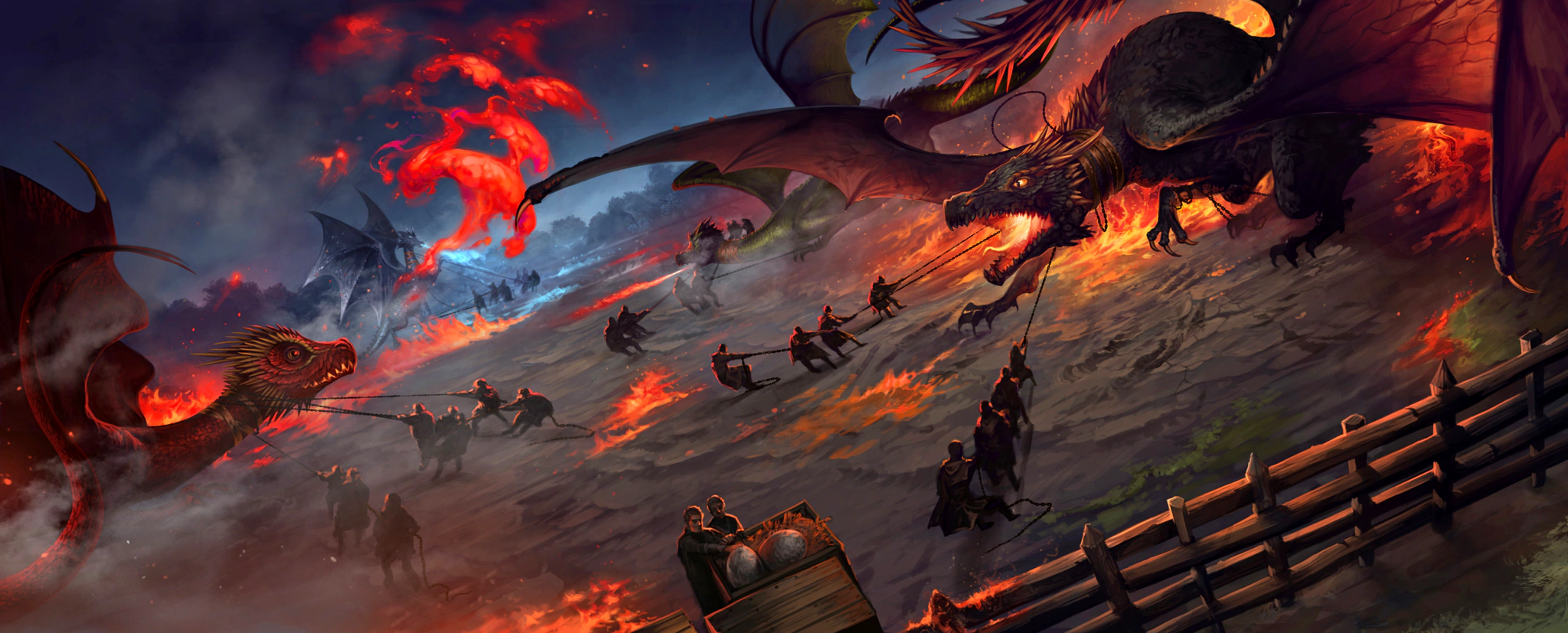
The Hogwarts gamekeeper, Rubeus Hagrid, loved and adored dragons, briefly owning a Norwegian Ridgeback named Norbert, who turned out to be a female and was subsequently renamed Norberta. In 1993, the Minister for Magic, Cornelius Fudge, suggested placing dragons to guard the school from Sirius Black after being compelled to remove the Dementors, something that Albus Dumbledore thought Hagrid would be very happy with.
Many useful materials came from dragons, but they were hard to obtain (see Uses below). It took almost half a dozen wizards just to stun a dragon. Muggles believed that dragons were a mere myth, but they had been known on occasion to glimpse these beasts, and thus the dragon became a huge staple of European and Asian legends. To prevent them from being seen by Muggles, and to protect them from poaching, dragons were kept in dragon reserves around the world, most of which were far from human habitation. Dragons couldn't be domesticated, despite individuals trying to do so.
However, it was possible to condition them via torture to make them somewhat subservient, as Gringotts Wizarding Bank had done to the one guarding the lower vaults, who had been trained to expect pain upon hearing a certain noise. The selling of dragon products was closely regulated by the British Ministry of Magic, and only dragon species that were over-breeding were killed to make these items. Those who studied dragons were known as dragonologists.
A dragon was mentioned in a song heard by Newt Scamander and his friends at the speakeasy known as the Blind Pig in 1926 New York. Also, the curse Fiendfyre produced flames in the shape of dragons, and Gringotts Bank employed dragon feeders. The position included fireproof robes and paid 7 Galleons per week.
Uses
Dragons were used in the First Task of the Triwizard Tournament of 1994, in which the champions had to retrieve a golden egg from a nesting mother. The varieties used were the Hungarian Horntail, the Chinese Fireball, the Swedish Short-Snout, and a Common Welsh Green. Ron Weasley's brother Charlie worked with dragons in Romania at the time, and helped transport the dragons used in the Tournament.

Dragons were also used to guard certain vaults at Gringotts Wizarding Bank, and one was used by Harry Potter, Ron Weasley and Hermione Granger to escape the bank following their break-in in 1998.
Though they couldn't be domesticated, there was one known instance of a dragon being used as a mount. In May 1998, Harry Potter, Ron Weasley, and Hermione Granger rode on the back of a dragon, though they had trouble maintaining a grip on their steed and could not control its flight. During the 1993–1994 school year, before playing in the Quidditch final against Slytherin, Harry dreamed that the Slytherin team were flying on dragons instead of broomsticks. When he awoke, he realised that, in reality, they would not be allowed to ride dragons.

The dragon model, like the model in the First Task of the Triwizard Tournament of 1994, was used in a roast chestnuts sale near Weasleys' Wizard Wheezes in Diagon Alley to hold the chestnut in place.
Dragon milk could be used to create dragon milk cheese, as noted in the revised edition of Charm Your Own Cheese. Madam Rosmerta owned a silk dressing gown embroidered with dragons, which she was wearing on the night in June 1997 when Harry Potter and Albus Dumbledore Apparated back from the Crystal Cave. There was also a disease called Dragon Pox in the wizarding world, which was originally contracted by wizards working with dragons. In rare cases, a corporeal Patronus might take the form of a dragon.
- Material Use - Dragon blood Harry Potter and the Philosopher's Stone - Dragon claw Harry Potter and the Order of the Phoenix - Dragon dung Harry Potter and the Chamber of Secrets - Dragon eggs Chinese witches and wizards. - Dragon heart Harry Potter and the Goblet of Fire - Dragon hide Harry Potter and the Order of the Phoenix - Dragon horn Class B-Tradable Material by the British Ministry of Magic. - Dragon liver Harry Potter and the Philosopher's Stone - Dragon meat Harry Potter and the Order of the Phoenix - Dragon spike Harry Potter: Magic Awakened
Books
Tried and tested tips to help you breed dragons, including the old-time favourite of brandy and chicken blood every half hour for newly-hatched chicks.
• A Dragon-Keeper's Guide

Handling
Dragons are extremely difficult to slay, owing to the ancient magic that imbues their thick hides, which none but the most powerful spells can penetrate...
Dealing with dragons required bravery, but it was also wise to be cautious. It was important to remember that bravery and recklessness were not the same thing. The study of dragons was a dangerous business, potentially even deadly from the slightest miscalculation.
There were several strategies that a witch or wizard might have used to save their life when encountering dragons. The best strategies were prevention, escape, and magical manipulation, in that order. The best way to deal with dragon-related incidents was to prevent them from happening in the first place, which was achieved through careful planning and smart choices. Failing all that, one had to resort to the extremely non-preferable option of direct conflict. Distraction was also employable to circumvent a dragon's strength. An example was when Cedric Diggory transformed a rock into a dog to distract the beast.
Dragon skin was imbued with ancient magic so that it could resist most spells. A simple Stunning Spell, for example, would have no effect, although a dozen wizards casting the Stunning Spell at once could stun a dragon. In the 1994 Triwizard Tournament, the idea that multiple wizards using the same spell on a dragon could indeed stun it was proven, as Charlie Weasley and several other dragon keepers used multiple Stunning Spells to successfully subdue several dragons.
While dragons resisted most spells due to their hides, their eyes were their weakest point, and, as such, the Conjunctivitis Curse, which caused irritation to the eyes, remained effective on them. In the Triwizard Tournament, Durmstrang champion Viktor Krum used this curse on a dragon, with satisfying results. However, blind or not, an angry dragon was dangerous all the same. Dragons were also vulnerable to the Sleeping Charm, which could magically manipulate a dragon into becoming harmless. Fleur Delacour succeeded in putting a Common Welsh Green dragon into a trance or bewitched sleep during the Triwizard Tournament. It was also vital for a dragonologist to be proficient with the Shield Charm.
Known breeds
There was a silvery blue one with long, pointed horns, snapping and snarling at the wizards on the ground, a smooth-scaled green one, which was writhing and stamping with all its might, a red one with an odd fringe of fine gold spikes around its face, which was shooting mushroom-shaped fire clouds into the air, and a gigantic black one, more lizard-like than the others, which was nearest to them.
There was no officially sanctioned breeding of dragons, as dragon breeding was outlawed by the Warlocks' Convention of 1709. However, they had been known to interbreed, producing rare hybrids. Below is a list of the ten known pure-bred breeds of dragons according to the fifty-second edition of Fantastic Beasts and Where to Find Them:
- Breed Image Description - Antipodean Opaleye Native to New Zealand, the Opaleye was generally considered one of the most beautiful dragons, with pearly scales that lined its body, and glittering multi-coloured eyes that had no pupils. It was a loyal creature and the least aggressive of all dragons. - Chinese Fireball Native to China, the Fireball was scarlet and smooth scaled with a fringe of golden spikes around its snub-snouted face and extremely protuberant eyes. Its name came from the ball shaped flame that it breathed out. It was also known as the "Lion Dragon". - Common Welsh Green Native to Wales in Great Britain, the Common Welsh was green in colour and had two spiked horns that resided on top of its head. The tail was very stream-lined with a single pointed tip at the end. It had a distinctive, melodious roar and shot fire in narrow jets. - Hebridean Black Native to the Hebrides islands of Scotland in Great Britain, it had dark rough scales, ridges along its back, and a tail tipped with an arrow-shaped spike. The Hebridean Black had brilliant purple eyes and could grow to be up to thirty feet long. Because of its aggressiveness, each one required a territory of 100 square miles. - Hungarian Horntail Native to Hungary, it had black scales and was lizard-like in appearance. It also had yellow eyes, bronze horns, and similarly coloured spikes that protruded from its long tail. Its fire breath could go as far as fifty feet and could reach extremely high temperatures, enough to make a stone turn red hot in seconds. It was considered to be the most dangerous and aggressive of all dragon breeds. - Norwegian Ridgeback Native to Norway, it resembled the Hungarian Horntail, except for the black ridges on its back and the browner texture in its scales. This breed was known to develop the ability to breathe fire much sooner in life than other breeds. Females were more aggressive than males. - Peruvian Vipertooth Native to Peru, its scales were smooth and copper-coloured. It also had black ridge-markings and short horns on its head. It was highly venomous, as well as being the smallest and fastest known breed of dragon. - Romanian Longhorn horns, when powdered, were a high demand potion ingredient and a Class B Tradeable Material. - Swedish Short-Snout Native to Sweden, its scales were silvery blue. Its powerful flame was also a brilliant blue colour and was hot enough to reduce timber and bone to ashes in seconds. It preferred to live in uninhabited areas, and, because of that, had fewer deaths to its name than other dragon breeds. - Ukrainian Ironbelly Native to Ukraine, it was a bipedal breed and was metallic grey in colour. It had an immense wingspan, long talons, and rough scales said to be as hard as steel. It was the largest breed of dragon ever recorded, reaching up to six tonnes, and its eyes were deep red. Sometimes the eyes seemed to be the same colour as its body because of a protective scale. It was more rotund and a slower flyer than other breeds.
The existence of these two dragons were only shown on a page of notes concerning the book Dragon Breeding for Pleasure and Profit.
- Breed Image Description - Catalonian Fireball Native to Catalonia in Spain, it appeared to have a black or possibly scorched, somewhat oddly shaped snout and possessed a row of spikes that descended down its neck. Two black horns resided on the top of its head. - Portuguese Long-Snout Native to Portugal, its appearance was somewhat similar to that of the Catalonian Fireball, with a ridged neck and scaly hide, but with a longer snout and pointier horns.
Sources
Adapted from the original article, under CC BY-SA 3.0.