Place
Gringotts Wizarding Bank
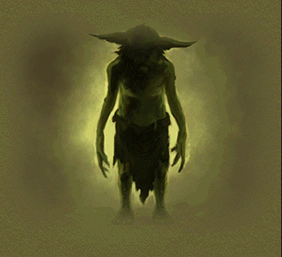
Only wizarding bank in Great Britain, and was owned and operated by goblins
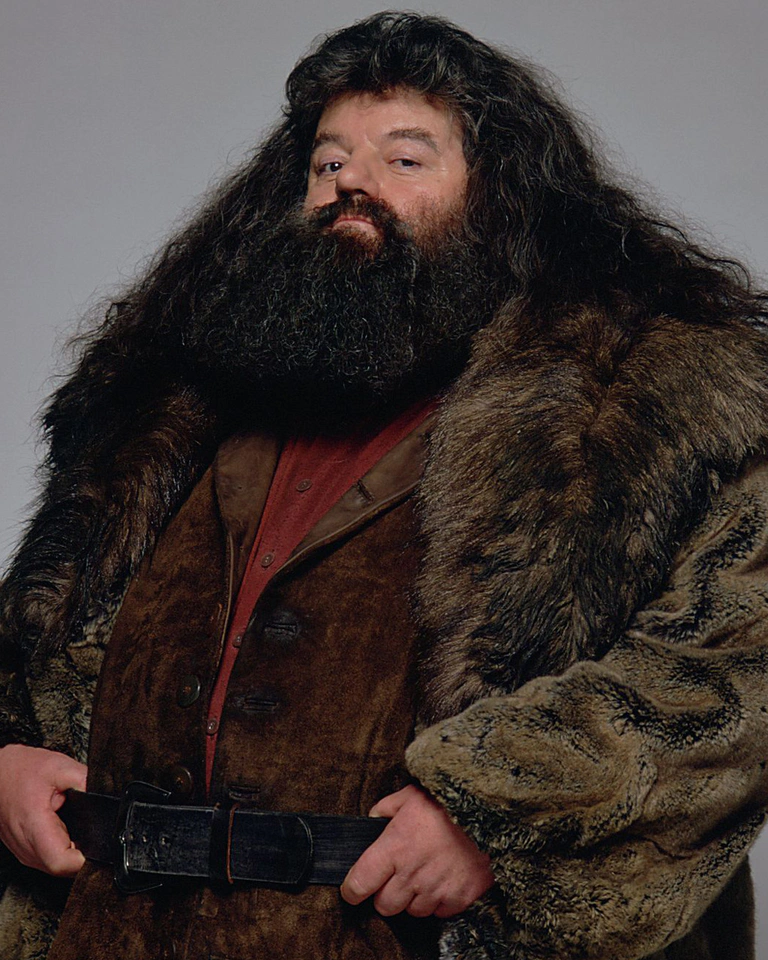
Never mess with goblins, Harry. Gringotts is the safest place in the world fer anything yeh want ter keep safe — 'cept maybe Hogwarts.
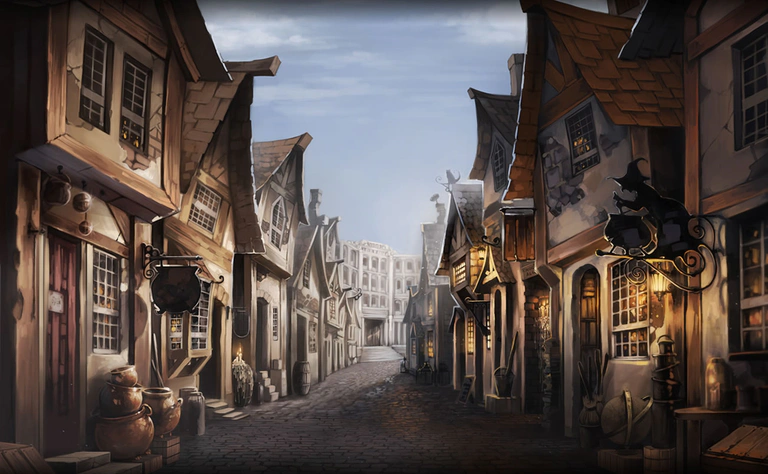
Gringotts Wizarding Bank was the only wizarding bank in Great Britain, and was owned and operated by goblins. It was founded by a goblin named Gringott in 1474. Its main offices were located around the North Side of Diagon Alley in London, England.
In addition to storing money and valuables for wizards and witches, one could go there to exchange Muggle money for wizarding money, which appeared to not be very difficult, as shown when Hermione Granger's parents did so while paying for her school supplies. The currency exchanged by Muggles was later returned to circulation in the Muggle world by goblins.
Gringotts also served as a workplace for the production of a portion—if not all—of British wizarding coins. In the process, the coins were pressed using the Gringotts Mints. The bank also had its own bureau de change, issued cheques and bank notes, granted loans to wizarding businesses, had a specific form for client bank transactions, and its own mail system. According to Rubeus Hagrid, other than Hogwarts School of Witchcraft and Wizardry, Gringotts was the safest place in the wizarding world.
The motto of Gringotts Wizarding Bank was Fortius Quo Fidelius (or Forteus Quo Fidelus), a Latin phrase that meant "Strength through loyalty".
Location
Gringotts Wizarding Bank was located on the north side of Diagon Alley. It was the side closest to the Leaky Cauldron and, thus, closest to Charing Cross Road and Muggle London. The bank was located near Potage's Cauldron Shop, Flourish and Blotts, and Florean Fortescue's Ice Cream Parlour.
Early history
The bank was created by the goblin Gringott in 1474. The creation of Gringotts was considered to be linked to the 14th Century Wizarding Economic Bubble, which happened the century before. It was established not long after the Soap Blizzard of 1378, a volatile event which burst the economic bubble.
The bank was put in the hands of the Ministry of Magic shortly thereafter, being under some degree of wizarding management already by the 1500s when Tertius applied for the job of Curse-Breaker to two wizards who were discussing job vacancies at the door to Gringotts. In 1865, the Ministry decided to put full control of Gringotts back in goblin hands.
Shortly after it opened, Percival Rackham and Charles Rookwood commissioned vault twelve which they protected with ancient magic. They left behind a path, including a key which served as a Portkey, which only those with the ability to detect ancient magic could follow. It was not opened for hundreds of years. In 1890, the key was given to Eleazar Fig and his student which led to unidentified ruins where the student unlocked a private entrance to Gringotts. The goblin on the front desk was surprised and took them to vault twelve with instructions to lock them inside it. Through exploration, the student found a Pensieve inside it.
19th century
On 1 September 1890, Eleazar Fig and his student entered the mysterious Vault 12 at Gringotts, where they passed a trial set by the Keepers, and gained access to the memories of Percival Rackham. As they came to terms with the power of ancient magic, Ranrok was assisted into Gringotts by a Gringotts guard loyal to him. Ranrok, his supporter and Belgruff, another supporter of his, aimed to find the truth behind ancient magic to weaponise it for themselves (a key cause behind Ranrok's goblin rebellion). Ranrok murdered a goblin banker who protested his entry, but both were then fought off by a Pensieve Guardian.

Ranrok discovered they had opened the vault and entered it. He killed the goblin which let them in and demanded answers from Eleazar and the student. They engaged in a duel which destroyed the Pensieve and transformed it into a giant knight which protected them. In the process, Eleazar and the student escaped the vault and Gringotts. Though at least one goblin guard at the bank was a member of Ranrok's army, Gringotts as a whole was not sympathetic to his cause and this was only cemented by Ranrok's murder of a goblin banker during his break-in.
20th century
On 29 November 1926, Gringotts was put on lockdown with protective enchantments cast.
1990–1991 break-in

During the 1990–1991 school year, a capped Dark wizard attempted to break into Sir Elric Parpidum's vault. As part of an Auror work experience programme, Alastor Moody tasked seventh-year students Merula Snyde, Nymphadora Tonks, and their friend with investigating the crime scene and taking witness statements, though Griphook refused to divulge the vault's contents due to client confidentiality.
The thief was later revealed as Eustace Burke, a former St Mungo's Healer and agent of 'R', who intended to steal Chinese Fireball claws for a potion; the news was reported back to Gringotts following Burke's apprehension.
1991 break-in


Investigations continue into the break-in at Gringotts on 31 July, widely believed to be the work of Dark wizards or witches unknown. Gringotts goblins today insisted that nothing had been taken. The vault that was searched had in fact been emptied the same day. "But we're not telling you what was in there, so keep your noses out if you know what's good for you," said a Gringotts spokes goblin this afternoon.
The break-in of 1991 was committed by Quirinus Quirrell, who was attempting to steal an object from Vault 713. The vault, one of the higher-security ones, held a small grubby bag, inside of which was the Philosopher's Stone. Albus Dumbledore sent Rubeus Hagrid to retrieve it while the latter was escorting Harry Potter to Diagon Alley in order to buy his school supplies.
Later that very same day after Hagrid and Harry left the Alley, someone, apparently a very powerful wizard, broke into the vault. Although he was unsuccessful in obtaining the Philosopher's Stone, the break-in shocked the wizarding world because it was practically unheard of for Gringotts to be robbed. The culprit was not caught, though it was later learned Quirinus Quirrell broke into the vault acting under orders from Lord Voldemort.
Second Wizarding War
During Lord Voldemort's control of the Ministry from 1997 to 1998, the bank was put yet again under the Ministry, which placed their own people in charge of the security at the institution.
1998 break-in
The vault we need to get into isn't empty, and I'm guessing its protection will be pretty powerful. It belongs to the Lestranges.
The break-in of 1998 was committed by Harry Potter, Hermione Granger, and Ron Weasley. Harry, Ron, and Hermione were aided by a reluctant Griphook in exchange for Godric Gryffindor's sword. They broke into the vault of Bellatrix Lestrange, where one of Lord Voldemort's Horcruxes (Helga Hufflepuff's cup) was hidden. They came to the conclusion that a break-in was necessary after Harry deduced the location of the Horcrux after the Skirmish at Malfoy Manor.
At the doors of the bank, two human guards had Probity Probes — devices that detected concealment charms. Harry quickly used a Confundus Charm on the two guards and Hermione passed by them unchecked. Once inside the bank they were in danger of being found out and Harry had to use the Imperius Curse on a goblin and a Death Eater named Travers in order for them to continue onward.
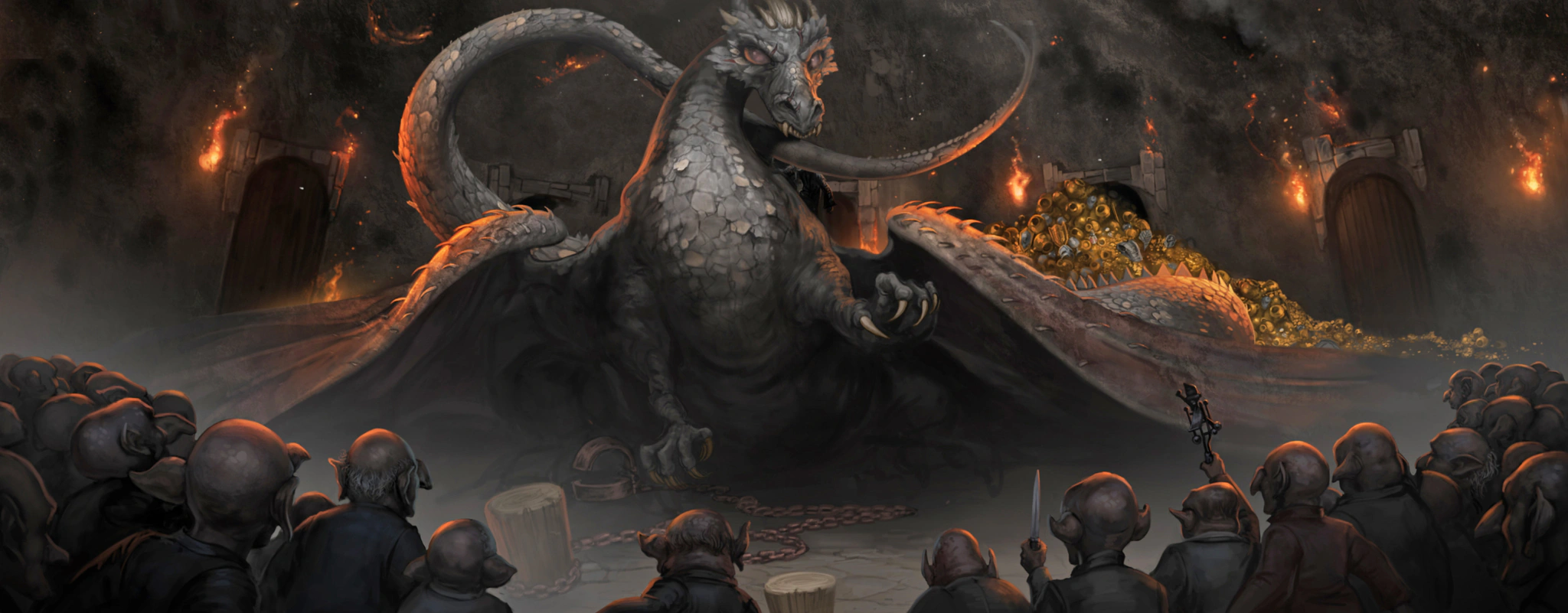
However, when they went into Bellatrix's vault, which was stocked with all manners of treasure, they found out that the treasure had the Gemino and Flagrante charms placed on it, which meant that thieves would be burned by the objects, which also duplicated until the thief was crushed under the burning weight of the fake treasure. The Trio still managed to escape with the Horcrux by fleeing on a half-blind dragon that was part of the security for the vault, leaving parts of the bank in ruins. Upon learning of this, Voldemort slaughtered a large number of bank guards and clerks, including Griphook, effectively venting out his rage and eliminating witnesses.
After the war
Following the defeat of Lord Voldemort at the Battle of Hogwarts and Kingsley Shacklebolt becoming acting Minister for Magic, the bank was presumably put back into goblin management. After their recent security breach and the escape of one of their dragons, however, Gringotts was quick to recondition their security measures. By 31 July the same year, they had replaced the dragons and security trolls that had previously guarded its high security vaults with a number of Sphinxes.
The goblins did not notify their clients about the changes to the security measures, however, as one of them, Mallory Twiddle, would later send in a letter to the Daily Prophet complaining about how he had been surprised by the change and ultimately unable to access his vault because of the difficult riddles asked by the Sphinx guarding it and wished they went back to the old arrangement.
By 8 February 1999, Gringotts had gone back to using dragons, as the bank announced that there was now an opening as Dragon Feeder at Gringotts through an advertisement in the Daily Prophet on said date.
21st century
During the Calamity that affected the wizarding world in the late 2010s and early 2020s, Gringotts, hoping to avert the potential economic disaster that the Calamity could cause, negotiated with a Calamity Investigator sent by the Statute of Secrecy Task Force on behalf of the wizarding community. As a result of these negotiations, Gringotts pledged to provide an unlimited line of credit to needy wizards during the Calamity, at a competitive rate of interest. Later, after an investigation began into a clandestine organisation known as the Unforgivable, British wizards were able to capture a member of this cabal, Gareth Greengrass. After his arrest, Greengrass entered into a deal with Harry Potter, where he agreed to disclose the names of the various socialites who also doubled as members of the Unforgivable, in exchange for medical assistance for his daughter. One of the names which Greengrass exposed was that of a Curse-Breaker at Gringotts.
Description
They had reached a snowy white building that towered over the other little shops.
Gringotts was an imposing snow-white multistoried marble building located partway down Diagon Alley, near its intersection with Knockturn Alley, that towered over the neighbouring shops. It was the place where British witches and wizards stored their money and other valuables, in heavily guarded vaults miles below ground.

When Harry Potter first visited Gringotts, he was told by Hagrid that one would have to be mad to try to rob Gringotts and that, apart from Hogwarts School of Witchcraft and Wizardry, it was the safest place for anything valuable to be kept. Goblins were extremely greedy and would protect their money and valuables at any cost, which made them ideal guardians for the valuables of the wizarding world. The goblins had a code that forbade them to speak of the bank's secrets, and would consider it "base treachery" to break any part of that code.
The centuries-old bank was run by goblins, and they alone knew the secrets of the twisting underground passages and the enchantments and creatures in place to defend against intruders. There was a rumour that Cornelius Fudge was trying to take over Gringotts when he was Minister for Magic; however, as it was published in The Quibbler, it was likely unsubstantiated.
Entrance and main hall
From Diagon Alley, a set of white stairs led up to a set of burnished bronze doors. The doors were flanked by a goblin in a uniform of scarlet and gold, though during the Second Wizarding War the goblin was replaced instead by two wizard guards with Probity Probes. This was the entrance to Gringotts, and it led into a small entrance hall and another set of doors. Engraved on these silver doors were the words:

Enter, stranger, but take heed Of what awaits the sin of greed For those who take, but do not earn, Must pay most dearly in their turn. So if you seek beneath our floors A treasure that was never yours, Thief, you have been warned, beware Of finding more than treasure there.
Through these doors, also flanked with goblins, was a vast marble hall long counters stretching along its length with doors leading off to the vault passageways with around a hundred goblins sitting at them. The vaults extended for miles under the city and were accessible through rough stone, complex and interconnected passageways by means of magic carts that were operated by goblins. Dragons and other mysterious beasts lurked in the depths as additional security devices.
Private entrances to Gringotts could be arranged. They they were very uncommon. Those who had great wealth and/or power were the only ones capable of arranging it.
Gringotts vaults
The vaults were reached by means of small, goblin-driven carts that sped along miniature train tracks through the bank's underground tunnels.
In contrast to the grand marble of the entryway and the main hall, the passageways to the vaults were stone and dimly lit with flaming torches. They sloped down to a track, upon which ran little carts controlled by the goblins. These carts took visitors deep beneath the surface of the earth, through a "maze of twisting passages" to the vaults. The carts went very quickly, which made Hagrid a little queasy and prevented its occupants from getting a good look at their surroundings, and seemed to run on a vast, complex, interconnected series of tracks that allowed them to move to and between any vaults.

The vaults themselves varied in size and security. The largest, most well protected vaults belonged to the oldest and richest wizarding families and lay deepest beneath the surface. Those vaults closer to the surface seemed to be smaller and had fewer security precautions surrounding them — they used keys, for example, rather than requiring the touch of a goblin to gain access. The rules around who was allowed to access vaults seemed to change; sometimes wizards were asked for identification or a key to be allowed access, yet both Molly Weasley and Bill Weasley were able to get gold from Harry's vault for him.
It is possible there was a charm forcing the wizard to give the gold to its rightful owner. However, even this wouldn't explain how Sirius Black was able to order a Firebolt in Harry's name, but take the gold from his own vault — despite being an escaped convict at the time. It also seemed that only blood relations could inherit a Gringotts vault; Albus Dumbledore implied strongly that when Sirius died as the last of the Black family line, his vault was cleaned out and its contents added to Harry's, rather than Harry inheriting the vault as well, though this could be excused as due to Harry already having a vault the bankers would not see fit to grant him an additional one.
It seemed that any vault belonging to a criminal would remain guarded and untouched, as when all the Lestrange family were sentenced to Azkaban for life, their vault was not evicted, leaving it a safe-place for Voldemort's horcrux, though it is possible that they had non-criminal relatives who could be in possession of the vault during their incarceration, but as Sirius Black was the last Black by name for at least some of his sentence and his vault remained without anything being confiscated, it would seem that Gringotts operated outside of wizard law, at the very least in rights of ownership towards their vaults and what was kept inside.
There are several vaults that were known specifically:
+ - bgcolor="#cccccc" Vault Owner Description Notes - Vault 1 Unknown Contained loads of Knuts. rubies, emeralds, sapphires, yellow gems and diamonds. - Vault 2 Contained loads of Sickles. - Vault 3 Contained loads of Galleons. - Vault 12 Percival Rackham and Charles Rookwood key. It was protected with ancient magic and contained a Pensieve. Percival and Charles opened it in Tudor times and left behind a path for those that could detect ancient magic. - Vault 619 14 The vault required a key for entry, though the overall security for the vault's location was questionable, as a goblin might still take one to the vault without proof of actually possessing the said key. Simeon Woderuff, at one point, was forced to train a Griffin, Tiffin, to guard the content. - Vault 687 Potter family The vault required a key for entry, and was at a moderate depth — further down than the Weasley Vault but not as far as Vault 713. parents had left him a great deal of money in a vault. - Vault 688 Unknown It faced Vault 687. - Vault 711 Black family in general) Harry Potter and the Half-Blood Prince Given its depth, it was likely a high-security vault. Harry Potter and the Prisoner of Azkaban Upon Sirius's death, he left all the money in the vault to Harry in his will. - Vault 712 Instead of being used as a regular vault, it was used by the goblins as a (presumably unsanctioned) lounge, suggesting it was unused. - Vault 713 Possibly the Flamel family A higher-security vault that used to hold a small grubby bag, inside of which was the Philosopher's Stone. It is reasonable to assume that the vault, like the stone housed within it, belonged to Nicholas Flamel and his wife. Hogwarts in 1991 while he took Harry Potter to Diagon Alley. Later that very same day, someone, apparently a very powerful wizard, broke into the vault. Harry Potter and the Philosopher's Stone - Vault 998 Quirinus Quirrell (prior to his death) Located in the new vault area. A key was needed to gain entry. - Lestrange Vault Lestrange family Flagrante. false sword of Godric Gryffindor, unknown to the Lestranges that it was actually a fake. broke into Gringotts in 1998. They managed to steal the cup, severely damaged the cavernous interior, and freed a dragon while escaping. - Spellbook vault Unknown special key consisting of five gemstones and guarded by a giant Fire crab known as the Vaults Guardian. spellbook. - Travers's Vault Travers Required a key. Death Eater named Travers, who was holding his key to his vault, also heading toward the bank. - Weasley Vault Weasley family Closer to the surface than Vault 687 and had fewer security measures. Harry Potter and the Chamber of Secrets - Pickering Vault Pickering family Probably located near the high-security Lestrange Vault. Harry Potter: Wizards Unite "Brilliant Event: First Year at Hogwarts"
Security
I got it out of your vault for you, Harry, because it's taking about five hours for the public to get to their gold at the moment, the goblins have tightened security so much. Two days ago, Arkie Philpott had a Probity Probe stuck up his ... Well, trust me, this way's easier.
Gringotts used a variety of security systems. Most lower security vaults, such as Harry Potter's, required a key; higher security vaults required the touch of a certified Gringotts goblin. Higher security vaults might have various enchantments upon the doors. For example, the door to Vault 713 needed to be stroked by a certified Gringotts goblin, which caused it to melt away. If anyone but a Gringotts goblin touched the door, the person would be sucked into the vault, which was checked for trapped thieves about once per decade. This, and the fact that visitors must travel in the mine carts to access the vaults, strongly suggests that there were Anti-Apparition Charms around the bank.
At various points, the bank had used dragons, security trolls, and Sphinxes to guard the highest security vaults, such as the vault of the Lestrange Family. Though affiliated with Gringotts, the dragons kept there were not actually "tamed" in the traditional way, in the sense that they were merely used to discourage intruders and unauthorised persons from approaching the vaults to which these beasts were stationed at. They were "conditioned" in an inhumane way that compelled them to retreat whenever they heard the sound produced by Clankers, which only the goblins possessed.

The usage of Sphinxes was troublesome for some clients when they wished to make a withdrawal but were unable to answer the riddles that the Sphinxes gave as security questions. Another security measure was the Thief's Downfall: a charmed waterfall that the goblin carts must pass through, it cancelled all enchantments and magical concealments and threw the carts off their tracks. Some vaults used the Gemino and Flagrante curses; when any item was touched by a thief, it multiplied rapidly and burned them, eventually crushing and scorching them to death. Objects within Gringotts couldn't be summoned. At times, Probity Probes were used on clients to detect enchantments, magical concealments, and hidden magical objects.
On his first visit to Gringotts, Harry was told by Hagrid to be cautious. Goblins were extremely greedy and would protect their money and valuables at any cost, which made them ideal guardians for the valuables of the wizarding world. This became one of the primary reasons that Voldemort chose to hide one of his precious horcruxes in the deeper vaults of the bank, and he was explosively furious when it failed his expectations. Ironically, Harry later did rob Gringotts with Hermione Granger and Ron Weasley, the only known successful theft in the history of the bank, by taking advantage of a former employee's knowledge of the inner workings of the bank. It is unknown if Harry was able to resume normal business with the bank following Voldemort's defeat.
During the Second Wizarding War, security of the bank was further enforced, as it was taking normal clients around five hours to make withdraws. Probity Probes were a known security measure used during this time, which could be stuck up a certain part of their bodies. Only employees of the bank would be able to get money out of a vault for a client much faster, as Bill Weasley did for Harry Potter.
Employment
Are you seeking a challenging career involving travel, adventure, and substantial, danger-related treasure bonuses? Then consider a position with Gringotts Wizarding Bank, who are currently recruiting Curse-Breakers for thrilling opportunities abroad
While Gringotts was largely staffed by goblins, including Griphook, Bogrod, and Ragnok, it is known that the bank did employ humans: Gringotts actively advertised career employment to Hogwarts students at least for Curse-Breakers, and might likely also do so to other wizarding schools elsewhere. Bill Weasley worked as a Curse-Breaker for Gringotts in Egypt, retrieving artefacts from ancient Egyptian tombs and pyramids after his graduation from Hogwarts.

When Bill wanted to do work for the Order of the Phoenix, he transferred to a desk job in England to be near home. That same year, Fleur Delacour took a job at Gringotts as well after participating in the Triwizard Tournament, to improve her English, though she only worked part-time. They also employed Dragon Feeders, a job with a high mortality rate, at an equally high salary of 7 Galleons per week.
At least during Harry Potter's break-in of the bank, there seemed to be a full-time security force that was comprised of wizard guards, who rushed to the scene when the Lestrange vault was broken into. Despite this, Griphook mentioned at that time that the goblins resented "wand-bearer" interference in their internal affairs.
Goblins
Gringott - founder of the bank
Ragnok
Ricbert
Nagnok
Blordak
Snaglok
Burgock
Odbert
Bodrag III
Garnuff's family
Gringotts Head Goblin
Unidentified goblin stockbroker
Unidentified Gringotts spokesgoblin
Tall goblin
Clever goblin
Magic goblin
Unidentified goblin at Gringotts in 1998 (I)
Unidentified goblin at Gringotts in 1998 (II)
Unidentified goblin at Gringotts in 1998 (III)
Unidentified goblin at Gringotts in 1998 (IV)
Unidentified goblin killed by Voldemort
Goblin Banker
Numerous unnamed goblins
Guards
• Gringotts Guard
• Unidentified Gringotts Bank goblin guard
• Marius
• Teffington
• Unidentified Gringotts guard (I)
Humans
Tertius - Worked as a Curse-Breaker during the 16th century.
Grilco Wuthering - former Head Curse-Breaker prior to 1890.
Photine - worked as a Curse-Breaker for Gringotts prior to her death sometime before 1890.
Thana - worked as a Curse-Breaker for Gringotts prior to her betrayal sometime before 1890.
Patricia Rakepick - former Head Curse-Breaker before she became the professor of Defence Against the Dark Arts during the 1988–1989 school year.
Bill Weasley - worked as a Curse-Breaker for Gringotts in Egypt, retrieving artefacts from ancient Egyptian tombs and pyramids, later took a desk job in 1995 to work with the Order of the Phoenix.
Fleur Delacour - took a part-time job with Gringotts after participating in the Triwizard Tournament, supposedly to improve her English.
Unidentified Gringotts Curse-Breaker (1980s)
Unidentified Gringotts Curse-Breaker - secret member of The Unforgivable.
Competition
Gringotts had no known competition in the wizarding banking industry, and was almost surely a monopoly in Britain. Rubeus Hagrid said it was the only wizard bank, but it isn't clear if he meant in Britain, or in the wizarding world as a whole. It is known, however, that the bank at least had dealings in Egypt, where Bill Weasley worked as a Curse-Breaker as of 1993.

Given that the bank was the only wizarding bank in Great Britain, it stands to reason that the goblins would have a tremendous amount of power over the wizarding economy, as goblins were also the force behind minting the British Wizarding currency, Galleons, Sickles, and Knuts. If they were active around the world, this might be true for other nations as well.
It is likely therefore, as goblins tended to be at odds with wizards on political and social levels, that the Ministry of Magic had laws set in place to stop Gringotts intentionally regulating the wizarding economy, likely through the Goblin Liaison Office.
Sources
Adapted from the original article, under CC BY-SA 3.0.