Thing
Philosopher's Stone
The Philosopher's Stone was a legendary alchemical substance with magical…
The ancient study of alchemy is concerned with making the Philosopher's Stone, a legendary substance with astonishing powers. The Stone will transform any metal into pure gold. It also produces the Elixir of Life, which will make the drinker immortal.
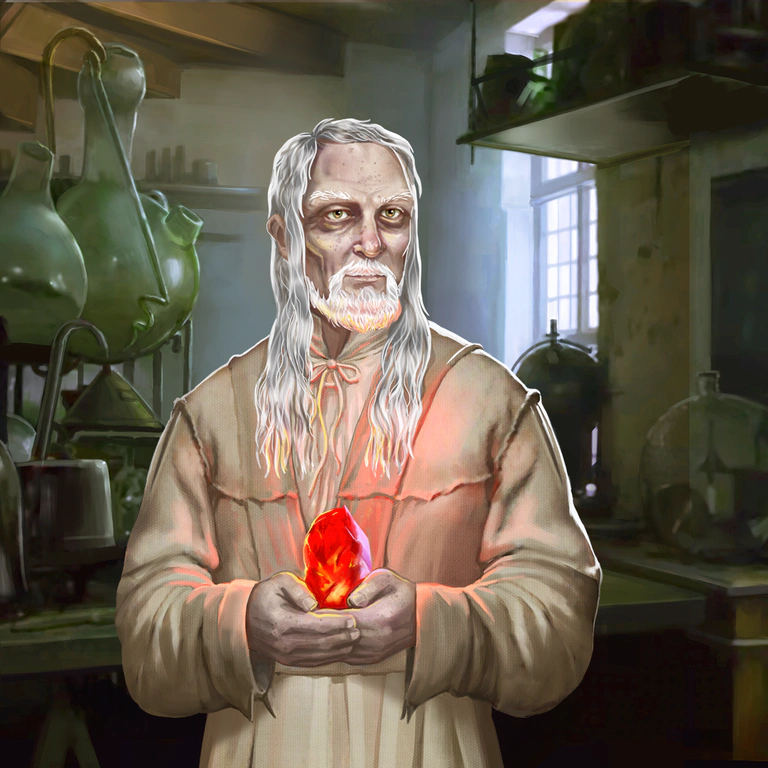
The Philosopher's Stone was a legendary alchemical substance with magical properties. The ruby-red Stone could be used to transform any metal into pure gold, as well as to create the Elixir of Life, which made the drinker immortal. The only known Stone to have ever existed was created by the famed French alchemist Nicolas Flamel.
Failed attempts to make the stone would result in the creation of a Failed Stone, a powerful object in its own right which possessed many of the abilities of the stone but was exceptionally unpredictable and dangerous in nature.
During the 1991–1992 school year at Hogwarts School of Witchcraft and Wizardry, Lord Voldemort made attempts to steal the Stone for his own purposes. The final, and almost successful, attempt resulted in a skirmish for possession of the Stone. However, Voldemort was foiled by eleven-year-old Harry Potter and his return to power was delayed.
Creation
Creating a Philosopher's Stone was one of the best known goals of Alchemy, and Alchemists have sought to produce the stone for centuries. Critics of the legend of the Deathly Hallows have suggested that Beedle the Bard (c. 15th century) was inspired to create the life-restoring Resurrection Stone from the life-extending Philosopher's Stone. In reality, the Resurrection Stone was, in fact, a genuine artefact with similar powers to its legendary depiction.
Despite countless attempts over the ages, the only Stone known to exist was created by famed French alchemist, Nicolas Flamel, sometime in the 14th century or later. Flamel used the Elixir of Life derived from the Stone to extend his and his wife Perenelle's lifespan for over six centuries.

While living in Place Cachée, Paris in 1927, Flamel kept the Philosopher's Stone in the back of a shelf next to his phoenix book in a glass dome where it could be seen when he met Jacob Kowalski. In 1929, Auror Lou Ferme believed that Gellert Grindelwald's acolytes was planning to steal the stone. During Gilderoy Lockhart's student days at Hogwarts, he would rant to anyone who would bother to listen about planning to achieve many impressive feats, one of which was to create a Philosopher's Stone before graduation; of course, he never did so. At some time before the 1990–1991 school year, the Stone was stored in Vault 713, a high security vault at Gringotts Wizarding Bank.
Protecting the Stone

I don't know how you found out about the Stone, but rest assured, no one can possibly steal it, it's too well protected.
At some point before or during the 1990–1991 school year, Albus Dumbledore had begun to grown concerned about the stone's safety in Gringotts due to rising dark forces that might seek the stone for themselves. He invited Flamel to Hogwarts under the pretence of asking him to give a lecture at St Mungo's in order to discuss the stone's security. Flamel was initially not convinced, however after a student stole a Failed Stone he had brought along for the demonstration, which had led to many objects in the castle being temporarily turned into gold including the student herself, he agreed that it would need more protection and accepted Dumbledore's offer to store the stone at Hogwarts.
In 1991, the Philosopher's Stone became the target of the Dark wizard Lord Voldemort, who intended to use the Elixir of Life to create a new body for his mangled soul after being disembodied during his failed attack on Godric's Hollow in 1981. It is unknown how Voldemort learned of the Stone. Voldemort used a human host, Quirinus Quirrell, to attempt to steal the Stone from Gringotts. However, by sheer luck and coincidence, Albus Dumbledore had had Rubeus Hagrid retrieve the Stone the very morning of the attempted robbery, in order to give it the protections he had agreed upon with Flamel.

The Stone was placed in a special chamber and guarded by seven enchantments and creatures, provided by the Professors at Hogwarts: Professor Sprout's web of Devil's Snare; Winged Keys, charmed by Filius Flitwick; a life-size board of Wizard's Chess, transfigured and animated by Professor McGonagall; Professor Quirrell's mountain troll; Professor Snape's potion riddle; and the Mirror of Erised, enchanted to hold the Stone by Albus Dumbledore. Rubeus Hagrid's massive three-headed dog, Fluffy, guarded the trap door through which the chamber was accessed.
In order to keep them safe from Fluffy and the other obstacles, Dumbledore forbade access to the third-floor corridor to all students. Harry Potter and his best friends Ron Weasley and Hermione Granger suspected that the Stone would be stolen. They mistakenly believed the thief was Hogwarts Potions Master Severus Snape, due to out-of-context conversations that they had overheard and Snape's general nature.
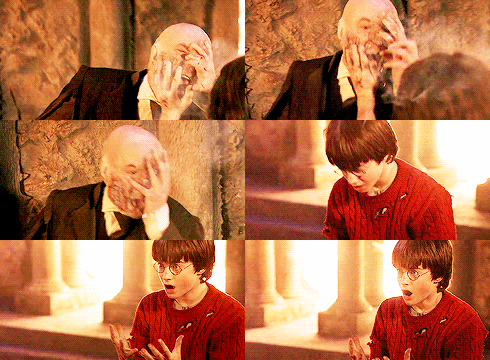
Harry felt compelled to protect the Stone and he and his friends, displaying intellectual power and heroism far exceeding their years, fought past the obstacles, until finally Harry was forced to face Quirinus Quirrell and Lord Voldemort himself. In the final showdown, Quirrell lost his life, and Lord Voldemort lost his meagre hold on the physical world once again.
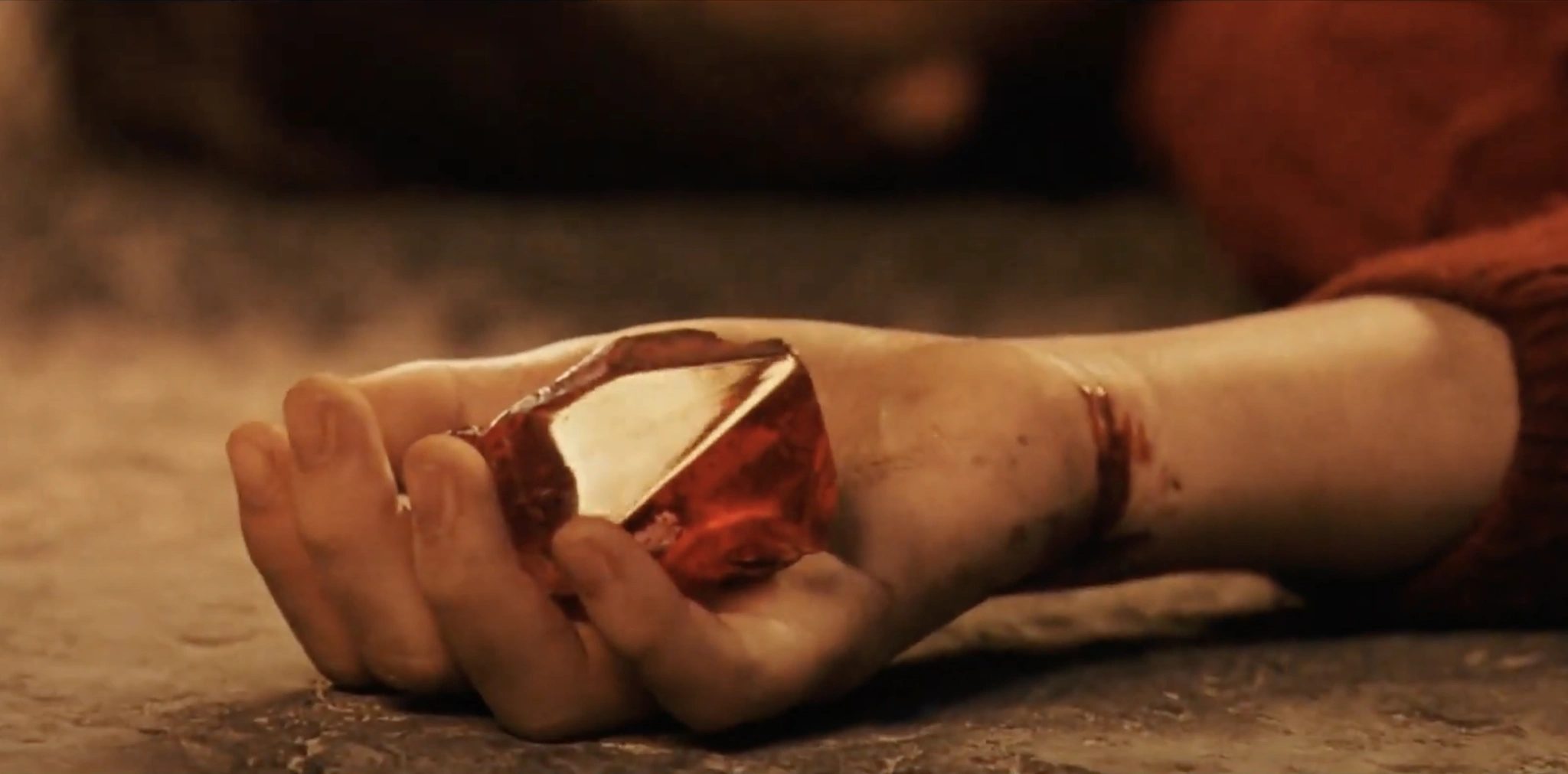
After securing the Stone, Albus Dumbledore and Flamel discussed its future and agreed that it was best to destroy it. Flamel ensured he and his wife had enough remaining elixir to set their affairs in order before they would ultimately die, a fate with which they were quite content. Upon learning this, Harry believed that this was a terrible price to pay but Dumbledore assured the young wizard that their deaths would be like "going to bed after a very, very long day", after living for over 600 years.
Aftermath

The Stone was not such a wonderful thing. As much money and life as you wanted, the two things most human beings would choose above all. The trouble is, humans do have a knack of choosing precisely those things that are worst for them.
After his failure, Voldemort correctly deduced that Dumbledore would destroy the Stone to prevent it from falling into the wrong hands again. Voldemort had then given up on the Stone and waited for another method to regenerate his body. He only wanted the Stone to create a body for himself, and nothing more, as being dependent on the Elixir and Stone for his immortality was unacceptable to him.
When Dumbledore's Army met for the first time in the Hog's Head Inn in 1995, Neville Longbottom incorrectly referred to it as the "Philological Stone" when discussing Harry's past achievements.
During the Calamity which affected the wizarding world, starting in the late 2010s, the Philosopher's Stone manifested as a Foundable, guarded by a Wizard's Chess piece Confoundable. Members of the Statute of Secrecy Task Force had to destroy the Chess piece with the Bombardment Spell, which released the stone and allowed it to return to its original time.
Nature
The Stone could turn any metal into pure gold, and it was used to produce the Elixir of Life, which extended the drinkers lifespan, thus preventing them from dying of old age. If drunken continuously, it effectively made the drinker immortal.

The downside was that once the drinker reached the end of their natural lifespan, they became totally dependent on the Stone and Elixir for their continued survival. Additionally, it only stopped them from dying, it did not stop them from ageing. After a few centuries of life, one became rather decrepit looking. The Elixir also only saved them from dying of natural causes, it did not prevent the drinker from being killed.
The Stone was variously described as red and white in the many old texts in which it appeared. These colours were important in most accounts of alchemy, and were often interpreted as having symbolic meaning.
According to a page in Advanced Potion-Making, "the Philosopher's Stone was believed to mystically amplify the user's knowledge of alchemy so much that anything was attainable."
Sources
Adapted from the original article, under CC BY-SA 3.0.