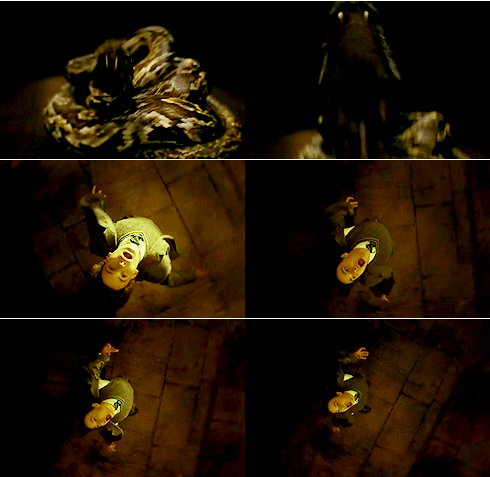
Person
Gilderoy Lockhart
Professor Gilderoy Lockhart, (b. 26 January 1964) was an English half-blood…

Fame's a fickle friend, Harry... Celebrity is as celebrity does, remember that.
Professor Gilderoy Lockhart, (b. 26 January 1964) was an English half-blood wizard, a Ravenclaw student at Hogwarts School of Witchcraft and Wizardry, and later a famous wizarding celebrity who authored many books on Dark creatures and his supposed encounters with them.
Prior to his tenure as Professor of Defence Against the Dark Arts at Hogwarts School of Witchcraft and Wizardry, specifically during the 1992–1993 school year, he received many prestigious awards, such as Order of Merlin, Third Class; Honorary Member of the Dark Force Defence League; and the Witch Weekly's Most Charming Smile Award five times in a row. He also invented an Occamy egg yolk shampoo at some point. This shampoo, however, was too dangerous and expensive for open market; it subsequently became his dream to be able to market and sell the product. His favourite colour was lilac.
Lockhart claimed he did many heroic acts, but it was later found out that he did not actually do them. He instead used his considerable talent in Memory Charms to force the actual people who had done them into forgetting what they did, while he took credit for the acts. Ironically, Lockhart lost all of his memory on 29 May 1993 due to a backfired Memory Charm cast by Ron Weasley's damaged wand.
Lockhart then became a permanent resident of St Mungo's Hospital for Magical Maladies and Injuries. He was institutionalised in the same ward as Neville Longbottom's parents (the Janus Thickey Ward for permanent spell damage). Following his hospitalisation, he dictated his final book entitled Who Am I?.
Early life (1964–1975)
It's not all book signings and publicity photos, you know. You want fame, you have to be prepared for a long hard slog.
Gilderoy Lockhart was born on 26 January 1964 to a Muggle father and a witch mother, and had two elder sisters, both of whom were Squibs. As the only one of her three children to exhibit magical ability, Gilderoy swiftly became their mother's unashamed favourite, thus greatly inflating young Gilderoy's sense of self-importance. He and his mother forgot, in their excitement, that Hogwarts was a school for all British and Irish wizards, and thus his introduction into the school along with everyone else was, in his eyes, extremely dull.
Hogwarts years (1975–1982)
Gilderoy Lockhart entered Hogwarts School of Witchcraft and Wizardry on 1 September 1975, a year below Jacob, and four years below James Potter, Sirius Black, Remus Lupin, Peter Pettigrew, Lily Evans, and Severus Snape. He was Sorted into Ravenclaw, but he came close to being a Hatstall, as the Sorting Hat also found him an excellent fit for Slytherin, but decided against it by a narrow margin.

He had hoped to be greeted by fans and thus become very popular, as in his mind he was already a fully-fledged genius with an exceptional magical prowess; the fact that he was merely ordinary, that more talented and gifted children were there, and that nobody was particularly impressed by his naturally wavy hair, disappointed him. He did have above-average abilities, and he was cleverer than most of his classmates, but he had a bad flaw in that he would not try unless he was confident that he was the best of whichever particular team, group, or class he happened to be with at the time.
Gilderoy did achieve good marks and his teachers did think that, with hard work, he might be able to make something of himself. Even if he fell short of his ambitions that he would freely share with anyone who bothered listening (he told them that he would succeed in creating a Philosopher's Stone before leaving school and that he intended to captain England's Quidditch team to World Cup glory, before knuckling down to becoming Britain's youngest Minister for Magic). Despite this, according to him at some point during his education he managed to play as Seeker for the Ravenclaw Quidditch team.
His vanity was such that he valued learning not for education, but because it granted him attention; he craved attention and prizes, and begged the Headmaster to start a school newspaper purely so he could see his own name in print. When this exploit failed to grant him any attention, he took to grander, more dramatic means of garnering attention. Though he had never been popular with the other students, he did manage to achieve small notoriety by carving his signature in twenty foot long letters into the Quidditch pitch (which also earned him a weeks' worth of detentions), creating a spell that shot a hologram of his own face into the sky in imitation of the Dark Mark, and sending himself eight-hundred Valentines, causing breakfast to be cancelled due to the number of droppings and feathers in the porridge. He increasingly devoted his talents to insincere shortcuts and cowardly dodges, focused on attention-seeking and neglecting true learning.
Career as an author (1982–1992)
Why, I remember the time when I was writing my second bestseller, Gadding with Ghouls. I believed that the more exposure I got in the press, the better my career would progress. Trouble was, I became overexposed! And it wasn't until I went mysteriously missing for three weeks, subsequently leaking the story to the Prophet that I'd been captured by Trolls in the wilds of Stockton-on-Tees, that I managed to regain my former prominent position as the world's most popular wizard.
After his graduation from Hogwarts in 1982 (with a faint sigh of relief from the school staff), Lockhart became an accomplished author, travelling to exotic parts of the world and, having mastered Memory Charms shortly after his graduation, tricking accomplished witches and wizards into revealing their greatest deeds and then erasing their memories, pretending he had done the things they did in his autobiographies. This sole focus on Memory Charms came at heavy cost. He didn't use any other magical spell or charms, causing him to become rather unclever in other skills.

Each time he returned to Britain, he brought with him a new book that chronicled an adventure that had supposedly happened over his travels. The books themselves were also self-promoting and filled with a wealth of invented details that were nothing but conceit, self-praise, vanity, gross exaggerations, and idle speculations that were all hot air and bilge water; known victims of his trickery included an Armenian warlock and a witch with a hairy chin. His books were very popular, and he reserved a special quill of peacock feather just for book signings.
He also received many awards for his supposedly great deeds and was invited to join the Dark Force Defence League as an honorary member, all the while managing to successfully hide his fraudulence. His former teachers, who were unaware of his status as a con artist, began to think that they might have misjudged him, due to his supposed bravery and resilience in combating the Dark Arts.

According to Lockhart, he initially believed that the more exposure he got in the press, the better his career would progress. By the time he was writing his second bestseller, Gadding with Ghouls, he became overexposed, something that damaged his popularity. He then went mysteriously "missing" for three weeks, after which he leaked to the Daily Prophet that he had apparently been captured by trolls in the wilds of Stockton-on-Tees. The story boosted his popularity once again. Through this experience, he claimed that one must be "sparing with [one's] public appearances, at first", as one might become overexposed.
At some point after the release of Wanderings with Werewolves, Gilderoy held a Wagga Wagga Werewolf symposium centred around his alleged experiences fending off the Dark Forces to talk about his supposed defeat of the Wagga Wagga Werewolf. Many influential people attended, including Cecil Lee of the Werewolf Capture Unit. During this event, he gave a public demonstration of the Homorphus Charm, which he claimed he could cast so effectively as to cure werewolves. During the same conference, he also said that werewolves were weakened by sunlight, which was incorrect.
Outside of writing, Lockhart was an amateur potioneer. He invented a shampoo that guaranteed lustrous locks of hair, one of his few claims that proved to be true. However, due to its main ingredient being too dangerous and expensive to procure, it was never produced for mass marketing.
Voyages, Vampires, and Valentines!

In 1988, Lockhart came to visit Hogwarts shortly before Valentine's Day as a part of his book tour. He invited six Hogwarts students to his book signing at Flourish and Blotts, claiming the students were randomly selected.
After the book signing, he and the six students went to Madam Puddifoot's Tea Shop, where he informed the students that they were special guests and planners of an event called Voyages, Vampires, and Valentines! held at the tea shop on Valentine's Day. In reality, he was planning to use this as an opportunity to learn the students' stories and Obliviate them afterwards in order to use these stories for a new book. At some point, he talked about his plan on the Grand Staircase, where it was heard by the portrait of Sir Cadogan.
During the event, Gilderoy Lockhart interviewed the students. During the interviews, two of the students involved, one of whom was Jacob's sibling, figured out that Lockhart was using the students and planned to inform Albus Dumbledore. In order to avoid exposure, Lockhart cast a Memory Charm on the students. As the spell was cast hastily, the students only forgot parts of their recent memories. Lockhart soon escaped the tea shop by Disapparating.
1988–1989 school year

Lockhart returned to Hogwarts in the 1988–1989 school year and gave a speech about himself at the outdoor celebration of magic. He demanded to clear the dance area to demonstrate his duelling expertise, but Jacob's sibling intervened and duelled Lockhart themselves on the Training Grounds. After losing the duel, Lockhart still did not want to leave, so Jacob's sibling transfigured a gobstone into a skunk, which sprayed Lockhart, forcing him to leave.
In February 1989, around Valentine's Day, Lockart held a book signing in Flourish and Blotts. Jacob's sibling approached him to ask for advice about love for an essay-writing competition. Lockhart gave them useful advice and was flattered that they asked him.
Employment by Dumbledore

Nice big smile, Harry, together, you and I are worth the front page.
Albus Dumbledore, the Headmaster during Lockhart's time, happened to know two of the wizards whose memories Lockhart erased and easily deduced the truth behind Lockhart's fame and decided to make Lockhart pay for his crimes. Even so, Dumbledore lacked hard evidence to back up his speculation. He correctly believed that dragging Lockhart into a normal, school atmosphere would reveal his fraudulence, and with a vacancy in Defence Against the Dark Arts having opened up, tracked down the author and offered Lockhart a job at Hogwarts (something Lockhart had not been too keen to do, as he saw how well his career as an author was progressing and because those who knew him from his time as a student like Minerva McGonagall and Severus Snape were still there as well).
Dumbledore slyly hinted that Harry Potter was a student at the school, and being a teacher to the "famous Harry" would propel Lockhart's fame into the stratosphere. Ego, fame-hunger, and glory-thirst overruled caution, and Lockhart took the job. The other teachers remembered Lockhart as the obnoxious attention seeker back then, regardless of his "later achievements", and were baffled at Dumbledore for inviting Lockhart to teach; Professor McGonagall, in particular, asked Dumbledore what possibly could be learned from such a vainglorious man, to which the headmaster replied that there was plenty to learn from even a bad teacher: what not to do, and how not to be.
Hagrid correctly deduced that Lockhart only got the job because he was the only applicant for the jinxed position due to the fact that no one at the Ministry who was a specialist in Defence Against the Dark Arts with impeccable credentials or who was a trained professional who worked in either the Auror Office or the Dark Force Defence League wanted the job because of what happened to Quirinus Quirrell at the end of the 1991–1992 school year. The only faculty member who wanted the job was Severus Snape, who did not particularly relish his current duty as Potions Master, but had done well at the job. Snape did not know the full story of Dumbledore's decision, and was perplexed at being passed over for a flamboyant wizard. Snape was at least correct in seeing Lockhart's lack of magical skills for such a job.

Lockhart thus became the Defence Against the Dark Arts teacher for the 1992–1993 school year, and several of his books were assigned for the course that year, resulting in an unusually expensive book list (as pointed out by the Weasley twins). In August 1992, Lockhart went to Flourish and Blotts to sign books to his fans and announce his employment; it was there that he met Harry Potter for the first time. He became quite excited and dragged Harry to the front, taking as many pictures as he could with the famous boy and then gifting him all of the set books in an attempt to garner some of Harry's affection. This incident, in fact, embarrassed Harry, who gave his books to Ginny Weasley, both because he could afford his own set and also because he did not particularly cherish his interaction with Lockhart.
Career at Hogwarts (1992–1993)
Early classes

Me, Gilderoy Lockhart, Order of Merlin, Third Class, Honorary Member of the Dark Force Defence League, and five-time winner of Witch Weekly's Most Charming Smile Award — but I don't talk about that. I didn't get rid of the Bandon Banshee by smiling at her!
Being the only willing applicant for the jinxed position, Gilderoy Lockhart became Professor of Defence Against the Dark Arts at Hogwarts School of Witchcraft and Wizardry during the 1992–1993 school year. His classroom and office at Hogwarts were decorated with pictures and portraits of himself (before the class started, Fred thought that the teacher must be a fan of Lockhart, for which he was certainly correct) which moved and smiled (there was even one of himself as a classical artist painting another medieval version portrait of himself). He also decorated the office with copies of his publications.
For his first lesson, he showed everyone in his class what he really was. He first did this when he gave his second-year class a "little quiz" which was filled with questions that had nothing to do with Defence Against the Dark Arts, but instead concerned his autobiography, Magical Me, and the parts of his books just referring to him, such as what his favourite colour and his ideal birthday present was; he simply wanted to see how much the class had read his books. Despite his claim of "little", it ran for three pages with fifty-four questions, and only Hermione Granger got all of them correct.
Lockhart, delighted with Hermione's perfect score, awarded Gryffindor ten house points. He then showed his true colours a second time when he proceeded to release a cage full of "freshly caught" Cornish Pixies into the classroom, causing a large amount of pandemonium. He demonstrated his incompetence further a third time when he tried to stop them with a spell that had absolutely no effect on the pixies and then irresponsibly instructed Harry, Ron, and Hermione to clean up after the mess while running back into his office.

Lockhart was not the least bit popular among his fellow Hogwarts staff members and constantly gave them unsolicited pieces of advice on their specialities. Harry and his friends (except for Hermione) also found him quite obnoxious and could not take him seriously as a Professor. Even Rubeus Hagrid, the Gamekeeper, who usually refrained from criticising a teacher, showed public disdain for Lockhart. Many male students, such as Ron Weasley, immediately saw that Lockhart was an annoying and incompetent fool whose reason for doing so poorly was because he had no idea what he was doing, and gave him very little respect outside of his presence. However, Lockhart's charms had attracted many schoolgirls such as Hermione and Susan Bones. Muggle-born students who had recently been introduced into the wizarding world, such as Justin Finch-Fletchley and Colin Creevey, also admired Lockhart due to their lack of experience with the magical community, and easily ate up his tall tales.
After the pixie chaos, Lockhart did not bring any more live creatures into class, but instead read from his books and re-enacted several portions of his "achievements", sometimes dragging Harry to help him with it. The only reason Harry agreed to do so was to get signed permission from Lockhart for a book in the Restricted Section of the library, which Lockhart signed without even paying attention to what book they wanted (Hermione claimed she was interested in reading more about slow-acting venoms, but in reality she wanted to learn how to brew Polyjuice Potion).
His idea of homework included composing a poem of one of his alleged achievements and offered a signed copy of his autobiography as a reward to the best composer. Due to Lockhart's overall poor performances, the class did not learn anything about true Defence Against the Dark Arts, and Ron claimed that he only learned not to set pixies loose, and would have dropped the course had he been allowed to. Lockhart's once powerful potential had been wasted from years of misuse and neglect, resulting in him being unable to properly teach (or even understand what he was attempting at times).
Irritating Harry Potter
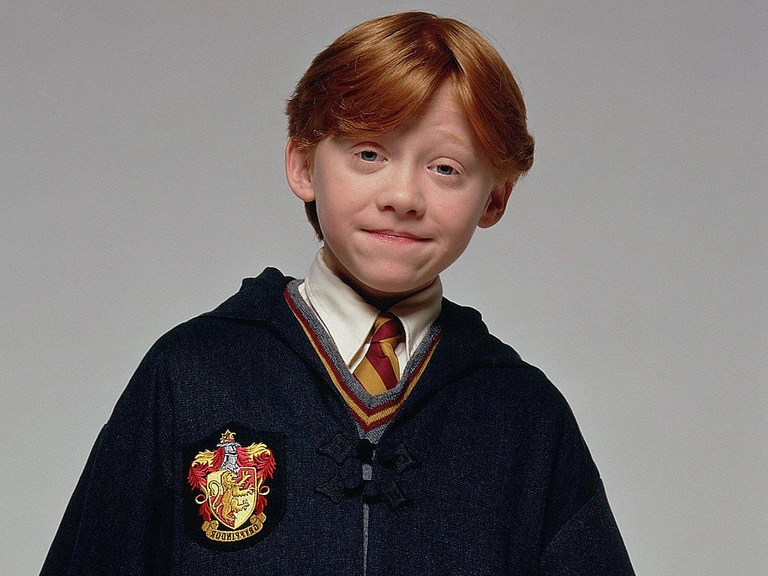
You could've fried an egg on your face.
For the majority of the year, Lockhart kept hounding on Harry, trying to use him to boost his own fame, much to Harry's humiliation and irritation. Lockhart made it look as though Harry was trying to use his fame of defeating Lord Voldemort to make a name in the wizarding world, that the Flying Ford Anglia he rode on to school was a publicity stunt, and that he was enjoying his companionship with Lockhart and ignored much of Harry's attempted contradictions to these ridiculous hypotheses.
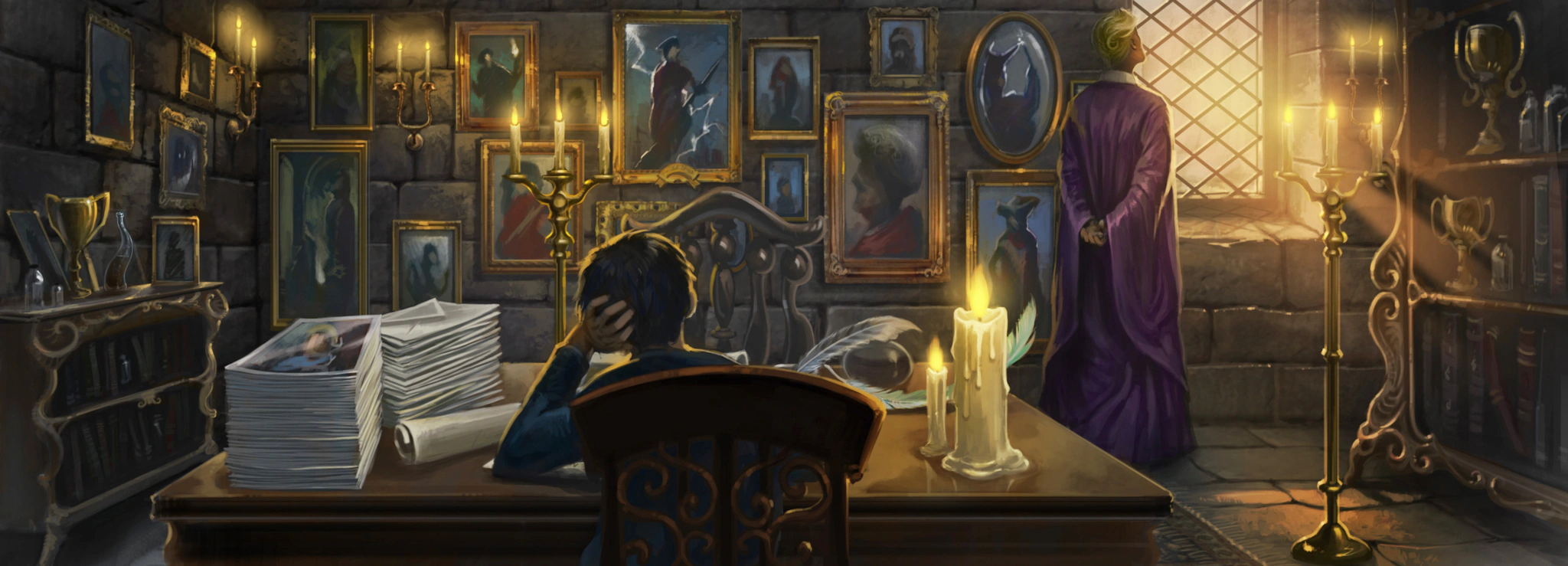
After Hagrid told him that Harry was more famous than him without trying, Lockhart personally requested Harry to help him answer his fan mails for detention while bombarding Harry with his advice for fame and thought Harry would think of this as a treat, much to the contrary. In fact, Harry practically begged Professor McGonagall to be in Ron's detention in assisting Argus Filch in cleaning the Trophy Room instead, though the strict Transfiguration teacher refused. Harry then suffered several long hours of dull boredom, addressing envelopes. When Harry heard mysterious voices during this detention, Lockhart thought Harry was merely tired. Following the disastrous episode in which he released "freshly caught" Cornish pixies in class, Lockhart staged dramatic readings from his books and often chose Harry to participate in re-enactments, much to Harry's aggravation.
After a Quidditch match between Gryffindor and Slytherin, in which Harry, the Gryffindor Seeker, had his arm broken by a rogue Bludger, Lockhart offered to help repair his arm, claiming it was a charm he had used on himself many times. Ignoring Harry's refusal, stating that Harry didn't know what he was saying, he accidentally vanished all the bones in his arm with the charm Brackium Emendo.
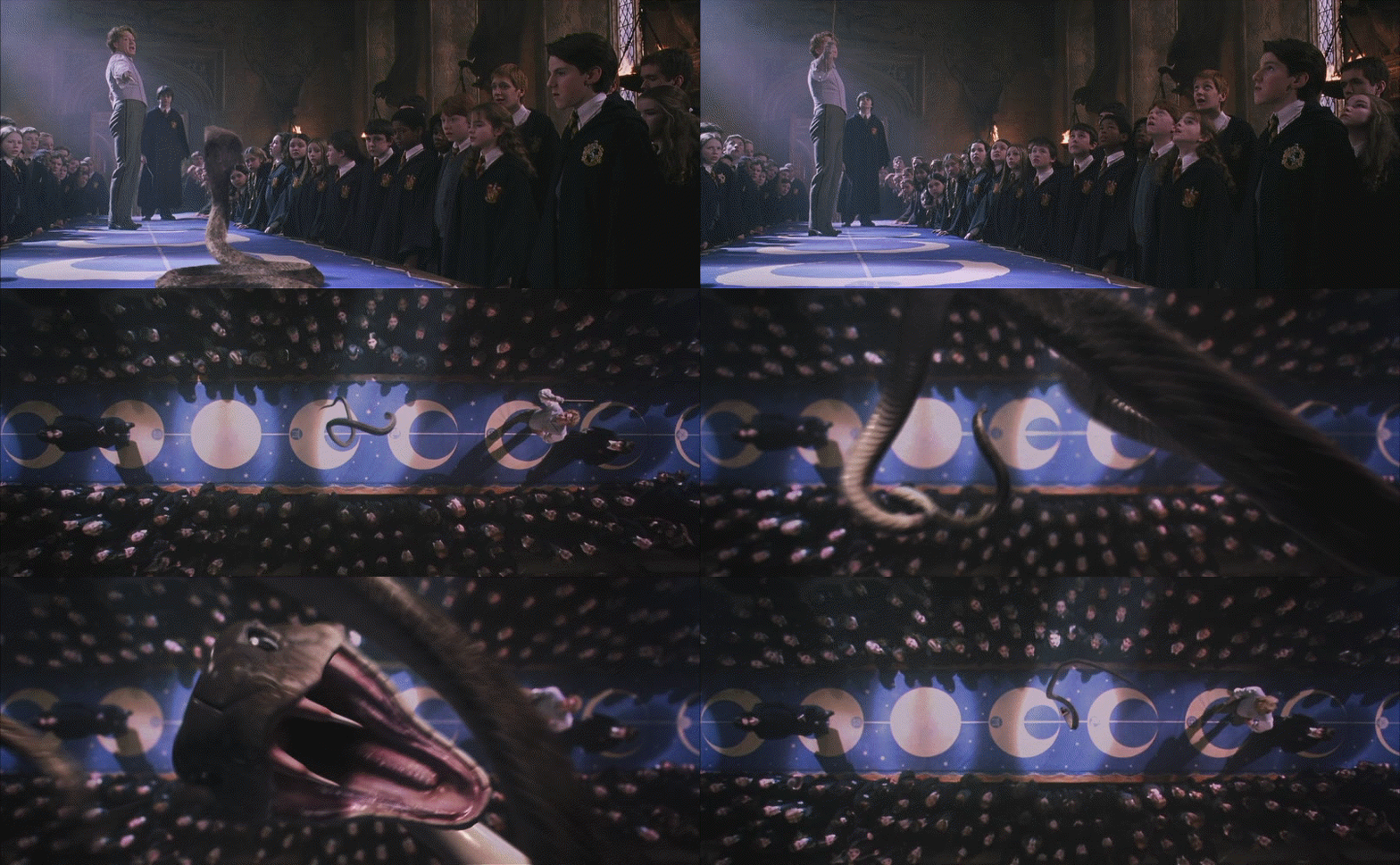
Lockhart founded a short-lived Duelling Club for students. He made a fool of himself at the very first meeting by firstly being disarmed by Severus Snape and then falsely claiming that he had allowed Snape to do so. He also angered a snake conjured by Draco Malfoy by launching it into the air rather than vanishing it, causing it to aim at Justin Finch-Fletchley. Lockhart was also indirectly responsible for bringing out Harry's full-fledged Parselmouth ability because if he had vanished the snake successfully, there would be no need for Harry to run at the snake and demand it to leave Justin alone. The snake was subsequently successfully vanished by Snape immediately afterwards.
When Hermione Granger was in the Hospital Wing for a malfunction dosage of Polyjuice Potion, Lockhart sent her a get-well card, with an unnecessarily long introduction of himself as a signature. Hermione slept with this under her pillow, much to Ron Weasley's disgust.
Valentine's Day

During Valentine's Day, Lockhart, wearing lurid pink robes, completely redecorated the Great Hall with pink flowers and raining heart-shaped confetti as a morale-booster to cheer up the mood against the Chamber of Secrets incident, much to the distaste of Ron Weasley and the teachers. Lockhart received at least forty-six valentines, one of which was from Hermione Granger, and made unwelcome suggestions about performing Entrancing Enchantments and brewing love potions, suggesting that they should ask Professors Flitwick and Snape, respectively. This made Flitwick bury his face in his hands in embarrassment, and Snape furious enough for Harry to make a bet that he would force the first person who dared to ask him for a love potion to consume poison.
He even had dwarfs wear golden wings and carry harps to deliver valentines throughout the school, which they did (even if they have to do so forcibly), much to Harry Potter's embarrassment when one forced him to listen to one from Ginny Weasley by knocking him down. This event was, ironically, somewhat a repeat of Lockhart's attempt to earn attention during his youth in Valentines Day, being equally as annoying.
When the Chamber of Secrets was opened, Lockhart made false claims that he knew where the Chamber was and what Salazar Slytherin's monster was the whole time. He even claimed that he knew Rubeus Hagrid was guilty all along when the Minister for Magic arrested the gamekeeper, even though it was only done as a precaution. While the other teachers were serious and tense from all the attacks, Lockhart was the only one who remained relaxed and unconcerned about these security measures. For instance, after Ginny Weasley was taken into the Chamber, he walked into the Hogwarts staffroom and simply told the other present Professors "So sorry — dozed off — what have I missed?", showing his complete lack of awareness and smug nonchalance.
The Chamber of Secrets

The adventure ends here, boys! I shall take a bit of this skin back up to the school, tell them I was too late to save the girl, and that you two tragically lost your minds at the sight of her mangled body — say good-bye to your memories! Obliviate!
On 29 May 1993, after the aforementioned occurrence, the other teachers, after giving him stony looks of hatred, told Lockhart to go down to the Chamber and deal with the monster, in response to his arrogance and many claims that he knew how to solve the problem. Instead of trying to rescue Ginny, Lockhart attempted to flee from the school but was caught by Harry Potter and Ron Weasley when they came to his office to give him information related to the Chamber, and he revealed his lifestyle of fraudulence.
At wand point, Harry and Ron forced Lockhart to take them to the bathroom. Once there, Harry asked Myrtle about her death in the hope that she would confirm his hypothesis. She remarked that she heard a boy's voice speaking a strange language and then saw a pair of great yellow eyes which killed. When he further inspected the lavatory, Harry discovered a broken tap with a snake engraved on the handle. He spoke to the engraving in Parseltongue, and the entrance to the Chamber opened. The entrance was a pipe large enough for a man to crawl through behind the sink. Ready to take the plunge, Harry and Ron forced Lockhart into the opening and followed.
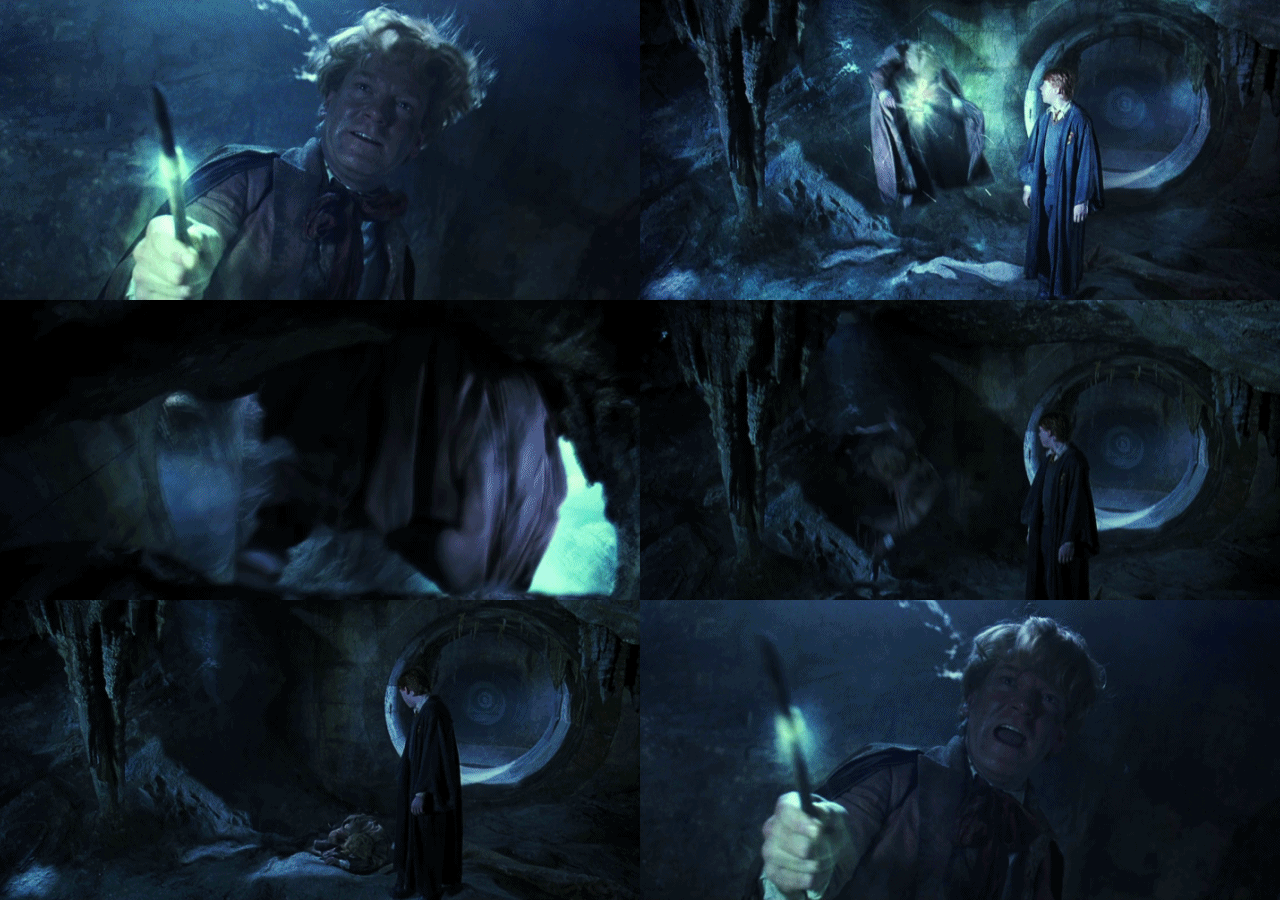
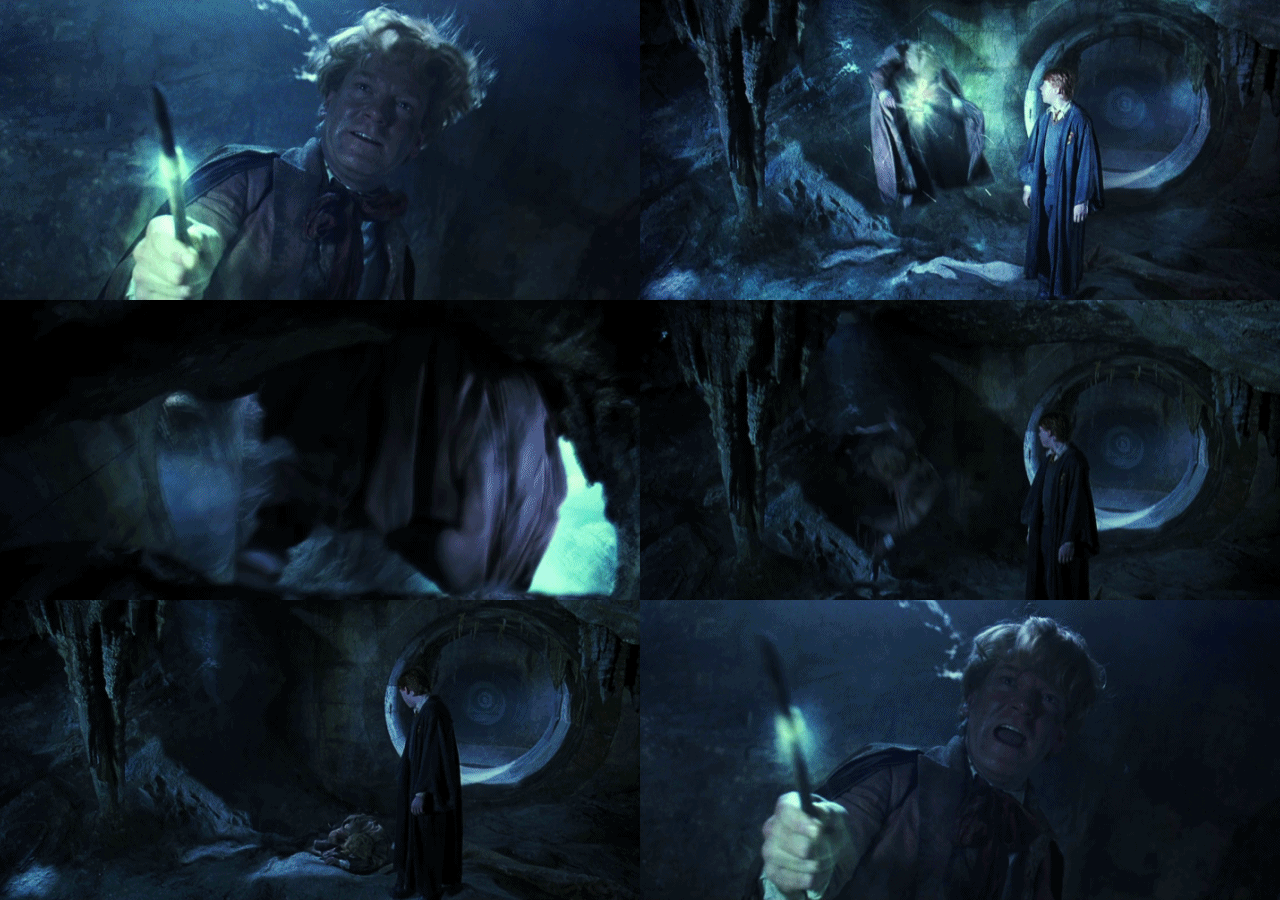
There, Lockhart seized Ron's broken wand and attempted to perform a Memory Charm on Harry and Ron, planning on taking a piece of basilisk skin back up to the surface and tell everyone that he was too late to save Ginny and that the two "tragically" lost their minds after seeing her mangled body. The wand backfired and the charm hit Lockhart instead, blasting him against the rocks and causing him to lose all of his memories, giving him complete amnesia. Lockhart was eventually rescued from the chamber with Dumbledore's pet Phoenix Fawkes, along with Ginny, Harry and Ron after Harry slayed the Basilisk, with him proclaiming that the whole situation was "just like magic".
An amnesiac Lockhart then arrived in Minerva McGonagall's office with Ron, Harry and Ginny, where a returned Dumbledore was present, who then derided the clueless Lockhart of his recent memory loss, having achieved his mission of exposing his fraudulence, before sending Ron to take him to the Hospital Wing. His departure from school was met with the joy and celebration of many students and teachers, as he had ceased to be universally popular at Hogwarts. He then became a permanent resident of St Mungo's Hospital for Magical Maladies and Injuries, in the Janus Thickey Ward, for permanent spell damage.
Permanent incapacitation (1993–?)
But as he stepped on to the landing he came to an abrupt halt, staring at the small window set into the double doors that marked the start of a corridor signposted SPELL DAMAGE. A man was peering out at them all with his nose pressed against the glass. He had wavy blond hair, bright blue eyes and a broad vacant smile that revealed dazzlingly white teeth.
Blissfully ignorant of his own fraudulence, or of anything else, for that matter, Lockhart's many crimes were never actually revealed to the public, presumably because his former employer, Professor Dumbledore, felt that Lockhart had already got what he deserved and decided against making his fate any worse by exposing him to the wizarding world and see him treated with contempt for the rest of his life for wrongdoings he had no idea he had even committed. This is evident by how not even the Healers at St Mungo's had been informed about the details around his admittance, as Miriam Strout, one of the employees at the long-time ward he was admitted to, spoke casually about how Gilderoy had been "quite well-known a few years ago" and were optimistic to the prospect of Gilderoy's signs of improvement later in his treatment. Due to this, the ex-professor was allowed to continue his career as an author, after a fashion, getting someone to help him write the book Who Am I?. Based on Miriam's statement, it appears that the wizarding world in general came to forget about Lockhart.

On Christmas 1995, Harry Potter, Ron Weasley, Hermione Granger, and Ginny Weasley saw Lockhart at St Mungo's in the Janus Thickey Ward. He had regained his memory to the extent that he could write in cursive ("with joined-up letters"), and still enjoyed signing autographs. Ron felt somewhat guilty since his malfunctioning wand was responsible for damaging Lockhart's memories, but Harry felt less sympathetic, for it was Lockhart's attempt to remove their memories in the first place that resulted in this backfire. Overall, Harry observed Lockhart had not changed much and voiced this opinion, making Ginny giggle.
It is known that Gilderoy never got visitors, suggesting that his family was either deceased or did not care for him. However, Lockhart still received fan mail including weekly letters from Gladys Gudgeon (further evidence that the foundation of falsehood on which he had built his career as an author never became common knowledge), though he had no idea why. He also kept his peacock-feather quill, though it had become somewhat battered by that time so that he could keep signing autographs. Though he retained some memories, Lockhart never fully recovered. Fortunately, however, he was known to be happier that way.
Despite the fact that adversaries that carried his likeness were on the attack and caused them quite a bit of trouble at the height of The Calamity in the early 2020s, when an agent of the Statute of Secrecy Task Force encountered the real Lockhart while treating a minor combat injury at St Mungo's Hospital for Magical Maladies and Injuries in London around the same time, the addled state of his mind drew their sympathy nonetheless.
Physical description
There was a big photograph on the front of a very good-looking wizard with wavy blond hair and bright blue eyes.
Gilderoy Lockhart was a foppish, handsome wizard with wavy blond hair, bright blue eyes, and particularly straight and shiny teeth. He was known for wearing flamboyant, flashy and incredibly extravagant robes in a wide assortment of colours.

However, during his moments of cowardice, Lockhart's handsomeness was lost, as he looked weak-chinned and foolish in the midst of his ineptitude.
Personality and traits
Yes, yes, I know what you're thinking! 'He's an internationally famous wizard already!' But when I was twelve, I was just as much of a nobody as you are now. In fact, I'd say I was even more of a nobody! I mean, a few people have heard of you, haven't they? All that business with He-Who-Must-Not-Be-Named! I know, I know — it's not quite as good as winning Witch Weekly's Most-Charming-Smile Award five times in a row, as I have — but it's a start, Harry, it's a start!
Gilderoy Lockhart's defining characteristics were his extreme arrogance, vanity, conceit, egotism and self-obsession. From childhood, he possessed an intense desire to be exceptional and famous, having been raised by a mother who regarded him as extraordinary and consequently arriving at Hogwarts expecting his fellow students and teachers to be similarly impressed by him. He was greatly disappointed to discover that he was neither uniquely talented nor the centre of attention he had expected to be. Although his teachers considered him to possess above-average intelligence and magical ability, and he achieved good marks, Lockhart increasingly valued learning principally for the recognition it could bring him. He developed extravagant ambitions, including creating a Philosopher's Stone before graduation, captaining the English National Quidditch team to World Cup victory and becoming Britain's youngest Minister for Magic, but was unwilling to apply himself consistently unless he believed he could be the best at what he attempted. If unable to distinguish himself through genuine achievement, he increasingly preferred shortcuts, attention-seeking schemes and other means of obtaining recognition.
Even as a student, Lockhart's desire for attention frequently manifested itself in grandiose and disruptive displays. Among other schemes, he carved his signature into the Quidditch pitch in enormous letters, sent himself hundreds of Valentine's cards which caused an outbreak of owl droppings at breakfast, and devised a spell which projected an enormous illuminated image of his own face into the sky. These antics earned him notoriety rather than the widespread admiration he desired, and he was never particularly popular at school. By the time he graduated, much of the Hogwarts staff were relieved to see him leave. His failure to achieve his extraordinary youthful ambitions did not extinguish his desire for fame; instead, his unwillingness to accept being merely above average increasingly led him to seek fraudulent means of becoming the exceptional wizard he believed he deserved to be.
After leaving Hogwarts, Lockhart discovered a particularly effective means of obtaining the fame he desired. He travelled widely and tracked down accomplished witches and wizards who had performed extraordinary deeds, persuaded them to explain exactly how they had accomplished them, and then used his considerable proficiency with Memory Charms to modify their recollections before publishing their experiences as his own. His fraud therefore involved considerably more planning and effort than simply inventing heroic stories: he deliberately sought out genuine achievements, acquired detailed information from the people responsible for them, removed their ability to contradict his version of events and reconstructed their adventures with himself as the hero, supplementing them with a wealth of invented detail. This demonstrated considerable cunning, resourcefulness and ruthlessness, as Lockhart was willing to permanently interfere with the memories of innocent people solely to acquire recognition for their accomplishments.
Lockhart proved exceptionally successful at cultivating the resulting public image. His natural good looks, charisma, writing ability and talent for self-promotion complemented the heroic persona presented in his books, and within a decade he had become a bestselling author regarded as a world-class defender against the Dark Arts. He possessed a shrewd understanding of celebrity and of what appealed to his audience, openly recognising that the genuine heroes whose achievements he appropriated were less commercially marketable than the handsome and charismatic figure he could present to readers. He was also highly opportunistic in exploiting publicity. When he encountered the already famous Harry Potter at his book signing in Flourish and Blotts, Lockhart immediately drew Harry into the assembled photographers' attention and used the occasion to announce his appointment as Defence Against the Dark Arts professor. After the subsequent fight between Arthur Weasley and Lucius Malfoy, he even attempted to persuade the Daily Prophet photographer to incorporate the incident into the report of his signing, regarding virtually any public attention as useful publicity.
Despite his considerable understanding of publicity and mass appeal, Lockhart was much less perceptive regarding the immediate reactions of people around him. He frequently interpreted discomfort, irritation or outright dislike as admiration, and appeared largely oblivious to the extent to which his behaviour annoyed those who were not already among his admirers. When Ronald Weasley reacted with disgust to Lockhart's ostentatious peacock-feather quill, for example, Lockhart assumed that Ron was admiring it, while Harry's repeated discomfort with Lockhart's attention did little to dissuade him from believing that Harry welcomed his advice about fame. He likewise failed to appreciate how strongly his habit of offering unsolicited professional advice irritated his fellow members of staff. Lockhart advised Pomona Sprout on treating the injured Whomping Willow, repeatedly offered Rubeus Hagrid advice on matters involving magical creatures, and claimed extensive experience brewing Mandrake Restorative Draught, prompting Severus Snape to remind him pointedly that Snape was the school's Potions Master.
This disparity between Lockhart's skill at appealing to a distant audience and his poor ability to judge people who knew him personally had been apparent since his school years. Lockhart had been unpopular among those who experienced his attention-seeking behaviour first-hand, yet his later public persona proved convincing enough that reports of his apparent courage and resilience caused several of his former teachers to wonder whether they had underestimated him. Albus Dumbledore, however, knew two of the people whose achievements Lockhart had appropriated and suspected the truth. Dumbledore consequently believed that bringing Lockhart back into an ordinary school environment would expose his fraud, as sustained personal scrutiny would require him to demonstrate the abilities and practical experience which he could more easily claim through books, photographs and publicity appearances. Minerva McGonagall, who had never been impressed by Lockhart, similarly remained largely immune to his celebrity.
Lockhart was nevertheless capable of considerable social manipulation when he understood what motivated the person with whom he was dealing. His vanity also made him particularly susceptible to the same tactic. Hermione Granger was able to obtain his signature on a permission slip for a book in the Hogwarts Library's Restricted Section by flattering him and appealing to his supposed expertise; Lockhart was so pleased by her admiration that he signed the note without properly examining the book she intended to borrow. Harry and Ron later exploited the same weakness to distract him from his responsibilities by encouraging him to attend to his appearance. His eagerness to receive admiration could therefore override his judgement even when greater caution or professionalism was required.
Lockhart's vanity was accompanied by considerable arrogance and a tendency to exaggerate his own importance and expertise. He regularly referred to his supposed adventures when offering advice and frequently implied that he could have handled situations better than the people actually responsible for them. When Mrs Norris was found apparently lifeless and rigid, Lockhart confidently suggested that she had been subjected to the Transmogrifian Torture, claimed familiarity with the curse and its counter-curse, and recounted an allegedly similar incident from his travels. Although his diagnosis was incorrect, his fraudulent history does not establish that the curse or the underlying magical knowledge he invoked was itself fictitious; Lockhart's characteristic deception was principally to represent knowledge and achievements acquired from others as products of his own extensive personal experience. Similarly, although his celebrated defeat of the Wagga Wagga Werewolf had actually been accomplished by another wizard, Lockhart was genuinely capable of performing the Homorphus Charm associated with the story and later demonstrated the spell publicly.
Let me introduce my assistant, Professor Snape, He tells me he knows a tiny little bit about duelling himself and has sportingly agreed to help me with a short demonstration before we begin. Now, I don't want any of you youngsters to worry — you'll still have your Potions master when I'm through with him, never fear!
Lockhart's arrogance could also cause him to badly underestimate other witches and wizards. While conducting the Duelling Club, he patronisingly introduced Snape as possessing only a small amount of duelling experience and assured the students that their Potions professor would survive their demonstration. Snape immediately defeated him with a Disarming Charm. Lockhart rapidly attempted to preserve his dignity by claiming that he had allowed himself to be struck in order to demonstrate the consequences of the spell, illustrating both his reluctance to acknowledge failure and his ability to improvise self-serving explanations when his public persona was threatened. His confidence in his own abilities therefore frequently exceeded his actual contemporary proficiency, particularly after years spent neglecting most forms of practical magic in favour of perfecting Memory Charms.
Lockhart was not, however, inherently devoid of magical talent or intelligence. His Hogwarts teachers had regarded him as above average in both respects, and he had once possessed reasonably good magical skills. His principal failing was his unwillingness to develop those abilities through sustained effort when genuine accomplishment offered less immediate recognition than shortcuts and self-promotion. Over years of concentrating almost exclusively upon Memory Charms while allowing his other abilities to lapse, his broader practical skills became rusty almost beyond repair. Consequently, by the time he returned to Hogwarts as a professor, there was an enormous disparity between the exceptional practical mastery attributed to the hero of his books and Lockhart's actual contemporary abilities. His failures with the Cornish Pixies, in duelling and in performing healing magic consequently exposed limitations which his carefully controlled public appearances had previously allowed him to conceal.
Lockhart was also highly impractical and could be reckless when his desire to appear knowledgeable or important overrode his judgement. His first practical Defence Against the Dark Arts lesson ended disastrously when he released a cage of Cornish Pixies and proved unable to regain control of them. When Harry's arm was broken during a Quidditch match, Lockhart ignored Harry's objections and attempted to mend it himself, only to incorrectly perform Brackium Emendo and vanish the bones from Harry's arm. The incident demonstrated the deterioration of his practical magical proficiency rather than establishing that he had never understood the spell or its intended purpose. Likewise, during the Duelling Club demonstration he used Alarte Ascendare to launch a conjured snake into the air, an action which did little to resolve the danger despite the spell itself functioning successfully. His poor judgement therefore frequently compounded the deterioration of his practical skills.
His tenure at Hogwarts also demonstrated that Lockhart's talent for presenting himself as an expert did not translate into effective teaching. Much of his instruction revolved around his own published adventures, with students reading his books, answering questions about Lockhart himself and theatrically reenacting scenes from his supposed exploits. This approach reflected both his vanity and his dependence upon a carefully constructed autobiographical persona. Although he possessed genuine magical knowledge and taught some practical defensive magic, his classes increasingly exposed the difference between being able to recount or write convincingly about dangerous encounters and possessing the practical experience necessary to respond effectively when confronted with comparable situations himself.
Lockhart's self-importance also manifested itself in his response to the reopening of the Chamber of Secrets. He repeatedly claimed that he understood the attacks better than his colleagues, offered confident explanations for events and insisted that he could have handled the situation more effectively. Nevertheless, despite his tendency to dismiss the danger and exaggerate his ability to deal with it, Lockhart did participate in the protective measures imposed by the school. When teachers were assigned to escort students between lessons, he took his turn doing so, and on one occasion appeared dishevelled after apparently spending most of the previous night patrolling the fourth floor. Characteristically, he simultaneously complained that such precautions were unnecessary and continued to insist that the danger had already passed. His willingness to perform routine security duties therefore contrasted sharply with his reaction when his claims of personal expertise were finally put to the test. After Ginny Weasley was taken into the Chamber, his colleagues reminded him of his repeated assertions that he knew where the Chamber was, understood what was inside it and could have dealt with the monster himself. Faced with the prospect of actually confronting it, Lockhart abandoned his pretence and attempted to flee the school.
This revealed one of the sharpest contrasts between Lockhart's public persona and his actual character. Although he had built his career around stories portraying himself as extraordinarily courageous, he was fundamentally cowardly when confronted with genuine mortal danger. Once Harry and Ron discovered him packing to escape Hogwarts, Lockhart admitted that the accomplishments in his books belonged to other people and showed little willingness to risk himself to rescue Ginny. His cowardice was accompanied by profound selfishness and a willingness to harm others to protect himself. After Harry and Ron discovered the entrance to the Chamber and forced him to accompany them, Lockhart seized Ron's damaged wand and attempted to erase both boys' memories, intending to leave Ginny to her fate and return with a fabricated account in which he had been unable to save her and Harry and Ron had tragically lost their minds. This willingness to destroy the memories of children and abandon another child to die in order to preserve his reputation demonstrated that beneath Lockhart's comical vanity lay a capacity for calculated and serious wrongdoing.
Teach? Me? Did I? Taught you everything you know, I expect, did I? Well, how about those autographs, then? Shall we say a round dozen, you can give them to all your little friends then and nobody will be left out!
His attempt failed when Ron's damaged wand caused the Memory Charm to backfire, destroying Lockhart's own memories instead. His demeanour changed noticeably following his memory loss. He appeared vague and easily distracted, reacted with delighted amazement to the magic he encountered, and showed none of his former need to insist upon his own accomplishments: when Dumbledore's conversation revealed that he had been a professor, Lockhart reacted with mild surprise and readily supposed that he had probably been a poor one. Following his permanent admission to St Mungo's Hospital for Magical Maladies and Injuries, he remained similarly good-natured when encountered by Harry, Ron, Hermione and Ginny several years later. Nevertheless, some aspects of his former personality persisted despite his amnesia. Lockhart remained delighted by attention, continued to enjoy signing autographs and took considerable pleasure in receiving fan mail, even though he no longer remembered why anybody wanted his autograph in the first place. His enduring attraction to recognition suggested that the desire to be noticed, unlike the grandiose self-image and fraudulent identity he had constructed around it, was deeply ingrained in his personality.
Magical abilities and skills
Harry, Harry, it's not nearly as simple as that. There was work involved. I had to track these people down. Ask them exactly how they managed to do what they did. Then I had to put a Memory Charm on them so they wouldn’t remember doing it. If there’s one thing I pride myself on, it’s my Memory Charms.
Magical aptitude: Lockhart's teachers at Hogwarts considered him to be "above average in both intelligence and magical ability", and believed that, with hard work, he might make something of himself. He likewise achieved good marks in his schoolwork, despite valuing learning principally for the attention it brought him, and demonstrated some capacity for magical innovation by successfully inventing a spell of his own while still a student. However, his increasing preference for shortcuts, coupled with his unwillingness to apply himself unless he could distinguish himself, meant that he never fully realised this potential. Indeed, his subsequent reputation as a courageous and highly accomplished wizard led several of his former teachers to believe that they might have misjudged him, unaware that the extraordinary achievements responsible for this reassessment had actually been appropriated from other witches and wizards. Although Lockhart was an utterly mediocre wizard relative to the extraordinary level of ability he claimed to possess, he was never inherently a bad wizard, but rather a lazy one whose once rather good magical skills deteriorated through years of neglect. As an adult, he nevertheless demonstrated some continued magical ingenuity by devising an Occamy egg yolk shampoo of his own, and attained exceptional proficiency with the difficult Memory Charm through years of dedicated practice. Indeed, while his near-sole focus on Memory Charms contributed to the deterioration of his other magical skills, Lockhart remained capable of several rather advanced feats of magic: he could Apparate, perform non-verbal magic, produce a non-corporeal Patronus, and successfully perform the immensely difficult Homorphus Charm in public. His later ineptitude in many areas of practical magic thus reflected how rusty his magical skills had become, rather than an inherent lack of the magical ability to perform them.
Charms: Lockhart demonstrated most of his genuine magical abilities in the field of charms. His greatest proficiency was with the Memory Charm, an advanced and difficult charm which he spent years perfecting while neglecting much of his other magic. He eventually became exceptionally accomplished in its use, successfully modifying the memories of numerous accomplished witches and wizards after extracting the details of their achievements from them, thereby allowing him to claim their deeds as his own without being exposed. Lockhart himself considered Memory Charms his particular gift, and on at least one occasion demonstrated sufficient proficiency to wipe the memories of an entire room of people with a single spell. Lockhart was also genuinely capable of casting the immensely difficult Homorphus Charm, which could force a werewolf back into human form. Although his claim to have used the charm to defeat the Wagga Wagga Werewolf was fraudulent, having appropriated the achievement from the Armenian warlock who actually accomplished it, Lockhart had nevertheless taught himself to cast it successfully as part of maintaining the illusion: Following the publication of his account, he organised a symposium dedicated to discussing the encounter, which attracted several notable attendees, including Cecil Lee of the Werewolf Capture Unit. During the event, Lockhart publicly demonstrated the Homorphus Charm, boasting that he could perform it with sufficient skill to cure lycanthropy entirely. Lockhart could also produce a non-corporeal Patronus, and successfully performed a number of other charms and enchantments, including the Tickling Charm, Softening Charm, Verdimillious Charm, Verdimillious Duo Spell, Verdimillious Tria, Knockback Jinx, Tongue-Tying Curse, Full Body-Bind Curse, and the levitation spell Alarte Ascendare.
Defence Against the Dark Arts: Lockhart possessed extensive theoretical knowledge of Defence Against the Dark Arts, despite lacking much of the practical experience for which he became famous. After leaving Hogwarts, he travelled widely and sought out highly accomplished witches and wizards whose exploits he intended to appropriate, learning from them exactly how they had accomplished their feats before modifying their memories and presenting their experiences as his own. Consequently, although the adventures described in Lockhart's books were not his own and his accounts contained a wealth of invented detail, they were based upon genuine encounters with dangerous Dark creatures and the first-hand experiences of the witches and wizards who had actually overcome them. Lockhart was able to supplement these genuine accounts with extensive embellishment while maintaining sufficient magical accuracy and plausibility that, within a decade of leaving Hogwarts, his books had achieved bestseller status and he had acquired a reputation as a world-class defender against the Dark Arts. As his works were publicly available, Lockhart could not control whether they would be read by witches and wizards with genuine expertise in the subjects about which he wrote, meaning that his invented material had to remain sufficiently credible to survive the potential scrutiny of authorities in these fields in order to avoid exposing his accounts as fraudulent through obvious errors or inconsistencies. If his if his honorary membership in the Dark Force Defence League were any indication that he did this quite well. Lockhart's knowledge was also not entirely theoretical, as he possessed genuine practical ability with some advanced defensive magic. Most notably, although he fraudulently took credit for the defeat of the Wagga Wagga Werewolf, he was genuinely capable of performing the immensely difficult Homorphus Charm, publicly demonstrating the spell at a symposium concerning the encounter before an audience that included Cecil Lee of the Werewolf Capture Unit. He also displayed knowledge of more obscure defensive magic, such as the lethal Transmogrifian Torture and its counter-curse. When the Basilisk of Salazar Slytherin Petrified Mrs Norris, Lockhart initially misidentified her apparently lifeless and unnaturally rigid condition as the result of the Transmogrifian Torture, claiming to have encountered the curse numerous times and to know the counter-curse that would have saved her. Although his claimed personal experience with the curse was characteristic of the experiences he fraudulently appropriated from others, his identification of a specific curse whose name indicated a torturous magical transformation of its victim may have been prompted by the superficial resemblance of Mrs Norris's condition to such an affliction. His mistake therefore did not necessarily indicate ignorance of the curse itself, but demonstrated the limitations of applying his largely second-hand knowledge to an unfamiliar practical situation. Despite the breadth of his knowledge and the reputation he had acquired, Lockhart proved an incompetent Professor of Defence Against the Dark Arts at Hogwarts relative to the expertise he claimed to possess. By this time, his once rather good general magical skills had become rusty almost beyond repair through neglect, and much of his teaching centred upon dramatisations and recollections of adventures he had fraudulently claimed as his own. Nevertheless, his instruction was not entirely without practical substance: Lockhart taught a number of defensive spells, including the Tickling Charm, Softening Charm, Verdimillious Charm, Verdimillious Duo Spell, Verdimillious Tria, Knockback Jinx, Tongue-Tying Curse and Full Body-Bind Curse. His shortcomings as a professor therefore did not stem from a complete absence of defensive knowledge or magical ability, but from the deterioration of his broader practical skills, his poor teaching judgement, and above all the enormous disparity between his genuine abilities and the world-class practical experience and expertise he fraudulently claimed to possess.
Magizoology: Lockhart possessed considerable knowledge of magical creatures, particularly dangerous and Dark species, despite having far less genuine practical experience with them than his published accounts suggested. In compiling his books, he travelled widely and sought out accomplished witches and wizards who had actually confronted such creatures, learning exactly how they had dealt with them before modifying their memories and appropriating their experiences as his own. His resulting works covered encounters with creatures including Banshees, Ghouls, Hags, Trolls, Vampires, werewolves and Yetis, and, although embellished with invented details, were sufficiently plausible to contribute to his considerable reputation as an authority on combating dangerous magical beings. Lockhart's practical creature-handling abilities were considerably less impressive. During his first Defence Against the Dark Arts lesson at Hogwarts, he lost control of a cage of Cornish Pixies and was unable to subdue them with Peskipiksi Pesternomi, leaving his students to deal with the creatures themselves. His extensive knowledge of magical creatures therefore did not necessarily imply equivalent field experience or proficiency in handling them directly.
Spell creation: While still a student at Hogwarts, Lockhart successfully invented a spell that projected an enormous, glowing image of his own face into the sky, similar in appearance to the Dark Mark. As spell creation is a particularly complex and potentially dangerous branch of magic, his ability to devise a functioning spell of his own while still at school demonstrated the genuine magical talent and capacity for innovation that his teachers had recognised in him, despite his increasingly directing those abilities towards attention-seeking rather than serious magical achievement.
Nonverbal magic: Lockhart was capable of casting spells without speaking their incantations aloud, a comparatively advanced magical skill taught to students at N.E.W.T. level. Despite the deterioration of much of his practical magical ability through years of neglect, he successfully performed several spells non-verbally. He cast the levitation spell Alarte Ascendare without speaking its incantation, and could likewise perform a Knockback Jinx non-verbally. He also attempted Brackium Emendo non-verbally when treating Harry Potter's broken arm; although the spell was performed incorrectly and vanished the bones in Harry's arm rather than mending them, this reflected his diminished proficiency with the spell itself rather than an inability to perform magic non-verbally.
Potions: Lockhart demonstrated some genuine aptitude for potion-making and the creation of magical preparations. He devised an Occamy egg-yolk shampoo of his own which successfully gave hair "locks of lustrous luminosity". The product ultimately proved commercially impractical, however, as Occamy egg yolks were prohibitively expensive and dangerous to procure. Lockhart also claimed that he could "whip up a Mandrake Restorative Draught in my sleep", although he was never demonstrated brewing the potion and the extent of his ability to do so is therefore unknown.] in my sleep", but this claim like his others, was most likely false.
Healing magic: Lockhart possessed some knowledge of healing magic, although his practical proficiency had deteriorated considerably by the time he taught at Hogwarts. After examining Harry Potter's injured arm, he correctly recognised that it was broken and knew that Brackium Emendo was an appropriate spell for mending the injury. However, when he attempted to perform the spell, he cast it incorrectly and vanished the bones in Harry's arm instead. The incident demonstrated that Lockhart retained knowledge of the diagnosis and magical treatment of at least some injuries, despite no longer possessing the practical proficiency necessary to perform the required healing magic reliably.
Flying: Lockhart was an experienced broomstick flyer and displayed a longstanding interest in Quidditch. While still a student at Hogwarts, he openly declared his ambition to captain the English national team to World Cup victory, indicating that Quidditch was already among the fields in which the highly ambitious young Lockhart hoped to distinguish himself. He later claimed that he had played as Seeker for the Ravenclaw Quidditch team during his school years, and as an adult continued to display familiarity with the position, taking an interest in Harry Potter's performance as a Seeker and offering him advice. Lockhart was demonstrably capable of broomstick flight, being photographed flying on several occasions, including at considerable altitude, and owned an elegant broomstick which he personally christened The swashbuckler. He was also photographed flying while wearing a Ravenclaw Quidditch uniform. Although this photograph may have been staged as part of Lockhart's extensive self-promotion, that does not itself establish that his claimed history with the Ravenclaw team was fabricated. His demonstrated flying experience, longstanding interest in Quidditch, familiarity with the Seeker position, and continued personal enthusiasm for broomsticks lend plausibility to his claim, although the extent of his ability as a competitive Quidditch player remain unconfirmed.
Apparition: Like most accomplished adult wizards and witches, Lockhart was capable of Apparating successfully at will. During one of his visits to Hogwarts prior to becoming a professor, he used a Memory Charm on several students after they discovered his fraudulent activities and subsequently escaped from the tea shop by Disapparating before they could expose him.
Duelling: Lockhart possessed some genuine knowledge and ability in duelling, although the extent of his proficiency was considerably less certain than he claimed. During the Outdoor celebration of magic, he publicly demonstrated his duelling abilities against Jacob's sibling and successfully employed offensive magic during the encounter, although he was ultimately defeated by Jacob's sibling, who was themselves an exceptionally talented duellist despite their young age. Lockhart also possessed knowledge of the conventions of formal duelling, including the proper bow, accepted combative position and wand movements, which he later demonstrated while conducting the Duelling Club at Hogwarts. By the 1992–1993 school year, however, his duelling ability had deteriorated along with most of his other practical magical skills. During his demonstration duel with Severus Snape, Lockhart badly underestimated the considerably more accomplished duellist and was immediately blasted backwards by Snape's Disarming Charm; he subsequently proved unable to demonstrate how to block an attack successfully. Lockhart nevertheless possessed a certificate from the British Wizard Duelling Association stating that he had won the Dunstable Duelling Championship, although the circumstances under which he obtained the award and whether it reflected a once genuine duelling talent that since turned so rusty his reaction speed no longer could prevail him remains unknown.
Love: Lockhart claimed to know a great deal about love and demonstrated some genuine insight into the subject. When Jacob's sibling sought his advice while preparing an essay on love for a Valentine's Day competition organised by the Hogwarts Express Railway Authorities, Lockhart declined to provide the ideas for the essay himself and instead advised them to seek out different people's perspectives on love in order to develop a fresh perspective of their own. Jacob's sibling followed his advice by interviewing numerous friends and acquaintances about their differing understandings and experiences of love, incorporated what they learned into their essay, and ultimately won the competition.
Intelligence: Lockhart was genuinely intelligent, with his teachers at Hogwarts considering him to possess "above-average intelligence and ability", and he achieved good marks in his schoolwork despite applying himself principally when doing so would bring him attention. As an adult, he demonstrated considerable cunning, resourcefulness and long-term planning in constructing his fraudulent career. Rather than merely inventing his adventures outright, Lockhart travelled widely to locate accomplished witches and wizards who had performed extraordinary deeds, persuaded them to relate exactly how they had accomplished them, modified their memories with his exceptionally proficient Memory Charms, and subsequently appropriated their achievements for his books while supplementing their accounts with a wealth of invented detail. Lockhart also possessed a shrewd understanding of celebrity, publicity and his intended audience, recognising that the genuine heroes whose achievements he appropriated were less commercially marketable than the handsome and charismatic public persona he had cultivated for himself, and later describing the considerable work behind his career as the "long hard slog" required to achieve fame. He was adept at recognising and exploiting publicity opportunities as they arose: upon unexpectedly encountering the already famous Harry Potter during a book signing at Flourish and Blotts, he immediately drew Harry into a press photograph, remarked that the two of them together were "worth the front page", and used the resulting attention to announce his appointment as Professor of Defence Against the Dark Arts at Hogwarts; shortly afterwards, when a public brawl broke out between Arthur Weasley and Lucius Malfoy, Lockhart attempted to have the incident incorporated into the Daily Prophet report of the event on the grounds that it was "all publicity". He likewise displayed an awareness of how self-promotion could affect a celebrity's image, advising Harry that distributing signed photographs at his current level of fame could appear conceited, while considering them an expected necessity once a sufficiently prominent public profile had been attained. Through his combination of deception, charisma, writing and calculated self-promotion, Lockhart successfully maintained the appearance of being an exceptionally accomplished and courageous wizard for years, becoming a bestselling author and acquiring a reputation as a world-class defender against the Dark Arts, with Albus Dumbledore being one of the few people to suspect the truth. Lockhart could also recognise and correct mistakes in his publicity strategy: after becoming overexposed in the press while writing Gadding with Ghouls, he deliberately disappeared for three weeks and subsequently leaked a fabricated story to the Daily Prophet claiming that he had been captured by Trolls in the wilds of Stockton-on-Tees, successfully restoring himself to his former prominence as the world's most popular wizard. His intelligence was therefore considerable, but was primarily directed towards achieving and maintaining fame, manipulating his public image and concealing his fraud rather than developing the genuine magical abilities which his teachers believed he possessed.
Tracking skills: Lockhart demonstrated considerable persistence and resourcefulness in locating the witches and wizards whose achievements he intended to appropriate. In order to construct his fraudulent career, he travelled widely and deliberately tracked down highly accomplished individuals who had performed extraordinary deeds, including people living in distant parts of the world, before persuading them to explain exactly how they had accomplished their feats and subsequently modifying their memories. Lockhart himself emphasised that this required genuine effort, explaining that he had needed to "track these people down" before he could obtain the information necessary to recreate their adventures in his books. His ability to repeatedly identify and locate suitable, often obscure individuals therefore formed an important practical part of the elaborate scheme by which he built his reputation.
Knowledge: Lockhart possessed a broad body of genuine magical knowledge, although much of it was acquired second-hand rather than through the personal experience he claimed. During his time at Hogwarts, he achieved good marks and was regarded by his teachers as possessing above-average intelligence and ability, despite increasingly valuing learning principally for the attention it brought him. As an adult, he substantially expanded his knowledge by travelling widely and seeking out highly accomplished witches and wizards whose achievements he intended to appropriate. Lockhart did not merely obtain general accounts of their exploits, but deliberately asked them to explain exactly how they had accomplished their feats before modifying their memories and reproducing their experiences as his own. Consequently, although Lockhart lacked much of the practical experience attributed to him, he had acquired genuine first-hand information from people who did possess that experience, giving him knowledge concerning a wide range of magical disciplines, dangerous creatures and defensive techniques, including the methods by which witches and wizards had overcome Banshees, Ghouls, Hags, Trolls, Vampires, werewolves and Yetis. He also displayed knowledge of advanced and comparatively obscure magic, such as the Homorphus Charm, Transmogrifian Torture and its counter-curse; although he incorrectly identified the apparently rigid and lifeless Mrs Norris as a victim of the Transmogrifian Torture, his mistake concerned the cause of her condition rather than demonstrating ignorance of the curse itself. Lockhart frequently attempted to apply his broad knowledge outside his own teaching subject, much to the irritation of colleagues who were themselves specialists in the relevant fields. He offered Pomona Sprout unsolicited advice on treating the injured Whomping Willow, claiming familiarity with the species from his travels; repeatedly advised Rubeus Hagrid on such matters as removing Kelpies from wells; and claimed sufficient knowledge of potion-making to have brewed the Mandrake Restorative Draught numerous times, prompting Severus Snape to remind him that Snape was the school's Potions Master. Such claims of personal experience cannot necessarily be taken at face value, but his tendency to exaggerate the source and extent of his expertise did not itself establish that the underlying knowledge was fraudulent. Although his published accounts contained a wealth of invented detail and falsely presented other people's experiences as his own, the fact that he was able to combine genuine specialist information with extensive embellishment while maintaining a highly successful public reputation as an authority on dangerous magic indicates that his knowledge extended considerably beyond basic theory. His principal limitation was therefore not an absence of knowledge, but the considerable disparity between what he knew, what he had personally experienced, and the exceptional practical mastery he claimed to possess.
Acting skills: Lockhart was highly adept at deception and at performing the heroic public persona upon which his celebrity depended, although he was considerably more successful at deceiving the wider wizarding public than people who knew him through prolonged personal contact. In constructing his fraudulent career, he successfully approached numerous accomplished witches and wizards and persuaded them to describe exactly how they had performed their extraordinary feats without revealing that he intended to appropriate their achievements and subsequently modify their memories. He then convincingly presented their experiences as his own through his books, publicity appearances and carefully cultivated image as an exceptionally courageous, experienced and accomplished adventurer. This performance proved extraordinarily effective at a distance: within a decade of leaving Hogwarts, Lockhart had become a bestselling author with a reputation as a world-class defender against the Dark Arts, and reports of his apparent bravery and resilience even caused several of his former teachers to wonder whether they had misjudged him. Lockhart was less successful at deceiving people who were regularly exposed to him personally, however. He had never been particularly popular during his own school years, the Hogwarts staff had been relieved by his departure, and several continued to remember him as thoroughly obnoxious despite his subsequent fame, while Albus Dumbledore, who knew two of the wizards whose achievements Lockhart had appropriated, suspected the truth behind his career. Dumbledore consequently believed that merely returning Lockhart to an ordinary school environment would eventually reveal him as a fraud, as sustained exposure would require him to demonstrate personally the abilities and experience which he could more easily claim through books and publicity. Lockhart nevertheless remained adept at improvising explanations intended to preserve his persona when individual failures occurred; after Severus Snape immediately defeated him during their demonstration duel at the Duelling Club, for example, he rapidly recovered his composure and claimed that he had deliberately allowed Snape's Disarming Charm to strike him for instructional purposes. His acting ability therefore lay principally in constructing, presenting and protecting a compelling celebrity persona rather than in consistently deceiving those who had sufficient opportunity to observe him at close quarters.
Author: Lockhart was an extremely successful and accomplished author, and writing was one of the genuine talents upon which his fraudulent career depended. Although the extraordinary adventures described in his books had actually been experienced by other witches and wizards, Lockhart did not simply reproduce their accounts: after learning exactly how they had accomplished their feats, he rewrote their experiences with himself as the protagonist and supplemented them with a wealth of invented detail. His ability to transform these accounts into compelling narratives proved enormously successful, and within a decade of leaving Hogwarts his books had achieved bestseller status and helped establish him as a world-class defender against the Dark Arts. The fraudulent basis of his works therefore did not negate the considerable writing ability required to construct and embellish the narratives convincingly, particularly as his books were publicly available to readers who could possess genuine knowledge of the creatures, spells and magical phenomena about which he wrote. Lockhart's writing could also have a genuine effect upon his readers: even among the highly accomplished agents of the Statute of Secrecy Task Force, who regularly faced dangerous Confoundables while combating the Calamity, his autobiographical emphasis upon the value of confidence was considered capable of bolstering an agent's resolve under pressure. His success as an author was further aided by his understanding of his audience and talent for publicity, as he recognised that the heroic image he presented was more commercially appealing than the less glamorous witches and wizards whose achievements he had appropriated. Even after the accidental destruction of his memories, Lockhart retained an inclination towards authorship and subsequently wrote Who Am I?, an autobiography concerning his life following his memory loss.
Artist: Lockhart was a talented painter, and painted portraits of himself in his spare time. A large moving portrait displayed at Hogwarts depicted Lockhart painting another portrait of himself, demonstrating his genuine ability as an artist. His preference for himself as a subject also reflected his considerable vanity, preoccupation with his appearance and enthusiasm for cultivating his own image.
Possessions
Wand: Lockhart's wand was made of cherry wood and had a dragon heartstring core. According to him, it was expensive.
Luggage set: Lockhart possessed a large set of fine luggage to hold his many belongings from his years of ill-earned fame, mostly related to his vanity. These include his many robes of varying colours, portraits and photos of himself, and a false hair piece. He tripped over one of the trunks when Harry disarmed him.

Peacock quill: Lockhart possessed a quill crafted from a peacock's feather. He saved it for special occasions, such as signing autographs and was rather proud of it. He completely misread Ron's revolt at the quill as admiration. After his memory loss, Gilderoy continued to use the quill to sign autographs, but it became battered since.
Lilac Ink: Lockhart owned a bottle of lilac ink, which he used to sign his many autographs with.
Grey owl: Lockhart owned a grey owl.
The swashbuckler: Lockhart owned an elegant broomstick, which he even vainly christened with a personal name. He would have used this broomstick whilst he played Quidditch as a Hogwarts student.
Hair care potions: Lockhart owned various hair care potions which he used for cosmetic purposes, such as Wizarding Sculpting Gel and Occamy egg yolk shampoo, the latter which he even invented himself.
Defence Against the Dark Arts teacher's office: During his year spent in the post of Defence Against the Dark Arts teacher at Hogwarts School of Witchcraft and Wizardry, Lockhart occupied the office connected to his classroom by a flight of stairs, which he decorated with portraits of himself.
Order of Merlin medal: Lockhart was given an Order of Merlin, third class, medal by the British Ministry of Magic, for his alleged achievements.
Known published works
For full details, see my published works.
Lockhart was an accomplished author, with twelve of his books shown. Although nine of them were supposed to be about eradicating dark forces, they were in fact just recollections of his experiences (of which he stole from other people) and his personal profiles, somewhat an extension of his autobiography, and contained a good deal of invented details as opposed to pure facts. All of these (with the exception of Who Am I?) were published at some point between 1982 and 1992, before his stint as a Hogwarts professor. Due to the immense popularity, the books were very expensive; he gifted an entire set to Harry Potter as a publicity stunt at Flourish and Blotts, which Harry donated to Ginny Weasley.

Lockhart assigned seven of these books to be his textbooks for his Defence Against the Dark Arts course, though it was simply an excuse for him to sell his works to the students, as none of them had any educational usefulness. He gave an overly long "little quiz" during the first lesson to test out how much his students took in from his collected works, but most showed little interest and did poorly. After the first lesson ended up in disaster, Lockhart simply read from these books aloud and sometimes reenacted the contents to the class in a theatrical manner.
Break with a Banshee
Gadding with Ghouls
Gilderoy Lockhart's Guide to Household Pests
Holidays with Hags
Magical Me (autobiography)
Marauding with Monsters
One Hundred and One Practical Uses for Bertie Bott's Every Flavour Beans
Voyages with Vampires
Wanderings with Werewolves
Who Am I?
Year with the Yeti
Family
Gilderoy was born in the Lockhart family, with a Muggle father, witch mother, and two elder sisters, both of whom were Squibs. His mother loved him more than she did her two daughters, which, when combined with Gilderoy's revealed wizardry and acceptance into Hogwarts, lead his vanity to grow like a weed. Both mother and son were too excited to remember that Hogwarts accepts all magical students from Britain and Ireland, and she was as deluded as her son in thinking that he was special amongst all children of his age. Due to Mrs Lockhart's overly love and pampering, she completely spoiled and deluded her son, which would lead to a very negative impact on his future.
When Gilderoy was admitted to St Mungo's Hospital for Magical Maladies and Injuries due to self-inflicted amnesia, none of his family members nor relatives visited him. This implies that they too despised him and had no desire to spend time with him, or that they were unaware of his unfortunate predicament, or had simply cut all contacts with him before. Even his mother, who overly doted on him, did not visit, suggesting that she was either deceased or came to hate him for his vain and annoying antics.
Fans
Most of Lockhart's fans were composed of middle-aged housewives, such as Molly Weasley, and young schoolgirls, such as Hermione Granger and Susan Bones. They were charmed by his looks and impressive claims but neglected to notice other dimensions of his personality, like his narcissism and general incompetence. Lockhart's notable fans, such as Gladys Gudgeon and Veronica Smethley, regularly wrote him adoring fan mail. Once Lockhart suffered permanent amnesia and disappeared from the public eye, the majority of his fans most likely lost interest in him, though some of them continued to send him letters at the hospital.

Hogwarts residents

That's got him out from under our feet.
During his time as a Hogwarts student, Lockhart was already unpopular with the school's residents, students like The Marauders and Severus Snape and the staff alike, almost immediately due to him being a spoiled child with a brat's sense of entitlement, self-delusions, and obnoxious personality. He was expecting everyone to whisper and stare about him and found it dull and disappointing when they did not, especially when they were not particularly impressed by his naturally wavy hair, of which he was very proud. His attempts to gain himself more attention did him little good; instead they made him more of an annoying troublemaker when he begged Headmaster Albus Dumbledore to start a school newspaper solely for his own name to appear in its print, carved his name into the Quidditch pitch (earning him a weeks' worth of detentions), shooting a hologram of his own face into the sky like the Dark Mark, and sending himself eight-hundred Valentines, causing breakfast to be cancelled due to the number of droppings and feathers in the porridge. His squandering of his own talents and refusal to take his studies seriously also earned him the scorn of his teachers, when they once hoped that if he had worked hard, he might have made something positive of his gifts. Lockhart's graduation was met with a faint sigh of relief from the entire staff. It was easily apparent that all of them would not hesitate to and perhaps even looked for opportunities to punish Lockhart out of sheer annoyance of his troublemaking and attention seeking personality, with the only Professor who didn't resent Lockhart and was willing to tolerate his antics appeared to be Dumbledore, as he apparently saw Lockhart's antics as amusing rather than irritating, evidenced by the fact that Lockhart's pleads for Dumbledore to start a school newspaper was the only time where Lockhart managed to get away unpunished. When word of his supposed accomplishments of Defence Against the Dark Arts have reached his former educators' and, in Snape's case, peers ears, they began to think that they had misjudged him due to his seeming resilience and bravery, unaware he was a mere charlatan who stole the credit of accomplishments made by true heroes. This misunderstanding, however, did not change their opinion on his annoying, attention-seeking personality, and they would later see him as the incompetent fraud he was.


Dear me. Impaled upon your own sword, Gilderoy!
When Lockhart had erased the memories of two wizards Dumbledore knew personally, Dumbledore, having never been fooled by Lockhart's tall tales and always being suspicious of how Lockhart came to fame due to knowing just what kind of a person Lockhart was, easily deduced the truth behind Lockhart's fame and saw through his charade and decided to track him down and make him pay for his crimes. Dumbledore offered Lockhart a position as the Defence Against the Dark Arts teacher, under the correct belief that school is the best location to expose the fraud for what he was. Lockhart was reluctant at first, as he was more interested in his successful career as an author, but was instantly swayed when Dumbledore mentioned Harry Potter's fame, which Lockhart would believe as a boost to his own. The other professors, who remembered Lockhart as obnoxious, were baffled at Dumbledore's choice to invite Lockhart back to Hogwarts, and Minerva even asked what possible benefits could students gain from such a vain man; according to Hagrid, the main reason for Lockhart's appointment was that he was the only applicant for the jinxed position after what happened to Quirrell, something the other teachers agree on, but still thought Lockhart's personality outweighed the desperate need for a new teacher. Dumbledore appeared to be the only one who Lockhart didn't express superiority to and possibly held some level of respect for his old headmaster.
During his tenure in the 1992–1993 school year, Lockhart made an utter mess out of the subject due to his incompetence and ignorance. He also annoyed most of the teachers (some of whom remembered during his time as a student) by making unsolicited advice to look as though he was superior to them in every one of their fields while constantly proving otherwise with his consistently terrible performances. As such, his coworkers found him extremely obnoxious and could not take him seriously as a professor. Lockhart's insensitive nature embarrassed Snape and Flitwick on Valentine's Day, when he made comments about Love Potions and Entrancing Enchantments regarding them, respectively, while disgusting everyone else by just overdecorating the Great Hall, and releasing dwarfs throughout the school to deliver Valentines, interrupting classes in progress. By the end of the year, the other teachers were pleased to see him leave, going as far as to join in the students' applause of the announcement.

Givin' me advice on gettin' kelpies out of a well. Like I don' know. An' bangin' on about some banshee he banished. If one word of it was true, I'll eat my kettle.
Even Rubeus Hagrid, who normally would never have criticised a teacher, publicly expressed disdain for Lockhart and did not believe any of Lockhart's fabricated claims, saying that he would eat his kettle if one word of it were true. Lockhart, on the other hand, did not seem to notice the resentment that the teachers had for him, and instead kept on annoying everyone. When Hagrid was sent to Azkaban based on Cornelius Fudge's misguided beliefs, Lockhart adamantly believed Hagrid to be guilty of opening the Chamber of Secrets, despite future events and the continuous tension of the atmosphere proved otherwise. This might have been the result of Hagrid claiming that he never read Lockhart's books and that Harry would not be giving out signed photographs due to being more famous than him without trying, both of which made Lockhart disappointed.
Gilderoy was particularly disliked by Professor Snape for not only taking the teaching post he coveted so much but also for his constant and presumptuous attempts to advise Snape with largely nonsensical suggestions. In fact, Lockhart was probably on top of the list of the DADA professor that Snape resented the most, with the only possible exception being Remus Lupin, who even then still got along better with Snape than Lockhart despite Snape's resentment. Snape looked as though he was prepared to kill Lockhart during the Duelling Club, as Harry described, and something even Lockhart eventually saw when he looked at Snape's expression. He was the most miserable of the teachers of Hogwarts when Lockhart held a Valentine's Day celebration, to the point Harry described Snape at this point as "looking as if he had been forced to drink multiple Skele-Gro" and when Lockhart encouraged the students to ask Snape to teach them how to brew Love Potion, Snape looked as if he would force-feed poison to anyone who dared to ask him. When Ginny Weasley was taken into the Chamber of Secrets, Snape immediately sent Lockhart to deal with the monster within. The other teachers agreed unanimously, in the hopes of scaring Lockhart away, especially considering he had walked in obliviously while the other teachers were devastated by Ginny's impending doom; it was during this situation that they were all glaring at him with genuine hatred, something that he remained oblivious to. In revenge, they took Lockhart's earlier claims and used it against him, while ignoring his attempt to stammer his way out with feeble excuses.
While he was unpopular during his time as a student, Lockhart, as a teacher, had a mixed relationship with the students of Hogwarts: about half of them admired him for his celebrity status, while the other half resented him for being obnoxious and fake. However, by the end of the year, when Lockhart revealed his own fraudulence and left school due to his accidental self-induced amnesia, pretty much every student gave their round of applause at the news.
The half of the students who initially admired him were mostly girls like Hermione Granger and Susan Bones, who fell for his good looks, and Muggle-born students who actually believed in the accomplishments in his books, such as Justin Finch-Fletchley and Colin Creevey. They remained ignorant of Lockhart's true colours, even when he revealed them little by little throughout his terrible performances. However, when he was finally exposed as a fraud, the boys most likely abandoned their faith in him.
Much like most of the faculty, the other half of the students simply found Lockhart to be annoying. Many of them showed little knowledge or interest in his history or published works, as they all did rather poorly on his "little" quiz that purely consisted of questions about him. Him not teaching them anything useful had caused a rift for their education experience. Even those who showed no outright sympathy either for or against Lockhart, such as the Slytherins, appeared to have no respect for and could easily enjoy and mock him behind his back, as Draco Malfoy mocked Harry for being dragged into the spotlight by the professor, and along with the other Slytherins cheered when Snape effortlessly grounded Lockhart at the Duelling Club with the Disarming Charm.
It appears that the only one in the Staff and virtually all of Hogwarts who had any amount of pity and compassion for Lockhart and his current state was Dumbledore himself. While he had purposefully intended for Lockhart to be exposed as a fraud to the Wizarding World and evidently disapproved of Lockhart's attention-seeking, Dumbledore notably chose not to expose Lockhart's crimes to the public. Despite Lockhart's fraudulent nature, Dumbledore likely thought that the loss of his memory was punishment enough. Since Lockhart would not remember either the so called accomplishments or his fraudulent behaviour, it would be cruel to expose him to a likely sentence in Azkaban. It is also notable that unlike all the other professors, Dumbledore was always civil and cordial to Lockhart despite knowing of his crimes, further implying while Dumbledore decided to expose Lockhart, he bore no personal animosity to him and only did so to protect more heroes from being denied their rights to be acknowledged for their deeds. Lockhart himself clearly admired and respected Dumbledore, as he never claimed to surpass Dumbledore and was always polite to him and he never annoyed him directly or indirectly, which is a sharp contrast compared to his interactions with the other teachers, indicating that despite his vanity, Lockhart's acknowledgement of how great Dumbledore was also came with the acknowledgement that Dumbledore obviously surpassed him, a fact that was very much true. This, however, did not stop Lockhart from making his unhelpful suggestions and false declarations even within Dumbledore's earshot. It appears that before he lost his memories that Dumbledore was the only staff member that Lockhart ever had any respect for.
Harry Potter
Harry yearned to throw Gadding with Ghouls right in Lockhart's stupid face.
Harry Potter particularly disliked Lockhart for dragging him into the spotlight against his will, beginning with the book-signing during which Lockhart made a spectacle out of Harry as a publicity stunt, and for making Harry seem as though he was constantly seeking attention only to finally get told by Hagrid that Harry was more famous than him without trying; the only reason Lockhart returned to Hogwarts to teach was under the presumption that getting close to Harry would boost his own popularity. Lockhart only further infuriated Harry by doing far more damage than help when he vanished Harry's arm bones instead of mending them when they were broken by Dobby's tampered Bludger, requiring him to use Skele-Gro. Their first lesson was enough to make Harry realise that Lockhart was an incompetent fool who had no idea what he was doing, and would spend much of the school year avoiding Lockhart to the best of his power, and practically begged Professor McGonagall to allow him an alternate detention when he was assigned to help Lockhart answer his fan-mails, which Lockhart thought was a treat, when Harry thought otherwise. Lockhart would often drag Harry to the front of the class to reenact some of the more dramatic portions within the textbooks' contents in a theatrical manner as part of the "lecture", something Harry would have refused if he did not have a very good reason then. Lockhart even offered Harry some private Quidditch lessons, to which Harry refused. Harry would further dislike Lockhart for insisting that Rubeus Hagrid was guilty of opening the Chamber of Secrets, simply based on the Minister's incorrect move of arresting Hagrid as a preventive measure, and barely resisted the urge to throw a book into his face.

So you've just been taking credit for what a load of other people have done?
Because of his growing hatred for Lockhart, Harry would use Lockhart's ignorance against him with pleasure, by requesting him to sign a permission slip for a library book in the Restricted Section that no other teachers would so easily do, and then have Lockhart return to class prematurely so Harry and Ron can sneak off from all security measures set. When Snape easily sent Lockhart flying backwards at the Duelling Club, Harry didn't feel any sympathy for him despite the fact that it was Snape who did it. Upon Lockhart inadvertently revealing his fraudulence in his refusal to enter the Chamber of Secrets, Harry's dislike and fury intensified, and swiftly disarmed Lockhart with such force that he sent the man falling back on his trunk. Neither Harry nor Ron had any qualms about attacking Lockhart and forcing him to enter the Chamber, and they even made him go first as a buffer for any approaching harm. Harry's sympathy was extremely limited when Lockhart lost his memories after his Memory Charm backfired, as it was entirely his fault for attempting it on Harry and Ron in the first place in addition to his intent to flee and leave Ginny for dead.
Ron Weasley
I haven't learned anything from him except not to set pixies loose.
Ron Weasley, who was already annoyed the book-signing at Flourish and Blotts made it look as though his family was unimportant, saw Lockhart for what he really was during their first lesson, when the professor gave a test completely irrelevant to the subject, and then released a boisterous group of pixies he was unable to contain. When Snape easily sent Lockhart flying backwards at the Duelling Club, Ron didn't felt any sympathy towards him despite the fact that it was Snape who did it. Ron's disgust deepened over the year, when Lockhart's continuous ineptitude annoyed him repeatedly, going as far as wanting to drop out of Lockhart's class because of it, feeling very revolted (alongside the rest of the staff) with Lockhart's over-decorative "morale booster" on Valentine's day, sickened by Lockhart's overly lavish peacock quill (something Lockhart completely misinterpreted as admiration), and reached a critical level when Lockhart attempted to flee while allowing Ron's sister to die in the Chamber of Secrets; when they finally discovered where the fabled Chamber was, and that Lockhart inadvertently admitted himself as a fraud, Ron demanded that Lockhart go first into the Chamber as a test subject. However, three years later, upon meeting Lockhart in the St Mungo's Hospital for Magical Maladies and Injuries, Ron showed some guilt for Lockhart losing his memories due to his Memory Charm backfiring from using Ron's damaged wand. However, Ron's sympathy towards Lockhart was extremely limited considering Lockhart attempted to wipe out his memory along with Harry's and nearly cost his younger sister, Ginny's life.

Hermione Granger
Why have you outlined all Lockhart's lessons in little hearts?
Unlike Ron and Harry, Hermione Granger was a big fan of Lockhart, showing excitement at the prospect at meeting him at Flourish and Blotts, saying that he has written almost the entire book list. When Lockhart taught at Hogwarts, Hermione, unlike Harry and Ron, completely dismissed his mistakes, when normally she would become annoyed whenever anyone cast a single spell wrong, such as after Lockhart's first lesson, she insisted that Lockhart just wanted to give them some hands-on experience by bringing pixies to the class, and refused to see that he did not know what he was doing. She also dismissed his blunders as the usual honest mistakes, such as when he de-boned Harry Potter's arm, and talking about "all the amazing things he's done."

To Miss Granger, wishing you a speedy recovery, from your concerned teacher, Professor Gilderoy Lockhart, Order of Merlin, Third Class, Honorary Member of the Dark Force Defence League and five-time winner of Witch Weekly's Most-Charming-Smile Award.
Ron Weasley also noticed that she had outlined Lockhart's lessons on her timetable with hearts. It was presumed she was shocked when Lockhart was exposed as a fraud. It was possible, however, that she simply fell for his good looks, as she was described to be breathless when she saw him at St Mungo's, despite Lockhart's true nature already having been revealed. Hermione claimed that she admired "the amazing things he had done", but she had showed signs that she only admired his good looks, no matter what she said to the contrary. Also, when she claimed that she didn't like someone just because they're handsome in their fourth year, Ron coughed the word "Lockhart".
Miriam Strout
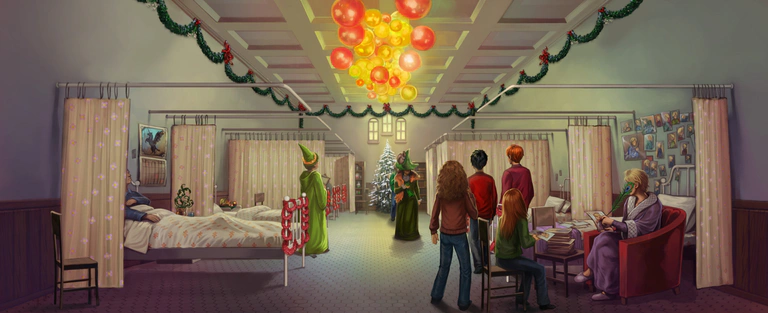
Gilderoy, you naughty boy, where have you wandered off to?
When Gilderoy was admitted into St Mungo's Hospital for Magical Maladies and Injuries due to his self-inflicted amnesia, the Healer in charge of his ward, Miriam Strout, took great care of him. She was very motherly to him, catering to his condition with an affectionate tone, leading him back into his room when he slipped out while speaking kindly to him as though he was a child out of place. She also took pity on him for the fact that nobody visited him, not even any of his family members.
Sources
Adapted from the original article, under CC BY-SA 3.0.