Lore
Dark Arts
The Dark Arts, also known as Dark Magic, or the Dark Side was a term that…

The Dark Arts are many, varied, ever-changing, and eternal. Fighting them is like fighting a many-headed monster, which, each time a neck is severed, sprouts a head even fiercer and cleverer than before. You are fighting that which is unfixed, mutating, indestructible.
The Dark Arts, also known as Dark Magic, or the Dark Side was a term that referred to any type of magic that was mainly used to cause harm to, exert control over, or even kill people and creatures. Common examples included dark spells such as the three Unforgivable Curses, brewing dark potions, and breeding dark creatures. These acts were often illegal in the wizarding world, or at least heavily discouraged.
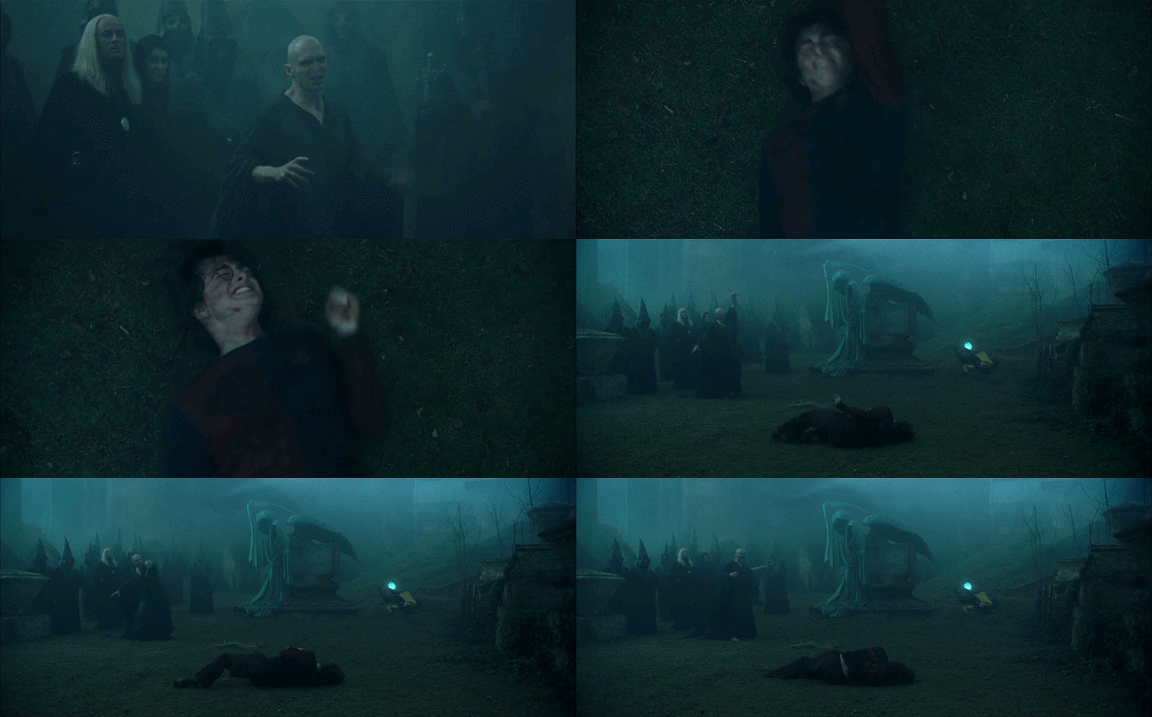
Human practitioners of the Dark Arts were referred to as Dark wizards or witches, most of whom, but not all, were evil. The most prominent and powerful of these was Lord Voldemort, who was widely considered to be the most evil Dark wizard in all of history. His followers, known as Death Eaters, also heavily practised the Dark Arts.
Nature of the Dark Arts
The Dark Arts were generally regarded as corrupting to those who use them (which is part of the reason they are called "dark"). Quirinus Quirrell was interested in dark magic, initially by a theoretical view to gain recognition, but his curiosity turned to avarice, and eventually he was completely drawn in and corrupted.
Albus Dumbledore, in particular, suggested that engaging in any of the Dark Arts that involve murder was damaging to the soul; for instance, he told Severus Snape that Draco Malfoy's soul was "not yet so damaged" that he was probably capable of murder, but that if he did go through with murder, his soul would be "ripped apart". This suggested that using very dark magic, such as the Killing Curse, damaged an individual's soul. The dark art of creating a Horcrux involved literally splitting the soul for the unnatural purpose of achieving immortality.
After engaging in the Dark Arts extensively for many years, even Tom Riddle's physical appearance demonstrated his corruption — he lost his former handsomeness, eventually taking on serpentine physical qualities such as red eyes, and no nose.
Just as all spells required intention to be cast properly, powerful dark spells required malicious intent in order to be successful. For example, according to Bellatrix Lestrange, to cast the Cruciatus Curse, one had to truly desire to cause pain in and of itself and enjoy doing so. Even if the caster genuinely hated the victim, righteous anger would not work. The Dark Arts could also be difficult to control; Vincent Crabbe lost control of the cursed fire he created in 1998 during the Battle of Hogwarts and was killed by it.
Injuries caused by dark magic sometimes never fully healed, such as George Weasley's ear after it was cut off by the Sectumsempra curse (he was struck with during the Battle of the Seven Potters). Furthermore, some curses could remain in one's genes, being passed down through generations as recessive, or could reemerge in a descendant that could lead to frail health. For example, Astoria Malfoy was one such victim of her ancestor's curse.
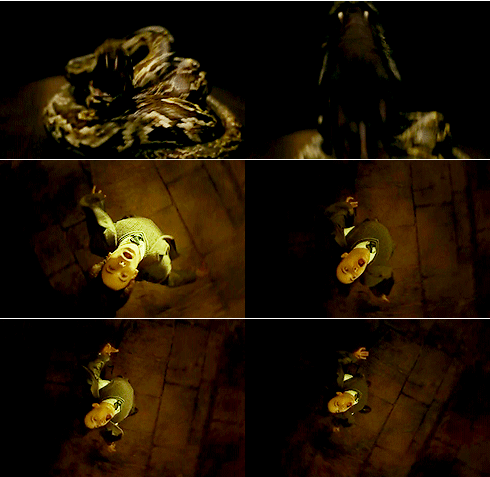
Dark creatures could also have lasting impacts that were deadly or incredibly harmful to those who came into contact with them. Basilisks had deadly venom in their fangs, as well as the ability to instantly kill anyone who looked them directly in the eye. Although, indirect eye contact, such as seeing its reflection, would only result in petrification. While petrification could be cured by the Mandrake Restorative Draught, and wounds from Basilisk fangs healed by phoenix tears, these treatments were quite difficult to prepare or obtain.
Another example was that Dementors had the ability to literally devour all the happiness from the world around them, leaving people with only their worst experiences, resulting in a state of misery and hopelessness. Furthermore, Dementors could consume human souls with their kiss. There was no cure for someone who has had their soul removed, as they spent the rest of their lives in a vegetative state which is even considered worse than suffering a painful death.
Wandlore
According to wandlore, the suitability of a wand to perform dark magic depended, at least partly, on its core; dragon heartstring, phoenix feather, and rougarou hair had reputations for being suitable for it, while it was hard to perform dark magic with unicorn hair wands.

Protection
You are protected, in short, by your ability to love! The only protection that can possibly work against the lure of power like Voldemort's!
Defence Against the Dark Arts was taught as a Core class at Hogwarts School of Witchcraft and Wizardry. In this class, students learned about a variety of dark spells and creatures and how to effectively defend themselves against them. It should be noted that D.A.D.A. required a practical approach, and that just teaching books and theories would have only hindered the learning process. According to Professor Snape, the Dark Arts were pragmatic in nature, where every time a branch was defeated, it only came back "fiercer and cleverer" than before. It is therefore imperative that one's defences had to be as versatile as these foul arts themselves.
There was a wide variety of sophisticated magical devices known as Dark Detectors, all of which made for effective weapons against Dark wizards. One such device was the Sneakoscope, resembling a spinning top; it spun around, lit up, and sounded a whistle if someone was doing something untrustworthy nearby. Another was the Foe-Glass, resembling a mirror, which showed its user a visual of their enemies. The closer those enemies got, the more clearly they could be seen in the Foe-Glass. When made to work together, the different kinds of Dark Detectors could improve upon each other's function. However, these devices could be fooled, so it was advisable not to rely on them too much.
Similarly, more proactive preemptive measures could have been taken against potential enemies, such as by placing an Admonitor on them, so as to monitor any spells they cast.
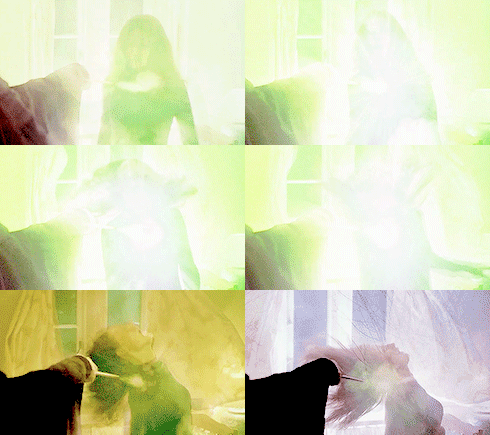
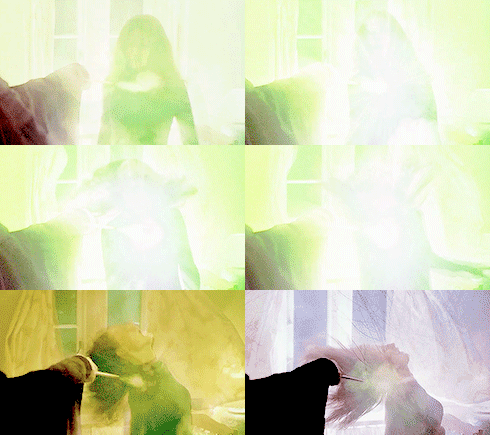
According to Albus Dumbledore, the only power strong enough to enable a person to resist the temptation of the Dark Arts, and to defeat them, was pure love. He was perhaps referring to the act sacrificial protection, which was invoked when someone sacrificed their life out of love to protect someone else, creating a powerful magical protection around the loved one in question against the enemy they sacrificed themselves to. Lily Potter inadvertently used to protect her infant son Harry Potter, and which Harry himself later used to protect the defenders of Hogwarts by willingly letting himself be hit by a Killing Curse from the Lord Voldemort.
Of course, Harry was not actually killed by this curse; since Voldemort had used Harry's blood (the magic of his mothers sacrifice still in his veins) to restore his physical form three years prior, he had inadvertently linked Harry's life to his own. The curse only destroyed the part of Voldemort's soul inside him. Although Harry did spend a brief time in limbo before returning to the land of the living.
The Dark Arts and the law

Now... those three curses — Avada Kedavra, Imperius, and Cruciatus — are known as the Unforgivable Curses. The use of any one of them on a fellow human being is enough to earn a life sentence in Azkaban.
Although many members of the wizarding world appeared to frown upon the Dark Arts, they were mostly not prohibited. The three Unforgivable Curses were punishable by an automatic life sentence in Azkaban prison when used on fellow humans, wizard or Muggle. However, some types of magic could have more benign uses as well as Dark uses, and thus were presumably not always illegal.

Under certain conditions, the Dark Arts may have even been encouraged. For example, during the height of the First Wizarding War, the Head of the Department of Magical Law Enforcement of the day, Bartemius Crouch Senior, authorised the use of killing instead of capture and granted the Aurors permission to use the Unforgivables against the Dark Wizards who followed Voldemort. Given this, it can safely be assumed that if the situation was dire enough, the Dark Arts were ironically encouraged by the Ministry to combat the problem.
Moreover, shops like Borgin and Burkes in Knockturn Alley openly traded in Dark artefacts, and were patronised by "hundreds of people", which suggested that at least some aspects of the Dark Arts were somewhat socially acceptable, or at the very least legal among parts of the wizarding population. Though with all businesses related to the Dark Arts collected together in one place, Knockturn Alley, it would have been easier for the Ministry to keep track of all of them, which may have influenced the government's policies on the matter.
Of course, the law may have differed from country to country. For example, while Hogwarts School of Witchcraft and Wizardry taught only Defence Against the Dark Arts, Durmstrang Institute taught the Dark Arts itself. In Japan, witches and wizards were not permitted to practise the Dark Arts in any capacity; to do so was a violation of the Japanese wizard's code, and anyone who did so would face trial in front of the Japanese Ministry of Magic. Furthermore, if the offender was a student at Mahoutokoro School of Magic, said offender would be immediately expelled, in addition to facing legal repercussions.
When Lord Voldemort was in control of wizarding Britain in late 1997 to mid-1998, every aspect of the Dark Arts was legalised and taught at Hogwarts by Death Eater professor Amycus Carrow. However, since Voldemort was controlling the Ministry at this time, it was not standard protocol.
Ethical considerations
The Dark Arts infuse many different kinds of magic like powerful roots.
While the Dark Arts had earned a bad reputation overall, dark magic was not, by definition, "evil" magic, as reflected in some of the people using it not being evil. The only known exception to this rule was the spell which created a Horcrux; this was an entirely selfish act — taking another person's life in order to prolong one's own. The act of genuine remorseless murder was so reprehensible that the caster's soul became fragmented, allowing for the creation of a Horcrux. The soul could only be restored by complete remorse for the murder, or repentance, which was actually painful enough to cause death.
That aside, dark magic could be used for good as well as evil. Even the Killing Curse could be used for good, as Albus Dumbledore requested that Severus Snape use it to kill him, mercifully saving him from a far worse way to die. A mercy kill did not count as a murder, so Snape's soul went undamaged by the act. Using the Dark Arts in an act of true mercy in and of itself contradicted the very stark moral view that many, such as Bartemius Crouch Senior, publicly espoused regarding them. Killing for self-defence or to protect someone else was also different from murder and left the soul unharmed.
Apart from the metaphysical ramifications, it was possible to use the Dark Arts to achieve great good in the long run. Snape killing Dumbledore ultimately served to help Snape fool Voldemort into thinking he was a loyal Death Eater, allowing him to work behind the scenes and lead Voldemort to his destruction.
At the same time, dark magic was not the only type of magic that could be used with the intent to kill. For example, the Severing Charm could kill if used irresponsibly or maliciously. The Fire-Making Spell could be used to burn someone, and the Levitation Charm could be used to drop someone from a great height.
Dark charms
A wizard who's about to put an illegal curse on you isn't going to tell you what he's about to do. He's not going to do it nicely and politely to your face. You need to be prepared. You need to be alert and watchful.
A dark charm was primarily defined as any charm that consistently negatively affected the object, usually associated with varying levels of discomfort.
Dark charms could be classified into three groups: jinxes, hexes, and curses. These groups form a hierarchy, with jinxes at the base, hexes in-between, and curses at the top. The further one ascended up this hierarchy, the more wicked, the stronger, the longer-lasting, and the less reversible the Dark spell's effects appeared to be. The Unforgivable Curses were the strongest known Dark spells in existence, as their effects were very powerful and their use required skill.
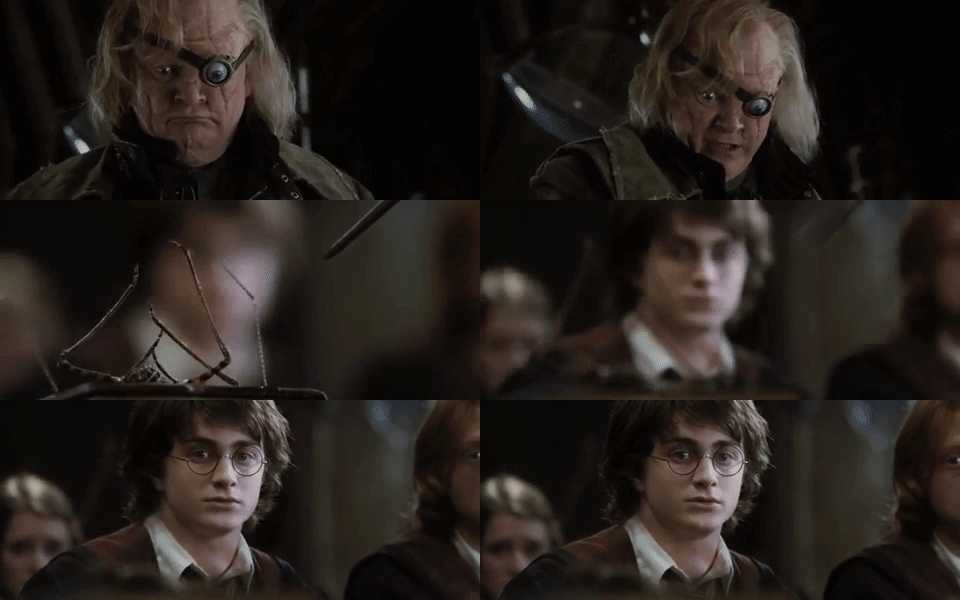
The Unforgivable Curses were shown to Hogwarts students in Defence Against the Dark Arts class in the sixth year, but Bartemius Crouch Junior (disguised as Alastor Moody using Polyjuice Potion) in the 1994–1995 school year showed these curses to fourth-years instead.
Other dark spells could be used not physically on their intended targets, but could cause great harm to them nonetheless. The Taboo was a jinx that allowed the caster to track anyone who said a certain word or name. This gave the caster a great deal of power over people's speech, which spread great fear. It was notably used by Death Eaters to track their enemies during the Second Wizarding War, when they made the name "Voldemort" taboo. Lord Voldemort himself placed a powerful jinx on the position of the Hogwarts Defence Against the Dark Arts teacher in revenge after he was refused the position himself, which resulted in every hired teacher of this subject being forced out of their job at the end of each school year, in various unfortunate circumstances.
The following are examples of dark spells and what hierarchy they belonged to:
- Type Spell Incantation - Jinx Minor dark magic, caused a small inconvenience to the target. Its effects were irritating but amusing, almost playful. Knockback Jinx Flipendo - Oppugno Jinx Harry Potter and the Half-Blood Prince - Revulsion Jinx Harry Potter and the Goblet of Fire - Hex Moderate dark magic, caused a major inconvenience and/or a low level of harm to the target. Bat-Bogey Hex Unknown - Knee-reversal hex - Toenail-growing hex - Curse The worst kind of dark magic, caused extreme harm to the target or otherwise affected them in a strongly negative manner. Cruciatus Curse Crucio - Imperius Curse Imperio - Killing Curse Avada Kedavra
Dark potions

Undoubtedly, this potion must act in a way that will prevent me taking the Horcrux. It might paralyse me, cause me to forget what I am here for, create so much pain I am distracted, or render me incapable in some other way.
These potions caused negative effects on those who drank them, or caused harm in some way or another. Dark potions may have also included ingredients that were not common in regular potions or possessed unusual properties. Some Dark potions included the following:
- Potion Notes - Rudimentary body potion snake venom. - Regeneration potion love sacrifice, it would also affect or protect the wizard or witch reborn with it. - Drink of Despair Harry Potter and the Deathly Hallows
Dark items
Of the Horcrux, wickedest of magical inventions, we shall not speak nor give direction —
Some items could be bewitched with Dark Magic for various purposes. They then became known as Dark Magic artefacts (or simply Dark items). The following items were associated with Dark Magic:
- Object Notes - Bewitched books Harry Potter and the Chamber of Secrets - Hand of Glory Harry Potter and the Half-Blood Prince - Horcrux Harry Potter and the Half-Blood Prince - Opal Necklace nineteen Muggles. - Black house locket Horcrux that contained Voldemort's mutilated soul. - Black Quill Harry Potter and the Order of the Phoenix - Unidentified relic Hogwarts Legacy (In the Shadow of the Relic)
Dark creatures
Seems you've had a pretty thorough grounding in tackling Dark creatures — you've covered boggarts, Red Caps, hinkypunks, grindylows, Kappas, and werewolves, is that right?
Many magical creatures were considered Dark, all of which were deeply feared and/or despised by numerous wizards and witches as a result of the danger these creatures posed to all living things. Some of those creatures included the following:
- Creature Notes - Acromantula Harry Potter and the Chamber of Secrets It was implied that most wizards stayed clear of them, due to how dangerous they were. Breeding Acromantulas had been made illegal by the Ministry of Magic and were included in the Ban on Experimental Breeding. - Banshee Harry Potter: Hogwarts Mystery - Basilisk petrified. It was known as one of the foulest beasts on Earth, and was also the mortal enemy of all spiders. Breeding Basilisks had been made illegal by the Ministry of Magic and were included in the Ban on Experimental Breeding. The punishment for breeding this monstrous creature depended on the ruling of the Wizengamot. - Boggart HarryPotter.com - Dementor Harry Potter and the Prisoner of Azkaban They could also consume a person's soul through the process known as the Dementor's Kiss. The Dementor's Kiss was considered a fate worse than death, leaving the victim in a permanently vegetative state. - Gorgon The Gorgon was a serpentine dark creature that resembled a female with snakes for hair. Like the Basilisk, its glare was capable of causing petrification. - Grindylow Harry Potter and the Prisoner of Azkaban Students at Hogwarts were taught to defend themselves against them in their third year of Defence Against the Dark Arts education. - Hag witches looked like, and were therefore popular in Muggle literature. - Inferius Muggles that the Dark Lord had murdered. - Lethifold A Lethifold was a carnivorous and highly dangerous magical creature. It was also considered a Dark creature because of its extremely aggressive and violent nature. The only known spell that would work against it was the highly advanced Patronus Charm. - Obscurial Fantastic Beasts: The Crimes of Grindelwald - The Original Screenplay - Poltergeist HarryPotter.com - Red Cap Harry Potter and the Prisoner of Azkaban They could be repelled with the Beautification Potion. - Rougarou United States. - Vampire Harry Potter and the Prisoner of Azkaban (film) - Werewolf HarryPotter.com - Zombie The zombie was a dark creature that was a member of the Living Dead, that dwelled in the southern regions of the United States of America. They were identifiable by their greyish, decomposing skin and foul, rotting smell.
Dark practices
Some other practices that would be considered dark included: breaking the Ban on Experimental Breeding by hatching a Basilisk, consuming the blood of a unicorn, and Necromancy, the Dark Art of raising the dead.
Known practitioners
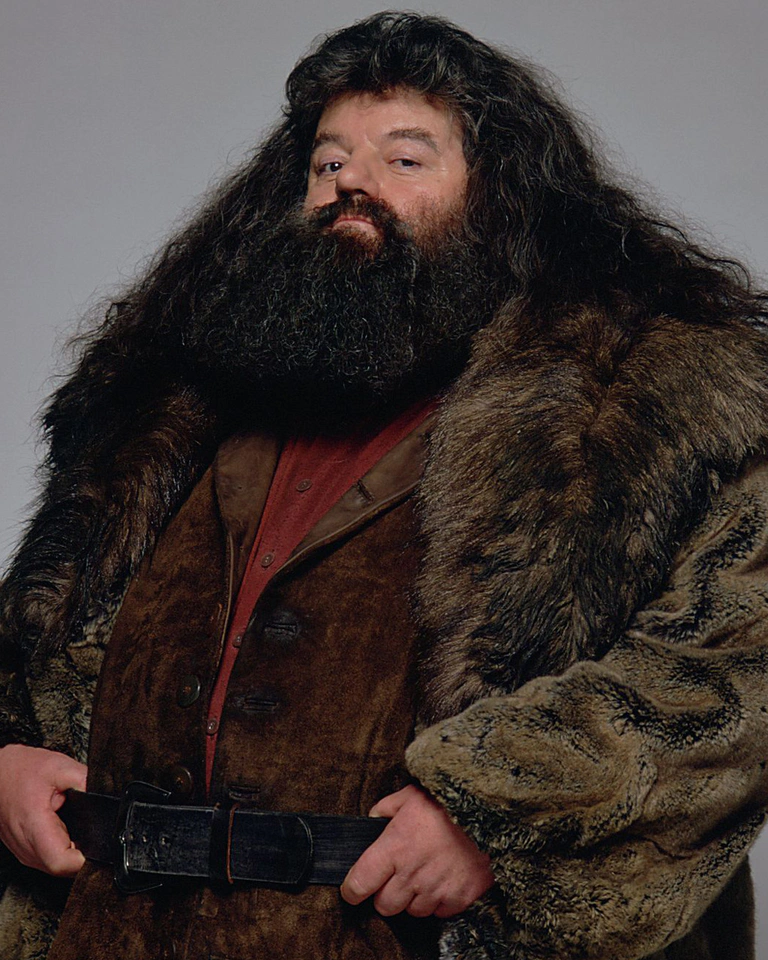
When a wizard goes over to the Dark Side, there's nothin' and no one that matters to 'em any more...
The following wizards and witches were known to have heavily used and practised Dark Magic. Note that, as above, the Dark Arts encompassed many different types of spells and practices, including many that seemed to be in everyday use by most wizards — this section was limited to those who had used strong dark magic at least once, with malicious and selfish intent.
Dark wizards
- Wizard(s) Notes - Ackley Barnes A prominent member of the Rookwood Gang. - Ailsa Travers A member of the Ashwinders and a particularly close friend of Victor Rookwood. - Bardolph Beaumont A coerced member of the Rookwood Gang who was executed and reanimated as an Inferius. - Barnabas Deverill (likely) Possibly the most dangerous dark wizard of the early 18th century, notorious for using the Elder Wand to carve himself a reputation as a fearsome warlock, until his reign of terror was ended. - Catrin Haggarty A gifted member of the Ashwinders. - Delphini The illegitimate daughter of Lord Voldemort and Bellatrix Lestrange, who attempted to reverse the result of the Second Wizarding War through Time travel in the 21st century. - Dolores Umbridge Harry Potter and the Order of the Phoenix - Dunstan Trinity Hogwarts due to his habit of thieving. - Egbert the Egregious (likely) duel. - Ekrizdis HarryPotter.com - Emeric the Evil Harry Potter: Hogwarts Mystery - Eunon Blackwood A dark wizard who erected mazes that could trap people inside. He is notable for being one of the few known Hufflepuff dark wizards. - Gellert Grindelwald Harry Potter and the Deathly Hallows - Godelot An "unpleasant character" who once owned the Elder Wand. - Gormlaith Gaunt HarryPotter.com - Gwendolyn Zhou A master thief and a well-respected member of the Ashwinders. - Hereward (likely) Mastered the Elder Wand after murdering his own father, Godelot, to acquire it. - Herpo the Foul Horcrux and speak Parseltongue. - Iona Morgan A member of the Poacher Pack. - Loxias (likely) Master of the Elder Wand after Barnabas Deverill and gave it the name of "the Deathstick". - Merwyn the Malicious invention of many unpleasant jinxes and hexes. - Morgan le Fay Harry Potter and the Chamber of Secrets (video game) - Narcissa Malfoy Harry Potter and the Goblet of Fire - Niko Nenad Pottermore (via The Internet Archive) - Patricia Rakepick Harry Potter: Hogwarts Mystery - Quirinus Quirrell Harry Potter and the Philosopher's Stone - Raczidian Patronus of her orphaned lover Illyius. - Salazar Slytherin Legilimens, and notable ancestor of the House of Gaunt. - Sebastian Sallow Anne, through a dark relic. - Silvanus Selwyn A lieutenant of Victor Rookwood and a member of the Ashwinders. - Tempeste Thorne A member of the Poacher Pack. - Theophilus Harlow The right-hand man of Victor Rookwood, the leader of the Rookwood Gang in the 19th century. - Dark wizard stopped by Helen Thistlewood Attempted to take over the British Ministry of Magic using an army of Chinese Chomping Cabbages. - Victor Rookwood Leader of the Rookwood Gang, a gang of Dark wizards who terrorised the Highlands of Scotland in the late 19th century. An ally of Ranrok, a Goblin rebel. - Victor Rookwood's father Leader of the Rookwood Gang prior to his death under suspicious circumstances. He was succeeded by his son. - Voldemort (Tom Riddle) defeated and killed by Harry Potter at the Battle of Hogwarts. - Y2 A pure-blood supremacist and believer in Voldemort's cause.
Death Eaters
- Wizard(s) Status Notes - Alecto Carrow Incapacitated, possibly imprisoned Muggles were inferior to Wizardkind, and punished students with the Cruciatus Curse who rejected her authority. - Amycus Carrow Harry Potter and the Deathly Hallows - Antonin Dolohov Killed or imprisoned Fought in the First Wizarding War, during which he tortured many Muggles as well as wizards and witches who were not supporters of the Dark Lord. - Augustus Rookwood Spy who worked as an Unspeakable in the Department of Mysteries. - Avery I Hogwarts. - Bartemius Crouch Jnr Dementor's Kiss Harry Potter and the Goblet of Fire - Bellatrix Lestrange Deceased Voldemort's most loyal follower and best lieutenant. She was the last of the Death Eaters standing during the Battle of Hogwarts. - Corban Yaxley Possibly imprisoned Harry Potter and the Deathly Hallows - Draco Malfoy Defected Harry Potter and the Half-Blood Prince - Evan Rosier Deceased Harry Potter and the Goblet of Fire - Crabbe Possibly imprisoned Harry Potter and the Order of the Phoenix - Avery II - Goyle Harry Potter and the Goblet of Fire - Gregory Goyle Harry Potter and the Deathly Hallows - Igor Karkaroff Deceased Headmaster of Durmstrang Institute and was murdered for defecting. - Lestrange Member of Tom Riddle's gang and one of the earliest Death Eaters. - Lucius Malfoy Defected He joined the Death Eaters, who shared his views on blood purity, and participated in the First and Second Wizarding War. - Mulciber I Possibly imprisoned Member of Tom Riddle's gang and one of the earliest Death Eaters. - Mulciber II Hogwarts, he became a Death Eater. - Nott Member of Tom Riddle's gang and one of the earliest Death Eaters. - Peter Pettigrew Deceased Harry Potter and the Prisoner of Azkaban - Rabastan Lestrange Possibly imprisoned Brother of Rodolphus and brother-in-law of Bellatrix. He fought in the First and Second Wizarding Wars. - Regulus Black Deceased Harry Potter and the Deathly Hallows - Rodolphus Lestrange Possibly imprisoned Brother of Rabastan and husband of Bellatrix. He fought in the First and Second Wizarding Wars. - Rosier One of the earliest Death Eaters of Lord Voldemort. He fought in the First Wizarding War. - Severus Snape Defected, deceased Harry Potter and the Half-Blood Prince - Travers Possibly imprisoned He fought in the First Wizarding War, during which he helped murder Marlene McKinnon and her family, and was imprisoned for committing this crime. He also fought in the Second Wizarding War. - Vincent Crabbe Deceased Harry Potter and the Deathly Hallows - Walden Macnair Possibly imprisoned Harry Potter and the Order of the Phoenix - Other Death Eaters
Non-Dark wizards
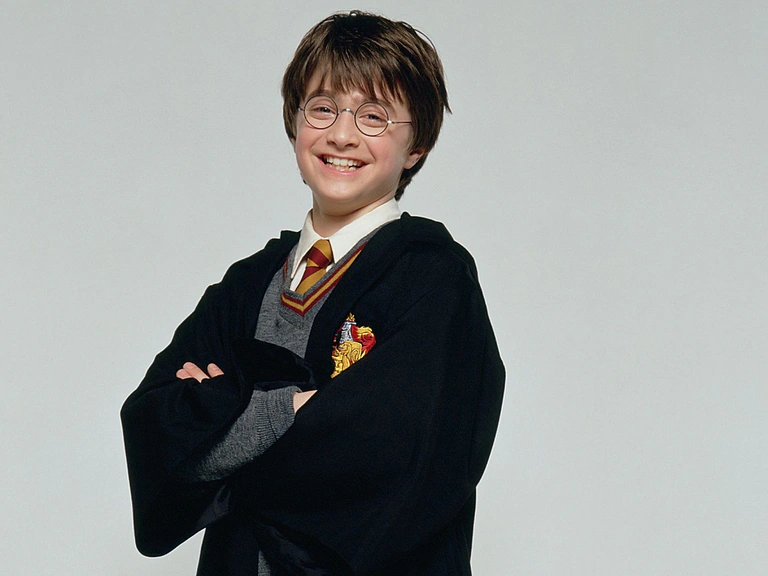
Imperio" Harry said again; his voice echoed through the stone passage as he felt the familiar sense of heady control that flowed from brain to wand.
- Wizard(s) Status Notes - Alastor Moody Occasional user Capable of performing the Unforgivable Curses and many other curses, hexes, and jinxes. - Albus Dumbledore Capable of performing many curses, hexes, and jinxes. - Bartemius Crouch Senior Harry Potter and the Goblet of Fire - Ginevra Weasley Harry Potter and the Order of the Phoenix and could perform other curses, hexes, and jinxes. - Harry Potter Capable of performing two of the three Unforgivable Curses and many other curses, hexes, and jinxes. - Hermione Granger Capable of performing many curses, hexes, and jinxes. - Isolt Sayre - Minerva McGonagall Harry Potter: Hogwarts Mystery and Oscausi . - Molly Weasley Harry Potter and the Deathly Hallows - Pius Thicknesse Imperiused While Imperiused, he performed numerous dark charms under the Death Eaters malign influence. - Viktor Krum Harry Potter and the Goblet of Fire - Durmstrang students Dark Arts. - Hogwarts students (1997–1998 school year) Threatened Harry Potter and the Deathly Hallows
Known texts
The following texts were known to discuss the Dark Arts:

• The Nightshade Guide to Necromancy
• The Dark Arts: A Legal Companion
• The Rise and Fall of the Dark Arts
• The Imperius Curse and How to Abuse It
In wizarding fiction
The Warlock in the wizarding fairy tale The Warlock's Hairy Heart, found in The Tales of Beedle the Bard, utilised a piece of Dark Magic to remove his heart from his body to ensure he would never fall in love, while keeping himself alive without this vital organ within his body.
Sources
Adapted from the original article, under CC BY-SA 3.0.