Creature
Poltergeist
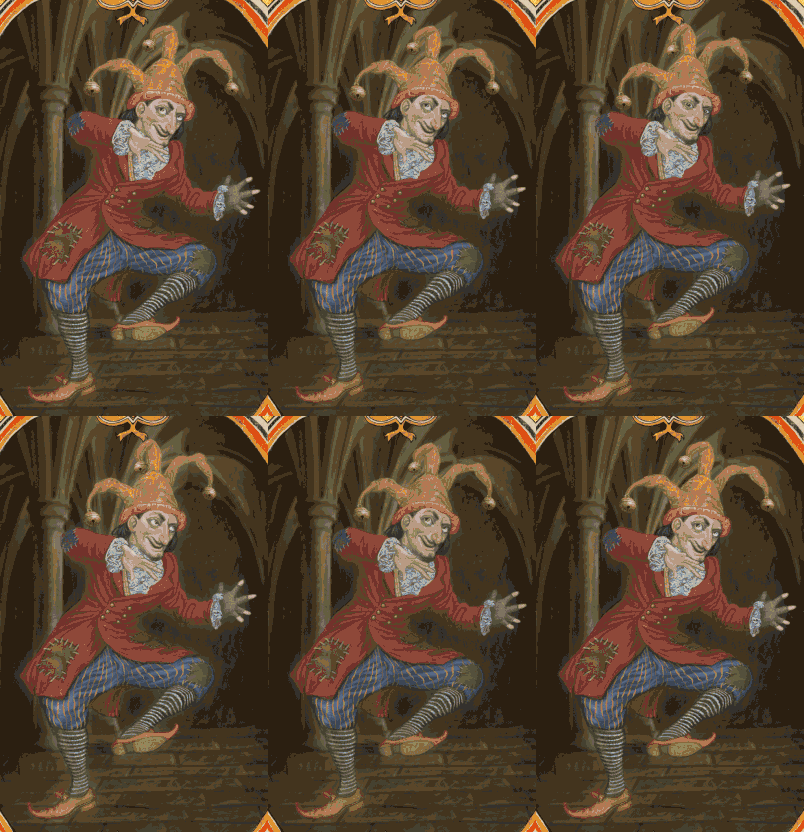
A poltergeist was an "indestructible spirit of chaos", and was among the…
The name 'poltergeist' is German in origin, and roughly translates as 'noisy ghost', although it is not, strictly speaking, a ghost at all. The poltergeist is an invisible entity that moves objects, slams doors and creates other audible, kinetic disturbances. It has been reported in many cultures and there is a strong association with the places where young people, especially adolescents, are living. Explanations for the phenomenon vary all the way from supernatural to scientific.
A poltergeist was an "indestructible spirit of chaos", and was among the creatures classed as Non-Human Spiritous Apparitions, and as such, they were amortal.
Poltergeists haunted one specific location at a time, generally those inhabited by a large number of adolescents and occasionally the homes of Muggles, and either "[came] with the building", or chose to enter it at some point. They generally did not have a physical form, with two notable exceptions being Peeves and Fastidio.
Abilities
Poltergeists could fly, become invisible at will, and they were selectively tangible, meaning that they could pass through walls like the spectral creatures they were, but they could also exert physical force on objects in order to move them.
Poltergeists were also able to use magic; Peeves was able to use the Curse of the Bogies to make students sick, and Fastidio was able to enchant the inside of his chest into a labyrinth of puzzle rooms he called his "playground".
Behaviour
Poltergeists were notably unruly and delighted in vandalism, malicious mischief, and the general aggravation and embarrassment of living persons. They would unscrew chandeliers, write rude words on chalkboards, throw water balloons at people, throw walking sticks at people, stuff keyholes with chewing gum and other such acts, simply for their amusement. Although, these acts were carried out by Peeves, who has been noted as the most troublesome poltergeist in British history, so the level of mischief caused by a more standard poltergeist is unknown.
It was inevitable that, in a building bursting with teenage witches and wizards, a poltergeist would be generated; it was likewise to be expected that such a poltergeist would be noisier, more destructive and harder to expel than those that occasionally frequent Muggle houses.
Some people (notably Albus Dumbledore and the Bloody Baron) could get the poltergeist to settle down for a while, though it would inevitably start acting up again. Additionally, despite their chaotic nature, poltergeists were known to sometimes sign a contract and it seems that once they did, they were bound by its terms.
Poltergeists had developed a misconception that there was no way to get rid of one once it had moved into a location. More destructive poltergeists who had inhabited a location for a longer period of time were harder to expel, but it was not impossible to do. Dolores Umbridge claimed that the Minister for Magic could sign an order banning a poltergeist, and once threatened Peeves with this action. However, her statement might reflect her belief in the superiority of wizards in general and the Ministry of Magic in particular, rather than specific knowledge of the nature of poltergeists, and that her efforts would be wasted. Peeves was likely the only known exception to this course of action.
The Tibble-Tabble Charm, which was first used by Lottie Turner during her time at Hogwarts, was able to invert a Poltergeist's behaviour, making them polite, orderly, and disciplined. However, the effects of the charm went too far and turned the Poltergeist into an insufferable authoritarian. The Tibble-Tabble Counter Charm was able to return the poltergeist to normal.
Comparison to ghosts
Whilst similar, poltergeists differed from ghosts in a number of ways. Firstly, ghosts were incorporeal, whereas a poltergeist, despite not normally having a physical form, was solid enough to move objects with physical force. Poltergeists with form had enough physicality that they could have gum fly up their noses, and they were vulnerable to some of the same jinxes as humans, including Langlock and Waddiwasi. It is also possible that they could feel pain, but still not be physically injured.
Another difference is that ghosts used to be living humans, whereas poltergeists had never been alive in the first place. This trait indicates amortality, the condition of never having died and being unable to die, as one was never alive to start.
Additionally, ghosts' spectral bodies had a greyish-pale appearance, whereas poltergeists spectral bodies had actual colours.
History
Peeves, the poltergeist that haunted Hogwarts Castle, was considered "the most notorious and troublesome poltergeist in British history".
The Sunday edition of The New York Ghost published on 28 November 1926 reported a poltergeist havoc wreaking a diner in Nashville. Quite a heavy novel, Pride, Prejudice, and Poltergeist: A Most Dreadful Love Story was most likely about poltergeists.
During the 1990–1991 school year, a troublesome poltergeist began haunting a Muggle family in Great Britain, which caused problems for the British Ministry of Magic. Arthur Weasley assigned a seventh-year student with dealing with this issue as part of their work experience at the Ministry. They reviewed poltergeists with Bill Weasley in an evening Defence Against the Dark Arts lesson to learn defensive techniques to be used against them.
Known poltergeists
Handsome Poltergeist
Uncle Edward
Fastidio
Unnamed Poltergeist
Sources
Adapted from the original article, under CC BY-SA 3.0.