Creature
Grindylow
A Grindylow was a small, horned, pale-green skinned water demon native to Great…
A sickly green creature with sharp little horns had its face pressed against the glass, pulling faces and flexing its long, spindly fingers.
A Grindylow was a small, horned, pale-green skinned water demon native to Great Britain and Ireland. The Grindylow was of a sickly green colour, with green teeth and small pointy horns on its head. It had long, strong (albeit brittle) fingers which it used to strangle its prey, and was a rather good swimmer, since it was adapted to live in water.
Description and traits
The first stage of a Grindylow's life cycle was the larval stage, where it was referred to as a Grypt. It was also known by several local names, such as a "Pollywiggle" in Ilkley, a "Candypole" in Kettlewell, and a "Jarvis" in Sheffield.

Aggressive towards witches, wizards and muggles alike, the Grindylow was only ever tamed by merpeople; the half-fish water dwellers who sometimes kept them as pets. Grindylows survived, for the most part, on fish, algae, and small sea creatures; however, occasionally they would eat humans (it is for this reason that they are classified as dark creatures).
These creatures were found in the weed beds at the bottom of lakes in Great Britain and Ireland.
The Grindylow was particularly prevalent in Yorkshire, where it displayed a large amount of physical variation. It was generally found in still or stagnant water. Grindylows also took to urban environments such as Porter Beach in the heart of Sheffield, where they sheltered in submerged shopping trolleys and traffic cones. There was a black market trade in Grindylows, as some wizards enjoyed them (illegally) as a delicacy.
Defence
The Grindylow had long, brittle fingers which despite their fragility were rather strong. The trick to escaping a Grindylow was to break their grip on a person; the Revulsion Jinx would help with this task, as underwater it shot jets of boiling hot water, which would scold their skin and cause them to release their grip and retreat.
History
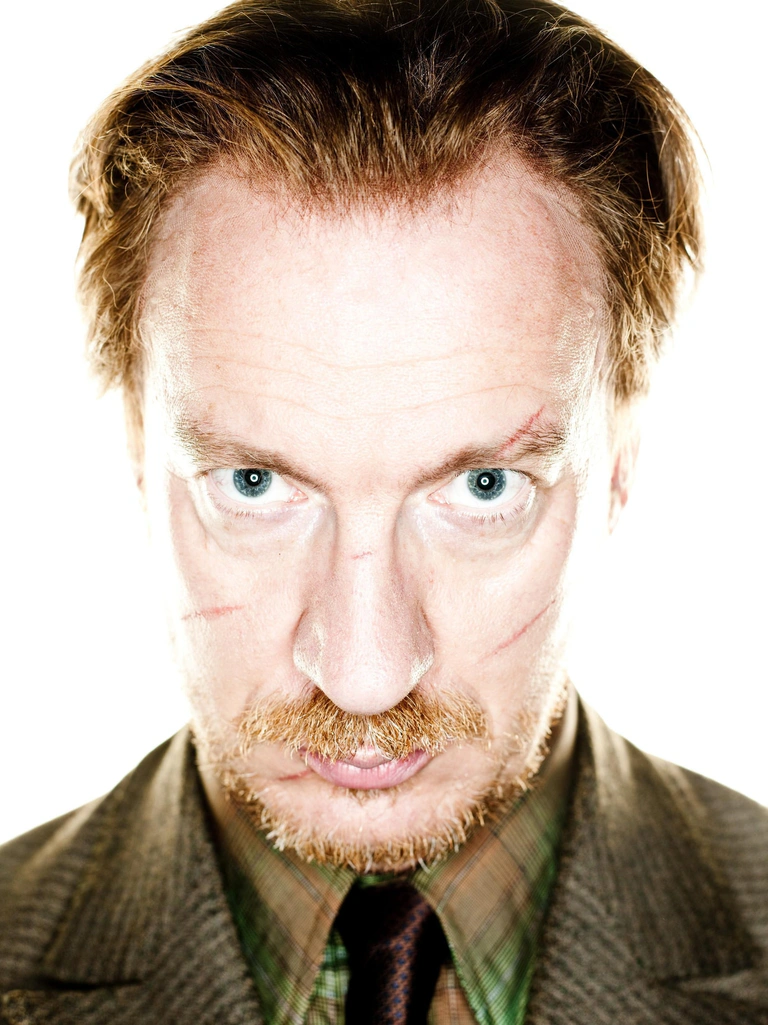
Ah. Why don't you come in? I've just taken delivery of a grindylow for our next lesson.
There were wooden carvings of Grindylows in the Boathouse at Hogwarts Castle. A pack of Grindylows also lived in the Great Lake in the 20th century; these Grindylows attacked the Great Lake Selkie colony in the 1989–1990 school year.
In 1910, Newton Scamander kept a jar of baby Grindylows in water in a cupboard at Hogwarts School of Witchcraft and Wizardry. Newt Scamander had several Grindylows in his suitcase during his travels to New York in 1926.
Harry Potter's encounters
Professor Remus Lupin ordered a Grindylow in 1993 for his third year class to study for Defence Against the Dark Arts. After his resignation, he left behind the tank in which the Grindylow was kept.


Harry twisted his body around and saw a grindylow, a small, horned water demon, poking out of the weed, its long fingers clutched tightly around Harry's leg, its pointed fangs bared-
One year later, the Grindylows of the Black Lake at Hogwarts School of Witchcraft and Wizardry attacked the students competing in the 1994-1995 Triwizard Tournament. They caused the early retirement from the task of Fleur Delacour, and harassed Harry Potter. Harry however managed to repel a swarm of Grindylows by using the Revulsion Jinx underwater. He blasted them with hot water and releasing himself from their tight grip, allowing him to continue swimming.
After the Battle of the Seven Potters, at The Burrow, Remus Lupin verified Harry's identity by asking "What creature sat in the corner the first time that Harry Potter visited my office at Hogwarts?" Harry correctly answered Grindylow, which proved to Lupin that he was not a Death Eater impostor.
Sources
Adapted from the original article, under CC BY-SA 3.0.