Lore
Levitation Charm
Charm used to make objects fly, or levitate
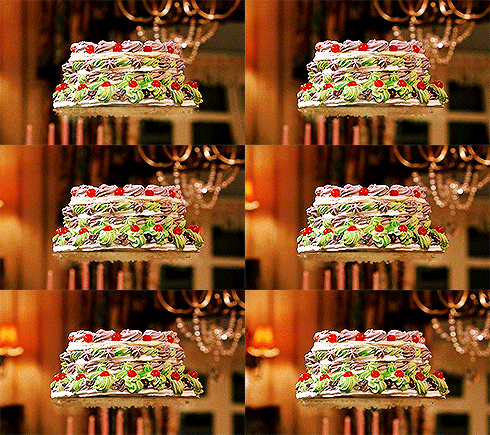
The Levitation Charm is one of the first spells learnt by any young witch or wizard. With the charm a witch or wizard can make things fly with the flick of a wand. The charm is an excellent test of your magical skills, wand control and above all, patience.
The Levitation Charm (Wingardium Leviosa) was a charm used to make objects fly, or levitate. It was taught to first-years at Hogwarts School of Witchcraft and Wizardry.
There were a number of lesser variations of the Levitation Charm, such as the Levitation Spell, the Hover Charm, the Rocket Charm, and the Floating Charm, but the Levitation Charm remained the original and best.
History
The Levitation Charm was invented in 1544 by warlock Jarleth Hobart who mistakenly believed that he had at last succeeded in doing what wizardkind had so far failed to do, and learnt to fly.
The Levitation Charm was first developed in the sixteenth century, and warlock Jarleth Hobart is credited with its creation.
On 16 July, Hobart invited a large crowd of wizards, among which was the Chief Warlock of the Wizengamot, to witness his "maiden flight" — a public demonstration of his own revolutionary charm on himself. He climbed onto the roof of his local church and, after several speeches and a rousing performance of the national anthem he leapt and, having cast the spell, was left hovering in mid-air. At first, he seemed to have succeeded but, after having spent nearly three minutes watching him hanging in mid-air, the crowd grew impatient to see him move somewhere, and booed him.
In response to the catcalls, Hobart tried to move in midair, and started performing vigorous swimming movements, which produced no effect. Mistakenly believing that his clothes were making him heavier and impeding his movement, Hobart stripped thus making him fall ten feet onto the ground below, as it were the clothes that were holding him up in the air — they had been charmed by the Levitation Charm, not Hobart himself. He fell completely naked on the ground, breaking sixteen bones, and received a fine for "outrageous silliness" from the Chief Warlock of the Wizengamot in 1544.
Hobart returned home, humiliated, where he realised that his spell could make objects levitate for varying lengths of time, depending on the skill of the spell-caster and on the weight of the object. He also concluded that small animals or even children could be levitated, but that they had no control whatsoever of their movement once airborne.
He thus made a second announcement, and an even larger crowd gathered to see his second demonstration of the spell (hoping for another laugh at his expense). Hobart's demonstration was, at first, by far more successful than the first one: he showed the onlookers how he could easily levitate objects ranging from small rocks to fallen trees. Hobart decided that, for a finale, he would levitate the Chief Warlock's hat — what he managed to levitate, however, was the Chief's wig, exposing his bald head to the gathered crowd. The Chief was not amused, and was determined to duel Hobart, but the Warlock levitated the Chief's robes over his head, and ran for it.
This was also the first spell students learnt to cast during their Charms lessons in the first year. They revised it in the second and their third year. The theoretical Charms O.W.L. exam included a question on the Levitation Charm. Hermione Granger was the first student in her class to levitate a feather much to Ronald Weasley's annoyance.
Effects
He eventually realised that he had invented a spell that would lift objects into the air and could cause them to hover for varying lengths of time, depending on their weight, and the skill of the spellcaster.
The Levitation Charm appeared to be an improvement on both the Levitation Spell and Locomotion Charm and/or the Hover Charm, being able to lift objects high in to the air, but also allowing one to magically move them around in the air as well. It also conveniently defied gravity, lifting objects that were heavier than a person would normally be able to carry, as seen when Ron used this spell to lift a troll's club, something a first-year Hogwarts student would otherwise never be able to do without magic.

Almost anything could be lifted with this spell, although the overall outcome of the spell depended on the weight of the object and the skill of the caster. It was even possible to levitate multiple objects at once with the same casting, but lifting as many as three objects at the same time was considered very difficult.
It was good for the wizard to keep their wrist loose, to help with the "swish and flick" wand movement.
This charm ought not to be seen as a joke spell. It can be most useful in duels and can lift physical obstacles and can even Levitate small creatures (though this is likely to confuse any poor animal and is certainly not to be encouraged).
Despite its strengths, however, the Levitation Charm had one fatal flaw: it did not work on human beings. Though a human could be levitated using this charm, it was actually their clothing that was being affected. The charm was apparently not strong enough to allow a human to do anything more that float a few feet off the air using this method, and therefore did not allow the true flight afforded to most other objects.
The effects of this charm could be reversed with the General Counter-Spell.
Known uses
- Caster(s) Date Notes - Jarleth Hobart 1544 The first use of the spell was that of Hobart using it on himself as he leapt from the roof of a local church, remaining suspended in mid-air for a brief period of time before the crowd of wizards gathered to watch his new spell. - Unidentified 19th-century Hogwarts student 1890–1891 school year Hogwarts Legacy - Delphini 31 October 1981 (alternate timeline) Harry Potter and the Cursed Child - Draco Malfoy 31 October 1981 (alternate timeline) Draco used this spell to elevate Delphini in the air and out of sight. - June 1996 Used it during his Theory of Charms exam, but lost concentration and caused his wine glass to smash. - Filius Flitwick 1986–1987 school year Harry Potter: Hogwarts Mystery - Pieter Talli Harry Potter: Hogwarts Mystery - Ben Copper Participated in a lifting game with Pieter Talli and Jacob's sibling. - Jacob's sibling Participated in a lifting game with Pieter Talli and Ben Copper. - Harry Potter: Hogwarts Mystery - 1987–1988 school year Harry Potter: Hogwarts Mystery - 1988–1989 school year Harry Potter: Hogwarts Mystery - Wilfred Levi Kidd 1989–1990 school year Harry Potter: Hogwarts Mystery - Jacob's sibling 1992 Harry Potter: Hogwarts Mystery - Hermione Granger 31 October 1991 Harry Potter and the Philosopher's Stone - Ron Weasley 31 October 1991 Professor Quirrell had let into the school. - 2 May 1998 Harry Potter and the Deathly Hallows - Bill Weasley August 1994 Harry Potter and the Goblet of Fire - Charlie Weasley Harry Potter and the Goblet of Fire - Rita Skeeter 13 November 1994 Harry Potter and the Goblet of Fire - Lee Jordan 1996 Harry Potter and the Order of the Phoenix - Harry Potter June 1996 Used it during his Theory of Charms exam. - 18 June 1996 Harry Potter and the Order of the Phoenix - 27 July 1997 Harry Potter and the Deathly Hallows - Severus Snape (possibly) October 1996 Harry Potter and the Half-Blood Prince (film), Chapter 11 (Cursed Necklace ) - Minerva McGonagall 1 May 1998 Harry Potter and the Deathly Hallows - Tiburon Merriweather's great-grandchild 2008–2009 school year Harry Potter: Magic Awakened - Ivy Warrington house's common room to practise. - Victor Kidd 2010s Used to levitate a book while practising the spell near the Stone Bridge. - Tiburon Merriweather's great-grandchild 2010s Harry Potter: Magic Awakened - Kevin Farrell - Robyn Thistlethwaite
The fictional character Babbitty Rabbity may have used this spell to levitate a horse, in the tale of Babbitty Rabbitty and her Cackling Stump, found in The Tales of Beedle the Bard.
Known practitioners
• Rowan Khanna
• Tiburon Merriweather's great-grandchild
Sources
Adapted from the original article, under CC BY-SA 3.0.