Person
Armando Dippet
Professor Armando Dippet (October 1637–1992) was a wizard and Headmaster of…

We are honour-bound to give service to the present Headmaster of Hogwarts! Shame on you, Phineas!
Professor Armando Dippet (October 1637–1992) was a wizard and Headmaster of Hogwarts School of Witchcraft and Wizardry, and the predecessor of Albus Dumbledore in the post.
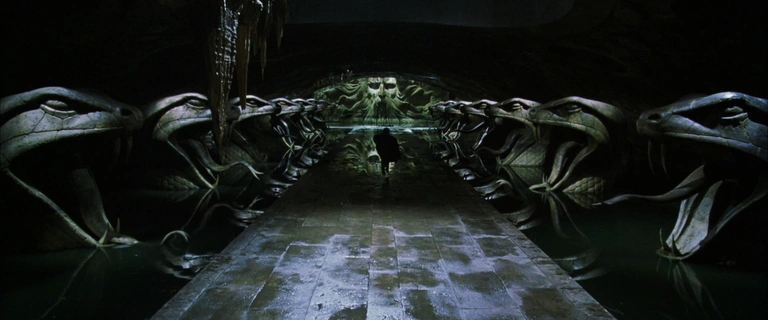
Dippet served as Headmaster in the 1940s into the 1960s (and possibly the very early 70s). It was during his tenure that the Chamber of Secrets was first opened by Tom Riddle since its creation by Salazar Slytherin in around A.D. 993. Unknowingly, Dippet was indirectly responsible for the end of the attacks by telling Riddle that the school would have to be closed if said attacks continued. Dippet was also responsible for the expulsion of Rubeus Hagrid after Riddle framed him for the attacks.
Dippet left office between March 1965 and March 1971 and was succeeded by Albus Dumbledore. He was a "nearly bald and a somewhat feeble" man in his elderly years and died in late 1992.
Early life
Armando Dippet was born in October 1637, and it is likely that he attended Hogwarts School of Witchcraft and Wizardry. If so, he must have been Sorted into either Gryffindor, Hufflepuff or Ravenclaw, but certainly not Slytherin, in 1649.
If he went through his magical education at Hogwarts, he would have graduated at the age of eighteen in 1656. What he did after his graduation is unknown, although Armando Dippet seemed to have been held in high regard in his old age, since he was eventually chosen and offered the job of being Headmaster of Hogwarts, although it is unknown whether he ever took up a teaching post prior to this appointment.
As Headmaster of Hogwarts
Early years

Professor Dippet became Headmaster of Hogwarts School of Witchcraft and Wizardry in the early twentieth century, at over 200 years old. In his position, it is possible he was responsible for the employment of Horace Slughorn, Herbert Beery, and Silvanus Kettleburn as teachers at Hogwarts. It is also known that he was responsible for hiring Minerva McGonagall, having offered her "a job in the Transfiguration department, under Head of Department, Albus Dumbledore".
He may have immediately succeeded Phineas Nigellus Black as Headmaster, after his death in 1925. If so, Dippet would have been the one who sent students home early in the following year and increased the security of Hogwarts in response to the threat from Gellert Grindelwald.
Christmas pantomime

The night's entertainment concluded with a packed hospital wing...
During Dippet's tenure as Headmaster, Herbert Beery, then-Herbology master, proposed an adaptation of The Fountain of Fair Fortune as a Christmas treat for both staff and students. The show, however, was a fiasco: the students playing Amata and Sir Luckless had been boyfriend and girlfriend until one hour before the show, at which point "Sir Luckless" dumped her for "Asha". During the play, the Engorged Ashwinder portraying the Worm (provided by the reckless Professor Silvanus Kettleburn) exploded in a shower of hot sparks and dust, filling the Great Hall with smoke and fragments of the scenery. While the Ashwinder's eggs set fire to the floorboards, "Amata" and "Asha" started duelling fiercely. Professor Beery was caught in the crossfire and his head assumed unusual proportions. While the staff evacuated the Great Hall, the fire raging inside it threatened to engulf the place.
Of course, there were several people sent to the Hospital Wing and Professor Dippet had to put Professor Kettleburn in one of his sixty-two periods of probation. In response to this dramatic fiasco, Professor Dippet imposed a blanket ban both on overtly dangerous magical beasts to class, and on all future pantomimes, the former of which lasted for the duration of Professor Kettleburn's teaching career, even after he was later succeeded by Albus Dumbledore, and the latter were a tradition that is still followed by the Hogwarts' staff and students even after Professor Kettleburn retired.
Chamber of Secrets openings
My dear boy, you must see how foolish it would be of me to allow you to remain at the castle when term ends. Particularly in light of the recent tragedy… the death of that poor little girl. You will be safer by far at your orphanage. As a matter of fact, the Ministry of Magic is even now talking about closing the school. We are no nearer locating the — er — source of all this unpleasantness…
Dippet was the Headmaster of Hogwarts when the Chamber of Secrets was opened by Tom Riddle during the 1942–1943 school year. Very fond of Riddle, Dippet was unaware of his sinister nature.
That school year, many students were attacked by Salazar Slytherin's Basilisk. On 13 June of the same year, a student named Myrtle Warren was murdered in a bathroom, during one of the Chamber's openings by Riddle. After realising that no one had seen Myrtle for a couple of hours, Professor Dippet asked fellow student Olive Hornby to go and look for Myrtle.
Myrtle's Muggle father and mother were summoned to the school by Dippet, and the Headmaster faced the possibility of closing the school. Dippet also rejected Tom's request of staying at school over the summer holidays due to the situation, but would have given him special permission if the school were much safer. Not wanting the school to close, or possibly not wanting to return to the orphanage, Riddle stopped attacking students with the Chamber's Basilisk and framed Rubeus Hagrid for the attacks. Dippet then promptly expelled Hagrid. However, under Albus Dumbledore's request, Hagrid was trained as Gamekeeper and was allowed to remain at the school.
Exchange visit with Castelobruxo
During the 1940s or 1950s, Hogwarts received students and Professor Benedita Dourado from Castelobruxo, the Brazilian wizarding school, during an exchange visit. When Dippet complained of Peeves, the resident poltergeist, Professor Dourado laughed heartily and offered to send him some Caipora for the Forbidden Forest "to show you what trouble really is". Naturally, Professor Dippet did not take her up on that offer.
Tom Riddle's job application
Professor Dippet told him that he was too young at eighteen, but invited him to reapply in a few years, if he still wished to teach... I had advised Armando against the appointment — I did not give the reasons I have given you, for Professor Dippet was very fond of Voldemort and convinced of his honesty — but I did not want Lord Voldemort back at this school, and especially not in a position of power.
When Tom Riddle returned to Hogwarts after his graduation to apply for the post of professor of Defence Against the Dark Arts after Galatea Merrythought retired, Dippet denied him the position for being too young, but invited him to reapply in a few years, despite being advised against it by Albus Dumbledore.
Dumbledore, at the time, had realised Riddle's true intentions, but did not include them as his reasons for denying him the job, as Professor Dippet was very fond of him and believed that he was completely honest.
Retirement
...Rita Skeeter, best-selling author of Armando Dippet: Master or Moron?
Professor Dippet's term as Headmaster ended between March 1965 and March 1971. His immediate successor in the post was Professor Albus Dumbledore, who had been Dippet's Head of Transfiguration. Dippet was at some point immortalised on a Chocolate Frog Card.

At some point, Rita Skeeter published her bestselling biography titled Armando Dippet: Master or Moron?, which, given its title and Skeeter's own brand of sensationalist writing (elsewhere described as "one quarter truth to three quarters rubbish"), it can be reasonably assumed that it contained false defamatory information, or otherwise facts taken out of context.
Death and post-mortem
In the 1 September 1992 edition of the Evening Prophet, he was being suspected of causing an accident only a month before his ancient age flying test on his 355th birthday. Dippet died in late 1992.
After his death, the late Headmaster was allowed to leave behind an imprint of himself in the form of a portrait mounted on the wall of the Headmaster's office along with other revered Headmasters and Headmistress. In doing this, he effectively ensured that he in some capacity could continue to posthumously serve the school by sharing his knowledge with his successors in office as a final service to his beloved school.
The portrait he left behind presented him as very dignified and solemn-looking while attired in long, majestic robes of blue and bronze. In 1995, he scorned the portrait of Phineas Nigellus Black, who was feigning tiredness in order to avoid going to 12 Grimmauld Place like Dumbledore asked him to. He was devoted to serving whoever was Headmaster.
After the Battle of Hogwarts, he was most likely among those who congratulated Harry Potter on his defeat of Lord Voldemort, along with the other headteachers of Hogwarts.
Physical description
Professor Dippet had brown eyes and, in his youth, a thick brown beard. At the time of his appointment to the post of headmaster, Dippet had his portrait painted, and though it perfectly captured the enfeebled state of his old age, it also depicted him as a grave, dignified old wizard with bushy eyebrows, a well-kept white beard and long, curly silver wig that made him appear quite regal in his flowing robes of gold and midnight blue. Around the time of Tom Riddle's visit following the death of Myrtle Warren in 1933, his frail appearance was made even more pronounced by the fact that his baldness was on full display with only a few wisps of white hair left on his head.
Personality and traits
As made evident by his portrait in the Headmaster's office, he was apparently a very proud man who for the most part held himself with dignity and solemnity at all but the most trying of times, in which case he would, over time, look very feeble and tired after having to cope with such troubles at his age.
Very loyal to Hogwarts, Professor Dippet gave a certain impression of holding the school in higher regard than he did even his staff, as he was very distrusting of others, and Professor Albus Dumbledore, his Head of Transfiguration during the later parts of Professor Dippet's tenure, noted that he was one of the few people that Professor Dippet confided in. He was also a man of tradition, having trained his portrait to scold anyone who showed lack of respect or loyalty to the school, which was shown when it reprimanded the portrait of Phineas Nigellus Black for attempting to defy a request from Professor Dumbledore, expressing that they were honour-bound to give advice to the current Headmaster or Headmistress, regardless of their personal feelings.
Professor Dippet appeared to be a disciplinarian, as corporal punishment was practised at the school during his tenure. Horace Slughorn once joked that Dippet might place him in detention if he found him letting students roam the school after hours at his Slug Club. He also placed Professor Silvanus Kettleburn, whom he always considered to be quite reckless, on no fewer than sixty-two periods of probation for various incidents.
His concern for the well-being of his students was shown once more during the 1942-1943 school year, when he, like all his employees, did everything in his power to apprehend the perpetrator and protect the students after the opening of the Chamber of Secrets. During that year, it is known that he instructed a student by the name of Olive Hornby to go look for fellow student Myrtle Warren the moment he realised that no one had seen her for some time.
He also seemed to favour status, as he believed a prefect Tom Riddle over a younger Rubeus Hagrid, even expelling Hagrid without putting much effort into investigating the matter when he was accused of opening the Chamber of Secrets. However, as the school at the time was dangerously near to being closed down by the Ministry of Magic after the murder of Myrtle, he was likely to have done so on account of having been under a lot of pressure. Although, as Hagrid was allowed to stay at and be employed by the school after his expulsion, Professor Dippet might have been a wise and well-meaning, if somewhat strict, administrator under pressure rather than mercilessly expelling one student on the word of another.
It is known that, during his tenure at Hogwarts, Professor Dippet grew rather fond of Tom Riddle and was perhaps somewhat biased towards him, partly due to sympathising with the boy who had grown up orphaned and friendless and partly due to the young man's charisma. However, this did not blind him from keeping safety as his number one priority, nor did it stop him from keeping up certain standards. This was shown when he rejected the request of a recently graduated Tom Riddle to become a teacher on the basis of him being too young, as well as rejecting Riddle's request to staying at school over the summer holidays due to the situation with the Chamber of Secrets, while unaware that Riddle was the one behind the danger Dippet wanted to protect him from. However, being fully aware that Riddle despised the orphanage where he was raised, he did comment that he would have given him special permission if the school was safer at the time.
Possessions
Wand: Professor Dippet's wand was of unknown manufacturer, length, core and wood. He was in possession of it during the 1940s. He left it on his desk during his meeting with Tom Riddle in 1943 concerning the summer holidays and the opening Chamber of Secrets.
Headmaster's office: When Professor Dippet presided in the office in the Headmaster's Tower, there was a single bookcase, a desk, and several paintings there, including the portraits of his predecessors. His passwords are unknown, though it can be presumed that he told one of them to Tom Riddle in 1943.
Strawberry and ling plantings: According to Albus Dumbledore, Professor Dippet planted some strawberries and ling in the castle grounds while he was Headmaster.
Tom Riddle
I had advised Armando against the appointment — I did not give the reasons I have given you, for Professor Dippet was very fond of Voldemort and convinced of his honesty...
Dippet was very fond of Tom Riddle, whom he made several "special arrangements" for. His relationship with him was strong enough to make Dumbledore decide not to tell Dippet about why he thought Riddle should not be given a job at the school.
Hogwarts staff
Professor Dippet was, apparently, distrusting of his employees, confiding only in a few professors, which included the Transfiguration teacher Albus Dumbledore.
As Headmaster, Dippet placed Silvanus Kettleburn on at least one, but presumably many more, of his sixty-two periods of probation. The one known time was after he provided an Ashwinder with an Engorgement Charm on it instead of a worm for The Fountain of Fair Fortune pantomime. Dippet, after the chaos, placed a permanent ban on pantomimes at the school from there on.
Another of Dippet's employees was Herbert Beery, who was the one who adapted The Fountain of Fair Fortune into a play. Beery, who had been teaching Herbology, eventually left to become a professor of the Wizarding Academy of Dramatic Arts.
Horace Slughorn also worked under Headmaster Dippet. One evening, during one of his Slug Club's supper parties, Slughorn joked that, if the student group would be found up and about after hours, Professor Dippet would put them all in detention, including himself.
Sources
Adapted from the original article, under CC BY-SA 3.0.