Person
Phineas Nigellus Black
Professor Phineas Nigellus Black (1847 – 1925) was a pure-blood wizard born to…
Professor Phineas Nigellus Black (1847 – 1925) was a pure-blood wizard born to the House of Black. He was the younger brother of Sirius Black (I), and the older brother of Elladora and Iola Black. He attended Hogwarts School of Witchcraft and Wizardry as a member of Slytherin House, later taking on a teaching position and then becoming its Headmaster. He married Ursula Flint and together they had five children: Sirius, Phineas, Arcturus, Belvina and Cygnus. He banned Quidditch during the 1890–1891 school year, and did not participate in resisting Ranrok's goblin rebellion as most members of the staff did. His tenure as Headmaster of Hogwarts would see him regarded as the institution's least popular Headmaster in its thousand-year history.
Following his death in 1925, his portraits were hung in the Headmaster's office to offer advice to the current Headmaster, as well as at 12 Grimmauld Place, the ancestral home of the House of Black which was used as the Order of the Phoenix headquarters. He was able to travel between both portraits, allowing him to play a contributing role during the Second Wizarding War.
Early life
Phineas Nigellus was born to the House of Black in 1847. He had three siblings; Sirius, Elladora, and Iola Black.

The siblings were raised in a household that strongly believed in the importance of blood purity, and as such Phineas carried a grudge against Muggle-borns, whom he called "Mudbloods" and considered "simple".
At the age of eleven, circa 1858, Phineas Nigellus began his schooling at Hogwarts School of Witchcraft and Wizardry, where he was Sorted into Slytherin House. He was once reprimanded by Dinah Hecat for having eaten a Sugar Quill in the middle of a lecture.
Some time after leaving school circa 1865, Phineas Nigellus married Ursula Flint, and at the age of 30, the two had a son, Sirius, named after his deceased brother. Four more children followed: Phineas, who did not inherit his father's views on pure-blood supremacy and was disowned by the family for supporting Muggle rights; Arcturus, Belvina and Cygnus. He was reportedly quite distant from his children, seldom visiting or speaking to them; that said, he still ensured that they were financially cared for.
As Headmaster of Hogwarts

There's Phineas Nigellus... my great-great-grandfather, see? ... least popular Headmaster Hogwarts ever had.
As an adult, Black became a professor at Hogwarts School of Witchcraft and Wizardry, a job which he loathed due to the impertinence of his students. He was later appointed as the Headmaster of Hogwarts by the British Ministry of Magic, but accepted the position only for the prestige and benefits associated with it and otherwise showed very little interest in acting as a role model or actively shaping children's education. While he was Headmaster, his two sons Sirius and Phineas both attended Hogwarts.


The Headmaster hates everyone who isn't a pure-blood Slytherin.
Black was known to weave his pure-blood supremacist values into the administration of the school. In his role, he attempted to persuade Minister Faris Spavin to change the Hogwarts admissions process, very likely to favour pure-bloods and restrict Muggle-borns, though his request was declined. On another occasion, he failed to discipline two students who were bullying a half-blood victim, claiming that "the wise rabbit doesn't seek to outrun the tortoise – because it's not necessary." His bigotry was fairly well-known, as students throughout the school could be heard claiming that he hated anybody who was not a pure-blood Slytherin.
In general, much of his work, whether it was administrative or related to student safety, was overtaken by Professor Weasley, while he preferred to be Headmaster only for the rewards it brought to his social position. His great-great-grandson, Sirius Black (III), would later describe him as the least popular Head the school had ever known. A book of Hogwarts Quidditch records found in the school library also had Professor Black called a "prat" for cancelling Quidditch.
1890-1891 school year
Before the 1890–1891 school year, the Ministry charged Black with arranging the arrival of a Hogwarts student who would be starting late as a fifth-year. As the Deputy Headmistress Matilda Weasley insisted that the student would need a mentor to be prepared for their enrolment, he assigned the task to Professor Eleazar Fig. He also worked with the Department of Magical Education to secure a Wizard's Field Guide to help them with their studies.
On 1 September 1890, Black oversaw the Sorting Ceremony. After the last first-year student was sorted, he noticed Fig watching from outside the Great Hall and went to meet him as well as the new fifth-year. He informed Fig that the ceremony was over and stopped Fig from telling him about the goblin rebellion, which he regarded as mere rumours. He nevertheless allowed the student to be sorted and led them into the hall.
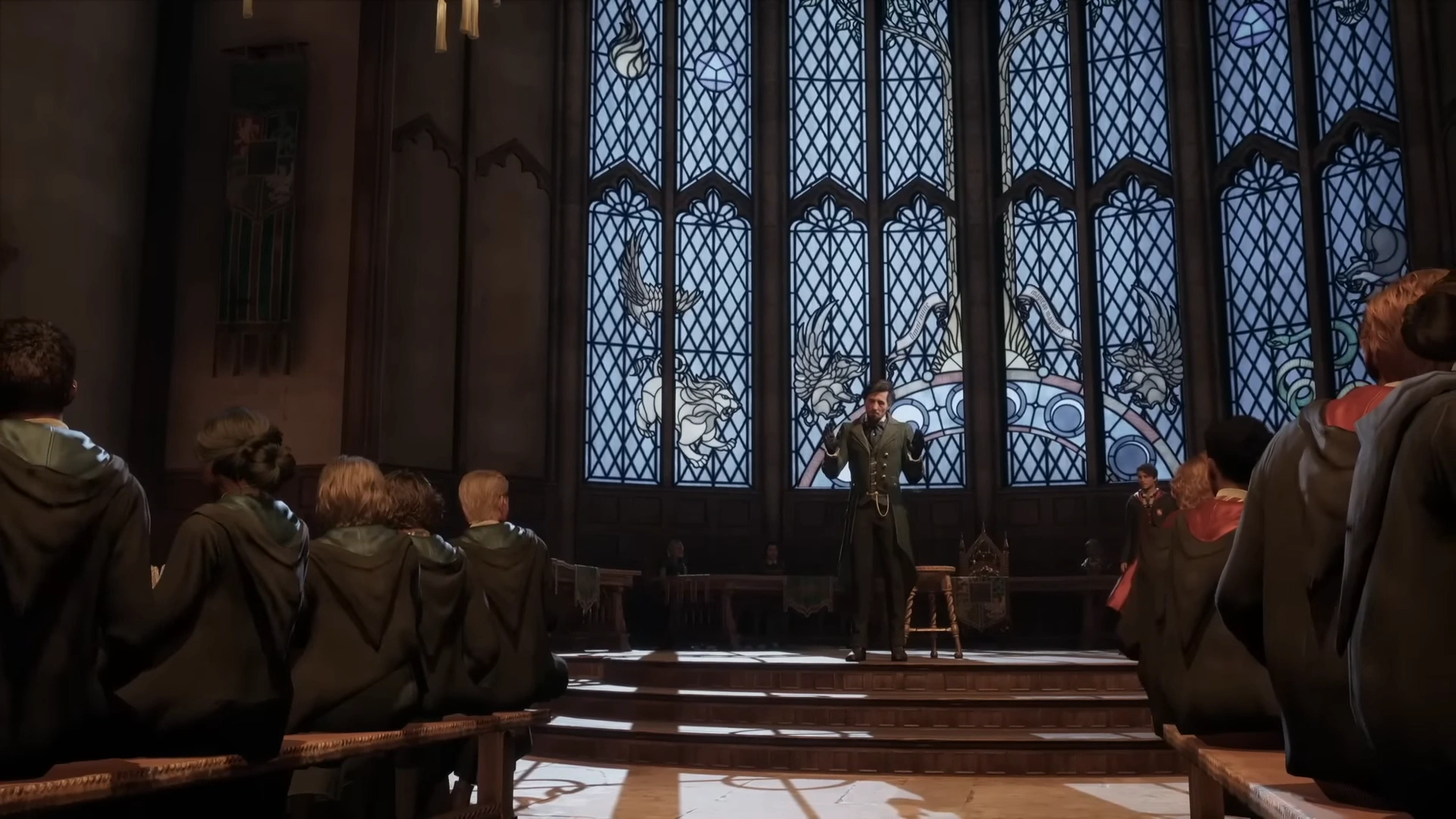
After the ceremony was done, Black announced that the year's Quidditch season was cancelled due to a student (in truth a pure-blood) having been injured in the previous spring's final. This elicited noticeable dissatisfaction among the students, whom he reminded that they were there to focus on their academic futures before hurrying them off to prepare for the next day's classes. His decision to cancel the Quidditch season was also received very badly by many staff in the school, most notably Imelda Reyes and Madam Chiyo Kogawa, the latter of whom would continually pester Black throughout the school year to get it reinstated.
After the Start-of-Term Feast, he asked Professor Weasley to show the new fifth-year to their common room. Later during the year, he ordered Gladwin Moon to remove the bells from the school's Bell Towers under the pretense that their sound gave him headaches, though rumour had it that he did not like hearing them because it reminded him of his wedding day.

Throughout the school year, Black remained oblivious while countless world-threatening developments occurred around him, such as Ranrok's planned invasion of the school. He peremptorily occupied Professor Fig's time when he was about to visit the library with the new fifth-year student, asking him to go to London to talk to the Minister for Magic about George Osric's death. When the new fifth-year student needed to use Polyjuice Potion to disguise as Black and obtain the password to the Headmaster's office, Fig asked Black to meet a liaison at Hogsmeade to draw him away, during which Black became inebriated rather quickly.
When Ranrok eventually did invade, with the aim of obtaining the final repository and supplanting wizardkind with goblinkind, Black was not present at the battle that ensued. Black later led an awkward and flippant tribute to Professor Fig, who had died in the battle, at his memorial ceremony in the Great Hall, and notably, he was reluctant even to appreciate the sheer heroism and skill of the new fifth-year student who had taken down Ranrok personally.
Aside from school and goblin rebellion matters, Black suffered from boils during the year and had Professor Sharp, the Potions Master, brew him a Cure for Boils. The new fifth-year became aware of this while disguised as Black via Polyjuice Potion; they ran into the Potions Master and ordered him to have a student deliver the cure to the headmaster's office, much to Sharp's bewilderment.
Death and post-mortem
We are honour-bound to give service to the present Headmaster of Hogwarts! Shame on you, Phineas!
Professor Black died in 1925 at age 78. At the time of his death, Phineas Nigellus had five children, at least thirteen grandchildren, and two great-grandchildren. Many more would be born after he had died.
Black's portrait in the Headmaster's office did not seem to enjoy assisting Albus Dumbledore, believing that he was eccentric. The second portrait of Black was hung at 12 Grimmauld Place, and like other portrait subjects in the wizarding world, Black could travel between his portraits, which he did often. In 1995, Harry Potter stayed in the bedroom where Black's portrait was hung, and Black passed him messages from Dumbledore. His voice could sometimes be heard coming from the frame when he was not in it, making sarcastic comments. His portrait had also been trained to ridicule those with Muggle parentage. One of the main messages that Black passed was when his great-grandson Arthur Weasley was attacked by Nagini whilst on duty for the Order of the Phoenix, letting Sirius know he was going to have company.
Black's unpopularity would only be surpassed by Dolores Umbridge, who even the school itself refused to let her enter the headmaster's office. Students and teachers alike all openly rebelled against her tyrannical rule. His portrait would later proclaim Snape as the only Slytherin headmaster since himself, showing not even he acknowledged Umbridge as a head of the school.

During Harry Potter, Ron Weasley and Hermione Granger's quest to destroy Lord Voldemort's Horcruxes, Black's Grimmauld Place portrait was hidden in Hermione's magically enlarged beaded bag to stop him from being able to report their location to Severus Snape, then Headmaster of Hogwarts. His portrait was then taken with the trio when they left the house.
During this time, Black reluctantly dropped certain snippets of information on what was going on in Hogwarts to them, aiding them in their quest. He managed to find out where they were camping and informed Snape, who was able to give them the Sword of Gryffindor. He appeared happier to help Snape than he was when helping Dumbledore, proud to help another Slytherin Headmaster.
Black possibly watched the Battle of Hogwarts in 1998. After Voldemort's defeat, he saw Harry, Ron, and Hermione at the Headmaster's office. Like all the Headmaster portraits, he celebrated Hogwarts's victory, and proudly brought up the fact that Slytherin House had contributed to it. He very likely would have continued to help future Headteachers after the Second Wizarding War.
In 2019, Black's portrait was captured by the Calamity and began to appear around the world as a Foundable.
Physical description
When the clever-looking wizard continued to feign sleep, some of them shouted his name too.
Professor Black was a clever-looking wizard, with black hair, "shrewd, narrow" dark eyes, a pointed beard and thin eyebrows. He was depicted posthumously in his portrait as wearing the green and silver colours associated with Slytherin House. He also wore a hat.
Personality and traits

Never try to understand the students. They hate it. They would much rather be tragically misunderstood, wallow in self-pity, stew in their own —
In his portrait form, Black was shown to be a snide, sarcastic individual. He had little patience for the feelings and problems of others, particularly young people, whom he found tedious and self-absorbed, and had no qualms whatsoever in using demeaning phrases when referring to others. He did however show respect towards certain individuals, such as Severus Snape. He also acknowledged Albus Dumbledore's skills despite generally disagreeing with him. He also seemed to support blood purity, since he looked down on Muggle-borns and even used the pejorative term "Mudblood". Black even harboured a hatred for half-bloods, considering Mundungus Fletcher to be "manky".

Despite his views on blood purity, he did not support the Death Eaters and celebrated with the other portraits when Lord Voldemort was finally defeated. He seemed sentimental of the Black family possessions, as he was quite dismayed upon learning that Mundungus was stealing and selling them. He also seemed to care for his family members, even ones who were disowned, as he was upset at learning about the death of his great-great-grandson, Sirius Black. He appeared to hold many of the qualities that are fitting of Slytherin House: cleverness, ambition, cunning, self-preservation, determination and pride.
Magical abilities and skills
Hogwarts was never in danger! The castle is and always has been well protected under my stewardship.
Magical mastery: His reputation as the least popular headmaster in the history of the school notwithstanding, Professor Black was nevertheless a powerful wizard: While most portraits were reducible to two-dimensional representations of the living subjects and hence merely capable of using some of their favourite phrases and imitate their general demeanour and not much else, Professor Black's portrait was capable of considerably more interaction with the living world than the average painting, which included advising his successors, use logic to critically assess the flaws in other people's thinking, and impart knowledge spanning several topics, such as how the movement of portraits works and the magical qualities of goblin metal-work. This is particularly notable, as the extent to which a portrait could interact with those that looked at it depended not on the skill of the painter, but rather on the power of the witch or wizard depicted.
Intelligence: Although Professor Black was never passionate about the prospect of educating young witches and wizards, he did value education for its own sake, and took great pride in his knowledge, to the point where his portrait, which he had trained to behave and act like himself, looked down on those whom it regarded as ignorant, and educated his portraits on things he believed later generations of Heads of Hogwarts would find useful, among them specifics of goblins metalwork.
Head's privilege: As the overarching magical protections surrounding Hogwarts School of Witchcraft and Wizardry were bound by enchantment to its stewardship. Professor Black was, as one of its rightful incumbents, the only wizard alive capable of controlling them for the duration of his tenure as headmaster.
Defence Against the Dark Arts: Although he never openly acknowledged the extent to which Ranrok posed a threat to the security of the school following the battle for the final repository in order to save face, Professor Black asserted that the school was well-protected during his tenure as headmaster, a statement that was fully backed up by how both the Ashwinders and the Poacher Pack remarked how they would have attacked the school if the defensive spells Black maintained had not kept them out, and even Ranrok himself noted that a certain student he sought to capture was out of reach upon arriving at Hogwarts until he later drilled his way in from underneath it, an area the protective enchantments of the castle did not cover at the time. As such, Professor Black was highly proficient with defensive spells.
Charms: Professor Black was implied to be proficient with charms, as Nellie Oggspire believed that he had the skill, but not the interest, to disenchant the Daedalian Keys that had been previously been bewitched by former Headmistress Eupraxia Mole. He was also adept at casting the Freezing Spell, and did so on at least one occasion to extinguish a fire caused by three Slytherin students at Hogwarts.
Family
Probably another message for my worthless great-great-grandson.
Phineas Nigellus Black's older brother, Sirius, died in childhood. He had two sisters: Elladora, who began the family tradition of beheading aged house-elves, and Iola, who was disowned for marrying the Muggle Bob Hitchens.

Black was married to Ursula Flint. They had five children: Sirius, Phineas, Cygnus, Belvina, and Arcturus. Phineas was disowned for supporting Muggle rights, showing that Phineas Nigellus valued pure-blood supremacy over his relationships with close family members.
Phineas Nigellus was reportedly quite distant and neglectful toward his wife and children, rarely visiting or speaking with them. Nonetheless, he fulfilled his duties as a provider, ensuring they were financially supported.
Though Black did not get along well with most people, his portrait was upset to learn that his great-great-grandson Sirius, the last of the surname Black, was dead in 1996, and was visibly upset when he learned that Mundungus Fletcher was stealing Black family heirlooms the following year. This could have been from dynastic or emotional reasons.
Albus Dumbledore

You know, Minister, I disagree with Dumbledore on many counts ... but you cannot deny he's got style ...
Black was Headmaster during Albus Dumbledore's years as a student at Hogwarts, but Black did not seem to hold much respect for his former student and distant successor. While others, including Harry Potter and Rubeus Hagrid, considered Dumbledore the greatest sorcerer in the world, Black considered him to be too eccentric and to be wasting his time by trying to understand the students. Dumbledore, however, always took Black's criticisms lightly. Although Black was trained to advise future Headmasters, he was known to despise advising Albus Dumbledore.

Black's opinion of the man went on even after Dumbledore's self-planned death at the hands of Severus Snape in 1997, and he proceeded to admire Snape, who later became Headmaster himself, considerably more.
However, after Dumbledore escaped from being arrested by the Ministry of Magic in 1996, Black commented to Cornelius Fudge that, although he disagreed with Dumbledore on many accounts, one couldn't deny that he had style. This may indicate that Black had a little bit of admiration for Dumbledore.
Severus Snape
Any relationship with Black before Severus Snape became Headmaster of Hogwarts School is unknown, but by the time that Snape was appointed to the post in 1997, Black came to greatly admire Snape, who was the first Head of the school to have once been in Slytherin since he himself had presided over the castle. Whenever others would insult Snape, Black would immediately end the conversation, although this disliking of anyone who insulted the subject of his respect did not carry so far as to stop other factors, such as curiosity, from refusing to speak to them indefinitely.

Snape himself, however, resented Black's tendency towards slurs directed at Muggle-borns, immediately demanding that Black never use the term "Mudblood" after Black let the phrase slip in Snape's presence.
Hogwarts students
You know, this is precisely why I loathed being a teacher! Young people are so infernally convinced that they are right about everything.
Despite being Headmaster, Black was known to dislike most of the students of Hogwarts and had no real ambition to be seen as a role model or any interest in the students' education. This was possibly a reason why Sirius Black believed he was the least popular Headmaster Hogwarts ever had. He believed that the young people didn't respect the professors enough, something that he told Albus Dumbledore when Harry Potter wanted to learn why it was so important to take Horace Slughorn's memory.
Furthermore, when Harry tried to convince Dumbledore that both Draco Malfoy and Severus Snape were loyal Death Eaters, Black said that young people believed that they were right about everything. However, Black might have had a good relationship with the Slytherin students, whom he described as brave, but not stupid.
Possessions
Wand: Black owned an ornate black-and-silver wand which he likely obtained from Ollivanders at the age of eleven, along with most other British and Irish witches and wizards.
Scrope: Scrope was a house-elf whose sole allegiance was to Phineas Nigellus Black. Scrope was inherited from Phineas's ancestor, Apollonia Black, whom he had served before. Scrope attended Phineas during his tenure as Hogwarts Headteacher.
Niffler: Black owned a pet Niffler.
Niamh Fitzgerald's book: This was a book stored in the Headmaster's office during Black's tenure, which allowed a student with the power of ancient magic to enter into Niamh Fitzgerald's trial.
Sources
Adapted from the original article, under CC BY-SA 3.0.