Lore
Herbology
Study of all plants and fungi, magical and mundane
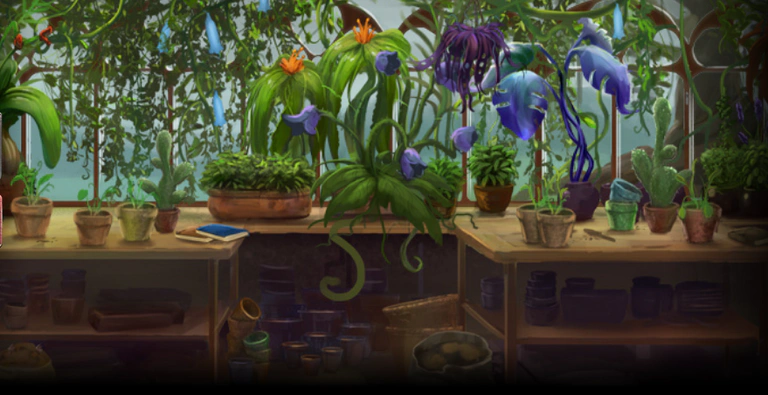
Professor Sprout took a large key from her belt and unlocked the door. Harry caught a whiff of damp earth and fertiliser mingling with the heavy perfume of some giant, umbrella-sized flowers dangling from the ceiling.
Herbology was the study of all plants and fungi, magical and mundane. Wizards and witches who specialised in this field were known as Herbologists.

The study of Herbology encompassed a vast array of topics, ranging from the mundane to the magical. Herbologists explored the growth patterns of magical plants, their preferred habitats, cultivation techniques, and the effects of magical properties on their surroundings. They also studied the uses of these plants in potion-making.
Nature
Greenish smoke billowed upward and when it has cleared, Harry saw that the bleeding had stopped. The wound now looked several days old; new skin stretched over what had been open flesh.
There were a vast variety of magic plants and fungi in the wizarding world, each with its unique properties and characteristics. Throughout wizarding history, herbology has been shaped by the contributions of notable figures. A Herbologist and author, Phyllida Spore, wrote the Herbology textbook One Thousand Magical Herbs and Fungi.

The knowledge gleaned from Herbology had practical applications in various magical endeavours. Most prominent was their use in potions. The Mandrake for example was the essential ingredient in the Mandrake Restorative Draught. According to Professor Aesop Sharp, Herbology class was just as important to the learning of potions as Potions class itself. It was good to have a solid grasp on not only how to combine ingredients, but to have an understanding of the ingredients themselves. The plants nurtured in Herbology class were often essential in potions. Being able to source one's own potion ingredients also helped to save a Galleon or two.
Aside from their use in potions, many plants had magical properties of their own. Gillyweed gave the person who ate it fish-like features and allowed them to breathe underwater for an hour. One of the most useful was dittany, a healing and restorative herb that could make fresh skin grow over an open wound. In addition to Essence of Dittany being applied topically, the raw plant could be consumed to heal shallow to moderate wounds. Some magical plants also had predatory attributes that made for effective weapons in combat, or a highly effective security measure.
Another aspect of the practise of Herbology were spells that were useful for gardening and could magically accelerate the growth of plants, such as the Herbivicus Charm and Rose Growth.
As with spells and potions, magical vegetation could be researched and experimented with, allowing for the development of something new. During her tenure as Headmistress of Hogwarts, Phyllida Spore cultivated a special fungus that could enhance a wizard's magical abilities beyond imagination. Professor Sprout called it "the Philosopher's Stone of Herbology".
According to Leah Lee, a professional Herbologist, the most important component in the practice of Herbology was Fertiliser, since plants grown in pots could not have gotten all the nutrients they needed from just the relatively small amount of soil they were planted in.
Limitations
The primary limitation of Herbology was that it took time for plants to grow and mature. In the 1992–1993 school year at Hogwarts, a number of students were petrified by the Serpent of Slytherin and the school staff intended to revive them with the Mandrake Restorative Draught. However, it took several months before the Mandrakes were ready to be chopped up and stewed.

Furthermore, different plants had different needs in order to thrive. Devil's Snare for example liked a dark and damp environment, and recoiled away from heat and bright lights. Another problem was that some plants, such as Niffler's Fancy, Thaumatagoria and Mimbulus mimbletonia were rarer than others.
While many plants were essential in the art of potion making, some were notably difficult to work with and prepare. The Sopophorous Bean for instance was incredibly difficult to cut. Although alternative methods could have been employed to make the process easier.
Additionally, while some magical plants made for good security, they were not an absolute defence. In fact, they were fairly easy to get past if one had the proper knowledge. Furthermore, these security plants were known to be unruly sometimes. In 1889, the mother of Leander Prewett tried planting some Chinese Chomping Cabbages to protect her garden from pests. They did save her the trouble of de-gnoming her garden, but they also ravaged her honking daffodils.
Dangers
Despite their beneficial properties, there was a variety of dangerous plants in the Wizarding world and they could have proven lethal if mishandled. The Whomping Willow, which whammed its branches against any living creatures that came near it. The Mandrake's cries were fatal to anyone who heard it. The Chinese Chomping Cabbage had rather sharp teeth. The Venomous Tentacula contained lethal poison in its bite. The Devil's Snare constricted and suffocated anyone who got too close. As such, a variety of precautions and countermeasures had to be employed.

It didn't help that some plants were more difficult to identify than others, the harmless plant known as Flitterbloom was almost identical to the deadly Devil's Snare.
Furthermore, according to Professor Mirabel Garlick in the late 19th century, plants were surprisingly perceptive and could sense if someone didn't truly care about them. Her predecessor did not truly care about the plants and he had a series of bad experiences with them which resulted in several trips to St Mungo's and ultimately led to his resignation. However, the prudent Herbologist was no more afraid of the Venomous Tentacula than the Bouncing Bulb.

Some magical plants also exhibited resistance to conventional spells and methods of control. For example, the Mimbulus Mimbletonia, with its defensive spray Stinksap, posed a difficulty to Herbologists attempting to study it.
Another danger was that unlike spells and potions, whose magic effects were obvious, magical plants could have unknown powers which could have proven dangerous, even deadly, upon discovery. A prime example of this was Gillyweed; it was first discovered by Beaumont Marjoribanks, but its ability to allow someone to breathe underwater wasn't known until Elladora Ketteridge ate the plant and nearly suffocated. She only survived by dunking her head into a bucket of water.
Hazardous attributes aside, some plants had disgusting attributes that could turn some green-fingered wizards and witches equally green-faced. It was not a subject for those of a delicate constitution.
Teaching

Three times a week they went out to the greenhouses behind the castle to study Herbology, with a dumpy little witch called Professor Sprout, where they learned how to take care of strange plants and fungi, and found out what they were used for.
A subject called Herbology was taught at Hogwarts School of Witchcraft and Wizardry. In this class, students learned how to properly care for and utilise different plants, as well as learned about their magical properties and what they are used for. Students were also taught a few spells that were helpful for gardening, such as the Herbivicus Charm.
Professor Pomona Sprout, a Herbologist and the Head of the Herbology department at Hogwarts School of Witchcraft and Wizardry, taught Herbology to several generations of students during the late 20th and early 21st century.
Herbology was also taught at Castelobruxo, the Brazilian wizarding school located amid the Amazon rainforest, whose students were especially advanced in the subject.
Published works
• A Horticultural History of the Blackwood Maze
• Diffindo spellbook
• Flesh-Eating Trees of the World
• Goshawk's Guide to Herbology
• Herbivicus spellbook
• Hogwarts Castle: A History of Cultivated Fungus
• Ingredient Encyclopedia
• Magical Water Plants of the Highland Lochs
• Plants and herbs
• The Spore Scrolls
Sources
Adapted from the original article, under CC BY-SA 3.0.