Lore
Animagus
An Animagus (pl. Animagi) was a witch or wizard who could transform themselves…
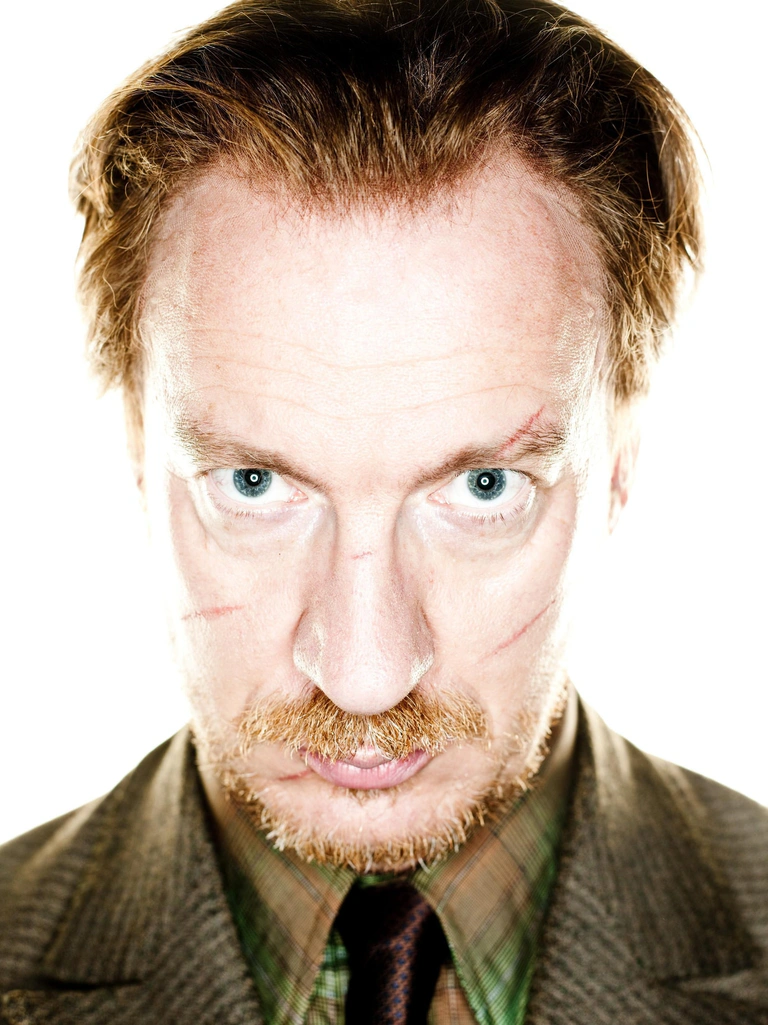
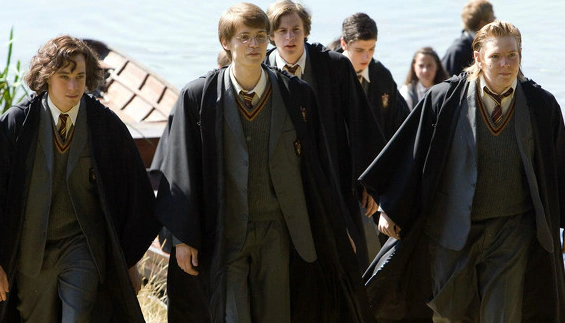
It took them the best part of three years to work out how to do it. Your father and Sirius here were the cleverest students in the school, and lucky they were, because the Animagus transformation can go horribly wrong — one reason the Ministry keeps a close watch on those attempting to do it. Peter needed all the help he could get from James and Sirius. Finally, in our fifth year, they managed it. They could each turn into a different animal at will.
An Animagus (pl. Animagi) was a witch or wizard who could transform themselves into an animal and back again at will. It was a skill that could be learned, unlike the hereditary ability of a Metamorphmagus. Information on Animagi was taught to Hogwarts students during their third-year Transfiguration class. An Animagus Registry existed to keep track of those that had learned to transform in this way.

Process
Any witch or wizard who wished to become an Animagus had to undergo a ritual-like process in order to achieve the ability. The process of becoming an Animagus was long and difficult and it had to be done in a very specific way. It required skill, practice, and patience.
The first step for becoming an Animagus was that the witch or wizard in question had to keep a single Mandrake leaf in their mouth for an entire month (from full moon to full moon). If the leaf was removed or swallowed, the witch or wizard would have to start over again.
At the next visible full moon (if the night happened to be cloudy, one would have to start over) the wizard had to spit the saliva-filled leaf into a small crystal phial that received the moon's pure rays. To the moon-struck phial, the wizard or witch must then add one of their own hairs, a silver teaspoon of dew taken from a place that had not seen sunlight or been touched by human feet for a full seven days, and the chrysalis of a Death's-head Hawk Moth. The resulting mixture then had to be put in a quiet, dark place, and could not be disturbed in any way.
The next thing that had to happen was for the wizard to wait for an electrical storm, whenever that might be. During this waiting period the wizard would have to, at sunrise and sundown everyday without fail, chant the incantation Amato Animo Animato Animagus with the tip of their wand placed over the heart. If one kept repeating the incantation, there would come a time when a second heartbeat may have been sensed with the touch of the wand-tip to the chest. This was perfectly normal and should have been ignored. It was important not to let it cause any disturbance to the process.
When, at last, there was a lightning storm, the wizard had to retrieve the phial, which, if everything was done right, should have been found to contain a blood-red potion. The wizard had to immediately move to a large and secure place; somewhere they could achieve the transformation safely and without alarming anyone. To complete the process, the wizard had to point their wand at their heart and recite the incantation one final time, and then drink the Animagus potion.
Once the process was completed, the witch or wizard would be an Animagus and for the rest of their life would have the ability to change between their human and animal forms at will, with or without the use of a wand. However, if any part of this process was done incorrectly, it had the potential to backfire and cause the transformation to go horribly wrong (such as causing permanent half-human, half-animal mutations).
Upon completion of the process, the Animagus experienced a vision revealing their new animal form. According to Natsai Onai, the first time an Animagus transformed into their animal form, it could be a bit unnerving. The first time she took her gazelle form, she felt a kind of searing pain and a strong double heartbeat. But it got easier the more an Animagus did it; after a while, Natsai didn't feel pain anymore, and found a sense of comfort in the double heartbeat.
It was advisable to try to avoid panicking during the first transformation, otherwise the animal mind may "gain the ascendancy", which could have resulted in the wizard doing something stupid or dangerous.
Because the process required so much time and effort and posed great risk should it go wrong, and because many witches and wizards simply felt that their time might be better spent in other ways, not many people chose to try becoming an Animagus. Besides that, the skill was of limited practical use anyway, unless one had a great need of disguise or concealment.
Teaching
At Hogwarts School of Witchcraft and Wizardry, the theory of Animagus transfiguration was taught about in third year. When Minerva McGonagall, an Animagus herself, was the teacher, it also included a practical demonstration. However, back when Matilda Weasley taught Transfiguration at Hogwarts, she believed that self-transfiguration was too dangerous for the students to learn.
Talented and determined students could acquire the skill during their school years if they wished to. A teacher who taught the skill did not need to be an Animagus themselves, as shown when Professor Dumbledore, who was not an Animagus, taught Minerva McGonagall how to successfully become one.
Minerva had become an Animagus by the age of seventeen, being taught by Professor Dumbledore, who made a note within The Tales of Beedle the Bard to explain for her that, while Animagi were usually people who sought to avoid punishment when they broke the law, she merely became one to further her studies in Transfiguration.
At Uagadou, a school known for its focus on self-transfiguration, students could become Animagi by the age of fourteen.
Details
An Animagus could change into their animal form by visualising said animal form, and return to normal by imagining their human self, as clearly as possible. A beginner may not have been able to change back right away, but with enough practice, an Animagus could slip in and out their animal form easily.

During the transformation, clothing, as well as items such as glasses or jewellery, melded to the skin and became one with fur, scales or spikes. This could have been described as "uncomfortable and frightening", but wizards generally preferred to Transfigure their clothing with them, to escape the embarrassment of reappearing naked.
An Animagus could only transform into one particular species of animal, furthermore they could not choose what kind of animal they gained the ability to transform into. Rather, one became the animal which suited them best. Natsai Onai believed that she could transform into a gazelle because she had a heightened sense of danger and could keep her wits about her regardless, although her mother believed it was because she was good at adapting to any situation.
Notably, no known Animagi have displayed the ability to transform into magical creatures like a dragon or phoenix, only into non-magical animals such as cats, dogs, and giraffes. Since Animagi were already rare, it's unknown whether transforming into a magical beast was actually impossible, or if it simply hadn't occurred. A conversation between two Hogwarts students in 1890 hinted at the possibility when one remarked that, had Hogwarts taught Animagus transformation like Uagadou did, he would have become a Niffler. This suggested it might be possible for a wizard's Animagus form to be a magical beast, though it could have been said jokingly or without real knowledge. It is also unknown whether Animagi could transform into extinct animals such as dinosaurs and sabre-toothed tigers.
Each Animagus bore an identifying mark on their animal form that was caused by some visible trait on their human body. This could be physical, like their dental structure, or acquired, like glasses. Both Minerva McGonagall and Rita Skeeter had markings on their Animagus forms caused by their spectacles.
If an Animagus underwent a major physical change, such as the loss of a limb, their animal form would reflect that, as in the case of Peter Pettigrew missing a finger, and his rat form missing a toe. That said, it's unknown what would have happened if an Animagus in animal form lost a body part they did not have in their human form, such as antlers or a tail.
An Animagus who chose to remain in animal form for a long amount of time was not subjected to the usual lifespan and ageing rate of the animal they were. Peter Pettigrew lived as a rat for at least twelve years, despite rodents normally only living a few years at most.
A wizard or witch's Animagus form may reflect their corporeal Patronus; Minerva McGonagall was one such case, both being a known cat Animagus and having a cat Patronus. Apparently, the form one's Patronus took may have been determined by the same inner-traits as the Animagus form, as shown with Minerva McGonagall and James Potter I. Notably, while there have been no known examples of magical or extinct Animagi, there were multiple examples of people who had a magical beast or an extinct beast for their corporeal Patronus, such as Albus Dumbledore and Hedley Fleetwood, though they were much more rare than Patronus beasts that resembled mundane animals.
In the event that an Animagus passed away or was killed while in their animal form, as was the case for Natsai Onai's father, they would return to their human form. Bellatrix Lestrange had this in mind when she killed a fox near Spinner's End in 1996, believing it to be an Auror in disguise, and when it didn't transform, she knew it was just a regular fox.
Uses
Apart from the ability to disguise oneself, Animagi could use their animal forms in multiple ways, depending on the kind of animal they could turn into; for example, one who took on the form of an insect could use their small size for spying. One who took on the form of a venomous or predatory beast might be more capable in combat. One who took on the form of a bird could enjoy the sensation of flight without the need of broomsticks, flying carpets, or riding on flying animals.

During the 1994-1995 Triwizard Tournament, when Harry Potter was searching for methods of breathing underwater in preparation for the second task, he wished that he could become an Animagus so he could transform into a fish and survive in the Great Lake for an hour, not realising that his form was predetermined.
Animagi also had the ability to communicate with normal animals. There seemed to be a clear understanding of want and need in this ability, but the full extent and quality is unknown. Sirius Black's Animagus form, a black dog named Padfoot or Snuffles, was able to communicate on a rudimentary level with Crookshanks, Hermione Granger's part-kneazle cat. As well, Peter Pettigrew's Animagus form, a grey rat named Wormtail or Scabbers, was able to communicate on the same level with passing rats that gave him hints and directions as he travelled around Albania in search of Voldemort. The precise form of communication is yet unknown, though it was probably not telepathy since Sirius did not know Crookshanks's name until Hermione told him.
Interestingly, it should be noted that werewolves were only aggressive toward humans; Animagi, while in their animal forms, were safe to be in the company of werewolves. They could actually help calm them down and make the transformations easier, as demonstrated with the Marauders: three of them transformed to help the fourth, who was afflicted with such a condition.
Aside from the more practical applications, Natsai Onai found it enjoyable to be able see the world from a different perspective in her animal form.
Nature
The difference between the Animagus transformation ability and the Transfiguration of a person into an animal was that an Animagus could change into an animal whenever they want, without a wand or an incantation. Being an Animagus was an ability, and Transfiguring required a spell. Furthermore, a human who was Transfigured into an animal would take on the mental state of that animal. An Animagus in animal form, on the other hand, would still think as they normally did in their human form, seeing as Rita Skeeter was able to eavesdrop on others' conversations when she was in the form of a beetle. However, an Animagus's feelings were not as complex when they were in their animal form; to beings with the ability to sense emotions, they might even mistake an Animagus in animal form as an individual with "waning sanity". A Dementor's influence on an Animagus in their animal form was weaker than if they were in human form.

There was a reversal spell which created a blue and white flash that would force an Animagus out of its animal form temporarily. Remus Lupin and Sirius Black once used it to force Peter Pettigrew out of his rat form. This spell could possibly be the Homorphus Charm that Gilderoy Lockhart claimed he used on the Wagga Wagga Werewolf to force him into his human form.
It was also important to note that werewolves were fundamentally different from Animagi, despite both having spells to force them into human form. Lycanthropy was a condition caused by a blood infection transmitted through being bitten by another werewolf, whereas the Animagus transformation was a skill that could be learned, and while a werewolf could only transform into a wolf-like beast, an Animagus could transform into one of any creature in the animal kingdom. Additionally, werewolves could not keep their minds while they were transformed (unless they took the Wolfsbane Potion), nor could they control themselves when they transformed, while Animagi could easily do both. Furthermore, an Animagus could transform between human and beast forms whenever they wanted, whereas werewolves would only and always transform during the full moon.
Animagus Registry
In Great Britain, every Animagus was required to register with the Animagus Registry in the Ministry of Magic. This registration included revealing one's animal form and one's distinguishing markings. The register was available for the public to view. The primary reason for registration was to ensure the Animagi did not abuse their abilities, as the Ministry would be able to keep track of them. This could be a detriment though; Talbott Winger's mother, a swan Animagus who was an outspoken critic of the Death Eaters, was tracked down and attacked by them, and because of their knowledge of her Animagus form, they managed to kill her. Her son, who was not a registered Animagus, managed to escape in his Animagus form, as the Death Eaters had no knowledge of it.
The penalty for failing to register as an Animagus was a sentence in Azkaban, although the length of time is unknown. Rita Skeeter gave up an entire year of writing articles, her main means of livelihood, so that Hermione Granger would not turn her in as unregistered. Skeeter also consented to writing an article about Harry's account of the night Lord Voldemort was resurrected, in direct opposition to the Ministry propaganda and free of charge, at Hermione's request. That would suggest the sentence for not registering was a long one, although being sent to Azkaban for any length of time was generally considered to be a horrible experience, no matter the length of stay there. Individuals who assisted the Animagus in hiding themselves from the Ministry would also face the same punishment as the Animagus, if the Ministry caught the Animagus in question.
Due to the complexity of the magic involved, the time it took, and the limited uses (for those who were registered) of the ability, Animagi eventually became very rare. There was a total of seven known registered Animagi in the twentieth century, among whom was Hogwarts's Transfiguration Professor Minerva McGonagall. According to Remus Lupin, it was also partially because of this complexity that Animagi were required to register themselves.
Unregistered Animagi
You know that I can disguise myself most effectively.
The problem with the Animagus Registry was that the witch or wizard in question had to register themselves in the first place. If they achieved the transformation on their own and chose to keep it a secret, as the Marauders did, then the Ministry would be none the wiser. With the Ministry unaware of their ability, an Animagus gained a new range of options in which to utilise their animal form.

Sirius Black, an unregistered dog Animagus, was able to escape from Azkaban and infiltrate Hogwarts Castle in his Animagus form, as the Ministry was ignorant of and therefore did not take his dog form into account when imprisoning him. Rita Skeeter, an unregistered beetle Animagus, was able to get into Hogwarts undetected (despite being banned from the Hogwarts grounds by Dumbledore) by transforming into her insect form. Peter Pettigrew, an unregistered rat Animagus, managed to fake his death and hide from the rest of the world in his Animagus form. Had the Ministry been aware of his ability, it would have allowed them to consider the possibility that he was alive. Pettigrew regarded this advantage as an effective disguise for the Dark Lord.
Unregistered Animagi History
The 2579th edition of Transfiguration Today contained a guide to identifying unregistered Animagi.
During the 1890–1891 school year, ex-Auror Patricia McManners was discovered to be an unregistered calico cat Animagus and arrested when she attempted to pose as the cat of her neighbour, Tabitha Smithers, in order to investigate potential Dark Magic, which turned out to be catnip.
During the 1980s, Talbott Winger, an unregistered Eagle Animagus, attended Hogwarts. He refused to register out of fear for his personal safety, as his parents fought against Lord Voldemort and were killed by Death Eaters in retaliation, which was only possible due to their registered status. Professor McGonagall was aware of Talbott's status and respected his decision.
Jacob's sibling had the option of becoming an Animagus during their time as Hogwarts. If they succeeded, they were unregistered, at least temporarily, during the school year. However after they graduated and began working for the Rare, Obscure, and Confounding Case Division within the British Ministry of Magic, they had the option of registering with the Ministry during their free time.
During the 1990–1991 school year, the British Ministry of Magic arrested Olivier Kikkert, an unregistered frog Animagus.
On the night of 6 June 1994, Remus Lupin stated that the Ministry "never knew that there used to be three unregistered Animagi running around Hogwarts", the three being his schoolmates Sirius Black, Peter Pettigrew and the late James Potter; Black's, Pettigrew's and Potter's Animagi nature was revealed by Remus Lupin to Harry Potter, Hermione Granger and Ron Weasley in the Shrieking Shack, and by Sirius Black himself to Albus Dumbledore in Professor Flitwick's office on the same night. The existence of a fourth unregistered Animagus, Rita Skeeter, was spotted by Hermione Granger about a year later, and revealed to Harry Potter and Ron Weasley in June 1995 (on the Hogwarts Express returning to London) and, indirectly, to Luna Lovegood on February 14th, 1996 (at the Three Broomsticks Inn). Albus Dumbledore indirectly stated that the Marauders never revealed to anyone, the Order of the Phoenix included, that three of them became Animagi until mid-1994, when Sirius Black told the entire story to him. It is unknown if Lily Evans knew it, but as she married James Potter, it is likely she did.
Post-registration system
• Harold Ruddle - Sable ferret (unregistered)
• Unidentified five Animagi
Miscellaneous
• Uagadou School Team - elephants and cheetahs
• Several members of Rookwood's Gang - wolves
Sources
Adapted from the original article, under CC BY-SA 3.0.