Lore
Floo Network
The Floo Network was a mode of wizarding transportation in which a witch or…
In use for centuries, the Floo Network, while somewhat uncomfortable, has many advantages. Firstly, unlike broomsticks, the Network can be used without fear of breaking the International Statute of Secrecy. Secondly, unlike Apparition, there is little to no danger of serious injury. Thirdly, it can be used to transport children, the elderly and the infirm.
The Floo Network was a mode of wizarding transportation in which a witch or wizard went from one place to another by means of Floo powder and a fireplace. Many fireplaces were connected in the Floo Network, and the traveller only needed to speak the location of the desired fireplace at which they wished to arrive very clearly as they stood in the emerald green flames.

Although generally reliable, mistakes could happen. Speaking the name of the destination loudly and clearly upon entering the Floo flames was sometimes difficult, due to ash, heat, and panic. If the destination was not spoken clearly enough, the traveller risked emerging from a fireplace in an entirely different location than the one intended. The Head of the Department of Magical Transportation, and therefore the man that the Floo Network Authority reported to, was Percy Weasley by 2014.
History
The Floo Network was in use for centuries. The most notorious instance of accidental misdirection regarding the Floo Network happened in 1855 when—after having a particularly nasty row with her husband Albert—witch Violet Tillyman leapt into the living room fire and cried, between sobs and hiccups, that she wanted to go to her mother's house.
Several weeks later, with no clean pots in the house and his socks in urgent need of washing, Albert decided that it was time she came home, and took the Floo Network to his mother-in-law's. To his surprise, however, she claimed that Violet had never arrived. Albert, a suspicious man and a bit of a bully, raged, stormed and searched the house, but his mother-in-law appeared to be telling the truth. A poster campaign and a series of articles in the Daily Prophet later, Violet had still not been found. Nobody seemed to know where she was and nobody had seen her come out of any other fireplace.
For several months after her disappearance, many people were afraid to take the Floo Network, in case it simply vanished them into thin air. However, time passed, memories of Violet faded, and nobody else disappeared, so the Floo Network usage continued on as usual. Albert returned grumpily to his house, learned cleaning and darning spells, and never used the Floo Network again for fear of what it had done to his wife.
It was not until twenty years later, after Albert Tillyman's death, that Violet resurfaced. Due to the indistinct way she had spoken when she had entered the Floo Network, she had not emerged from her mother's fireplace, but that of Myron Otherhaus, a handsome wizard who lived in Bury St Edmunds. Despite Violet's tear-stained, ash-covered and blotchy appearance, it had been love at first sight when she toppled out of his fire, and Violet, Myron, and their seven children lived happily ever after.
Officials apologised for Southern Floo Network congestion in The New York Ghost in 1926.
When Lord Voldemort and his Death Eaters took over the British Ministry of Magic, they imposed a new regulation that only senior-ranked Ministry employees were allowed to travel to the Ministry via the Floo Network or Apparition; all others had to use the Whitehall underground public toilets entryway to get there. This was immediately repealed once Voldemort was killed.
Regulation and usage

Well, there are an awful lot of wizard fires to choose from, you know, but as long as you've spoken clearly —
The British network was governed by the Floo Network Authority, a section of the Department of Magical Transportation of the Ministry of Magic. This department was located on Level Six of the Ministry. The Floo Network Authority controlled which fireplaces were connected to the Floo Network, which required specialised magic. Travelling by way of the Floo Network could be done without specialised magic, and could be preferable for wizards too young to Apparate or those without access to other forms of transportation, such as broomsticks. The Floo Network could also be used to transport underage children, the elderly, and the infirm.

Nearly every wizarding home had a fireplace that was connected to the Floo Network. While a fireplace could be disconnected by the use of a simple spell, connection required the approval of the Ministry of Magic, which regulated the Floo Network and prevented Muggle fireplaces from becoming inadvertently joined up (although temporary connections could be arranged in emergencies).
In addition to domestic fireplaces, there were over a thousand fireplaces across Britain connected to the Floo Network, including those at the Ministry of Magic and various wizarding shops and inns. The fireplaces of Hogwarts were not generally connected, although there were some occasions when one or more had been tampered with, often without the staff's knowledge.
In America, the Floo Network was regulated by the Magical Congress of the United States of America and appeared to be divided into regions, as The New York Ghost mentioned the "Southern Floo Network".
Body transport

It felt as though he was being sucked down a giant drain. He seemed to be spinning very fast — the roaring in his ears was deafening — he tried to keep his eyes open but the whirl of green flames made him feel sick — something hard knocked his elbow and he tucked it in tightly, still spinning and spinning — now it felt as though cold hand were slapping his face — squinting through his glasses he saw a blurred stream of fireplaces and snatched glimpses of the rooms beyond — his bacon sandwiches were churning inside him — he closed his eyes again wishing it would stop, and then… He fell, face forward, onto cold stone and felt the bridge of his glasses snap.
This network connected all wizarding fireplaces that utilised Floo Powder as a mode of transportation. Muggle homes were not connected to the Floo Network unless special, temporary arrangements were made, which did not require the Authority to visit the location, as the connection could simply be made directly from the Ministry of Magic.

To access the network, one had to toss a handful of Floo Powder into the fireplace, walk into the heatless, emerald green fire, and declare the desired destination. It was apparently also important for the traveller to keep their elbows close to their body. During the trip, the traveller would notice other fireplaces and hearths zooming past, but it was impossible for the traveller to see these locations clearly, as the speed of travel was too great.
Head-only transport

Amos Diggory's head was sitting in the middle of the flames like a large, bearded egg. It was talking very fast, completely unperturbed by the sparks flying around it and the flames licking its ears.
It was also possible to use the Floo Network to speak to someone in another location by merely putting their head through the green fire, as Sirius Black did to talk to Harry in the latter's fourth and fifth years at Hogwarts. The Floo Network could also be used to transport inanimate objects. For example: In 1994, Molly Weasley used the fire tongs to put a piece of toast into Amos Diggory's mouth while he was talking to Arthur Weasley via the Floo Network after the Quidditch World Cup incident.
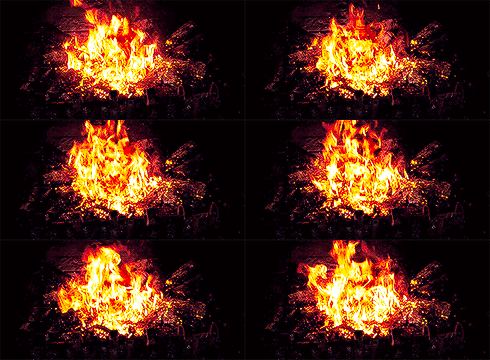
Though Sirius Black could use the fire to talk to Harry in the fourth and fifth years, in Harry's sixth year, a special arrangement had to be made from the Ministry to enable students to arrive at Hogwarts; it seems that head-only transport was possible even if full human transportation was not. Otherwise, intruders, including Sirius Black, could simply use the fire in the common room to circumvent the castle's defences.
However, during the 1993–1994 school year at Hogwarts, Severus Snape—after learning of Harry Potter's illegal visit to Hogsmeade—was interrogating the boy in his office and closely examining the Marauder's Map, which began to insult him. He decided that Remus Lupin—the Defence Against the Dark Arts teacher at the time—should take a look at it, so he immediately grabbed some Floo Powder, threw it into his fireplace, and summoned Lupin to his office. Moments later, Lupin stepped out of Snape's fireplace and carefully examined the map; he recognised it, then got Harry out of trouble and confiscated the item. It appears that teachers could travel between their offices via the fireplaces though only within the castle itself—a convenient method for discussing matters with a colleague that eliminated the need to traverse the entire castle.
Also, after the Battle of the Department of Mysteries, Albus Dumbledore travelled via the fireplace from the Ministry of Magic Atrium to the fireplace in his office at Hogwarts. It appears that the headmaster was permitted more leeway than the regular teachers, and could travel—even outside the castle grounds—wherever and whenever he pleased.
Known uses
He took a pinch of glittering powder out of the flowerpot, stepped up to the fire, and threw the powder into the flames. With a roar, the fire turned emerald green and rose higher than Fred, who stepped right into it, shouted, “Diagon Alley!” and vanished.
- Wizard(s) Notes - Muggle) Fantastic Beasts: The Secrets of Dumbledore - Jacob's sibling and friend Harry Potter: Hogwarts Mystery - Jacob's sibling Harry Potter: Hogwarts Mystery - Harry Potter Harry Potter and the Chamber of Secrets - Arthur Weasley Harry Potter and the Goblet of Fire - Ron Weasley - Fred and George Weasley - Harry Potter Harry Potter and the Order of the Phoenix - Hogwarts students Harry Potter and the Half-Blood Prince - Ministry officials Harry Potter and the Deathly Hallows This was repealed once Voldemort was killed.
Known connections
- Location Notes - Hogsmeade Three Broomsticks Inn - Diagon Alley Leaky Cauldron - Harry Potter and the Chamber of Secrets (video game) - Console and GBA versions - Magical Menagerie - Knockturn Alley Borgin and Burkes - Hogwarts School of Witchcraft and Wizardry Gryffindor common room - Headmaster's office - office - Transfiguration Professor's office - Head of Slytherin's office - Hogwarts kitchen - The Burrow Kitchen - Floo Flames Hogwarts, in the late 19th century - Ministry of Magic Atrium - Little Whinging 4 Privet Drive (temporarily) - London 10 Downing Street
Sources
Adapted from the original article, under CC BY-SA 3.0.