Lore
Magical transportation
There existed various methods of magical transportation that were employed by…
There existed various methods of magical transportation that were employed by wizardkind across the wizarding world.
Apparition
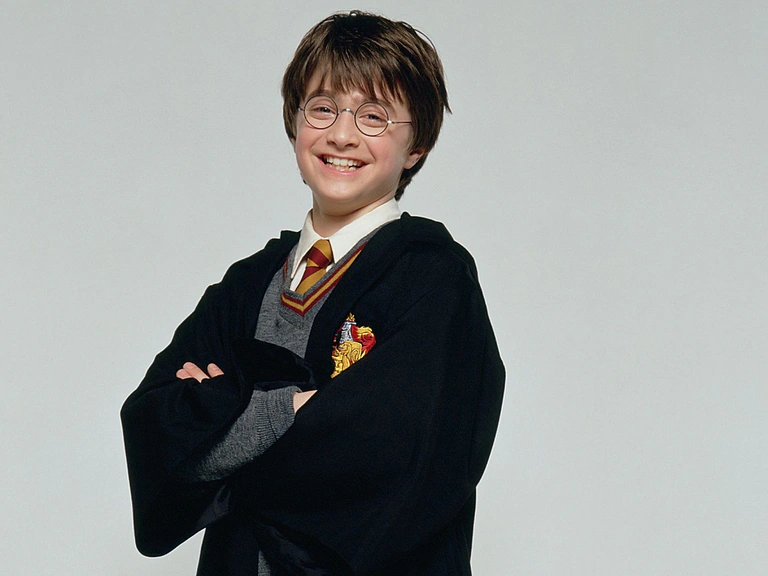
Harry knew Apparating meant disappearing from one place and reappearing almost instantly in another, but he had never known any Hogwarts student to do it, and understood that it was very difficult.
Apparition was a form of wizarding transportation in which a wizard or witch magically teleported from one place to another almost instantly, without traversing any of the space in between. The act of Apparating created a noise ranging from a small pop to a loud crack. Although by far the fastest and most convenient way of travelling, it was a difficult technique to master and became increasingly unreliable over long distances. It required complete concentration on the destination, determination and focus upon the desired location, and deliberation and certainty of reaching the goal. Only of-age wizards who qualified for licences may have been able to legally Apparate.
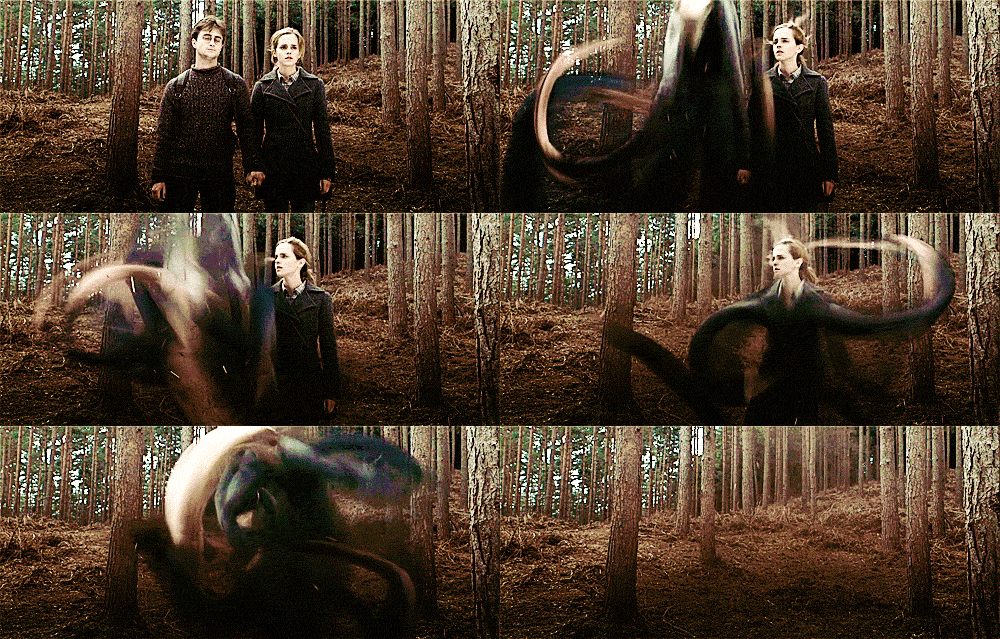
Hogwarts School of Witchcraft and Wizardry offered Apparition lessons to students ages seventeen and older.
Side-Along Apparition allowed those with licences to bring minors along with them. Poor focus may have resulted in Splinching, which caused body parts to be separated and left behind. The process of Apparition was said to feel like being "forced through a very tight rubber tube", according to Harry Potter.
Floo Network
He took a pinch of glittering powder out of the flowerpot, stepped up to the fire, and threw the powder into the flames. With a roar, the fire turned emerald green and rose higher than Fred, who stepped right into it, shouted, “Diagon Alley!” and vanished.
The Floo Network was a form of wizarding transportation in which a witch or wizard travelled from one place to another by means of Floo powder and a fireplace. This was accomplished by tossing a handful of Floo powder into a lit fireplace and speaking very clearly the desired location to which one wished to travel as they stood in the emerald green flames. Floo powder was a magical green powder that was thrown into a lit fireplace and allowed for a portal to connect to another fireplace at a desired location. The system was operated and overseen by the Floo Network Authority, which was based at the British Ministry of Magic.

A fireplace had to be connected to the Floo Network for one to travel to it, and fireplaces could be connected temporarily, in the case of travelling to Muggle homes. The Floo Network could also be used as a form of communication between wizards, and also a way to deliver objects as well.
For America, the Magical Congress of the United States of America oversaw the Floo Network. The network appeared to be divided into regions as the "Southern Floo Network", as mentioned in the newspaper The New York Ghost.
Flying
He mounted the broom and kicked hard against the ground and up, up he soared; air rushed through his hair, and his robes whipped out behind him — and in a rush of fierce joy he realised he'd found something he could do without being taught — this was easy, this was wonderful.
Wizards used broomsticks to travel long distances, or for sport, particularly in the game Quidditch. This skill of flying on brooms was taught at Hogwarts School of Witchcraft and Wizardry to first-years in Flying classes. The Cushioning Charm invented by Elliot Smethwyck provided comfort on broomsticks. Some modern broomsticks included the Comet, Cleansweep, Nimbus, and Firebolt.

In Asia and the Middle East, flying carpets were the primary form of wizarding transport, but were currently designated as Muggle artefacts in Britain and were therefore illegal to enchant. They also could not be imported, despite at least one merchant's continued efforts to do so. This ban seemed to be relatively recent as Bartemius Crouch Senior's grandfather owned a flying Axminster before they were made illegal.
Vehicles such as cars and motorcycles could also be modified to be capable of flight, though this was also technically illegal under Misuse of Muggle Artefacts laws.
A range of flying magical creatures were also available for transport, such as Thestrals and Hippogriffs. When visiting Hogwarts for the 1994 Triwizard Tournament, the Beauxbatons students travelled in a carriage drawn by Abraxan winged horses. Day students of Mahoutokoro (students between the ages of seven and eleven) that did not board at the school flew on the backs of flocks of giant storm petrels every day.
Unsupported flight

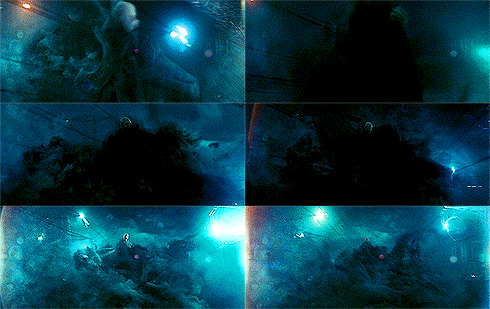
Voldemort was flying like smoke on the wind, without broomstick or thestral to hold him, his snake-like face gleaming out of the blackness, his white fingers raising his wand again —
This form of flight was a spell that allowed a witch or wizard to fly independently, without the aid of an inanimate object such as a broomstick. The spell was notably demonstrated by Lord Voldemort. Voldemort's servant Severus Snape was also shown to fly unsupported while escaping from the Ravenclaw Tower.
Portkey
Almost any inanimate object can be turned into a Portkey. Once bewitched, the object will transport anyone who grasps it to a pre-arranged destination.
Portkeys were magical objects that allowed for travel across extreme distances or to places that have been charmed against detection from entering or leaving. Portkeys may have sent unsuspecting people anywhere, and so they required Ministry authorisation to use and operate. They were usually disguised as ordinary rubbish, such as a crushed aluminium can or a dirty, discarded sock, so Muggles were more likely ignore them, though incidents of Muggles being transported had happened.
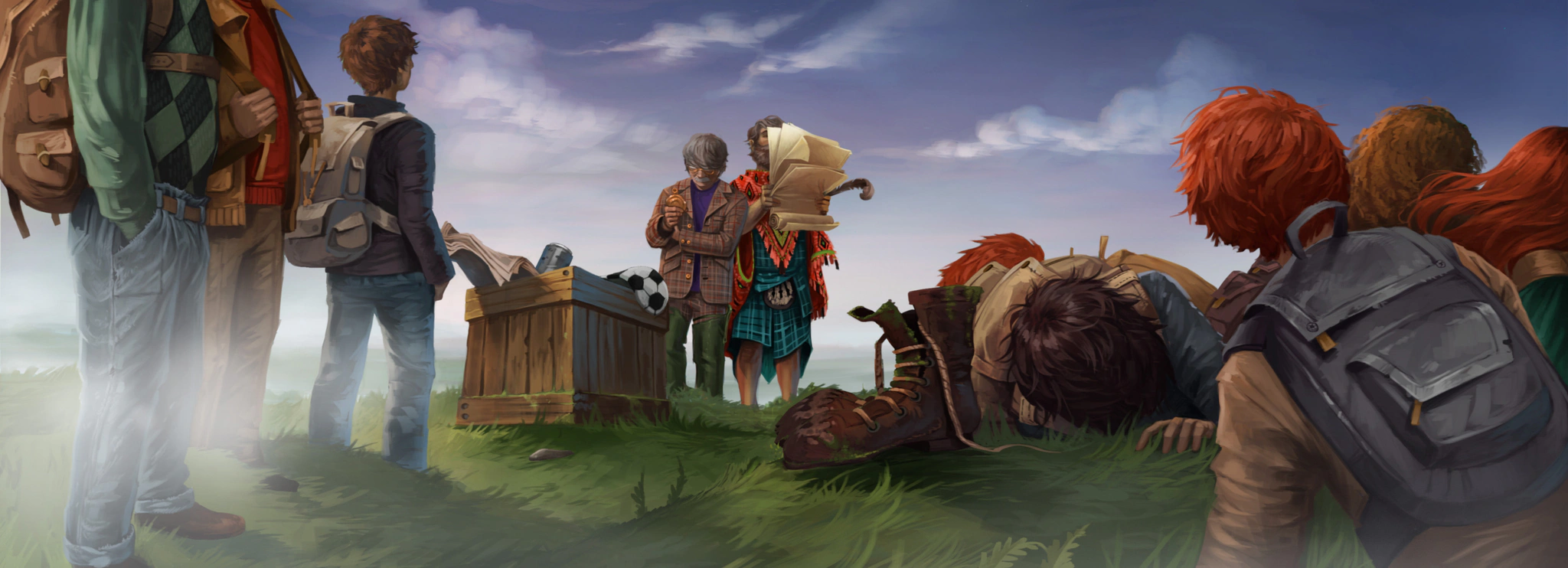
Portkeys could be set to activate either at a prearranged time, or as soon as the person came in contact with them.
Ground travel
Welcome to the Knight Bus, emergency transport for the stranded witch or wizard. Just stick out your wand hand, step on board, and we can take you anywhere you want to go. My name is Stan Shunpike, and I will be your conductor this eve — What were you doin’ down there?
The Knight Bus took stranded wizards to anywhere in the United Kingdom.
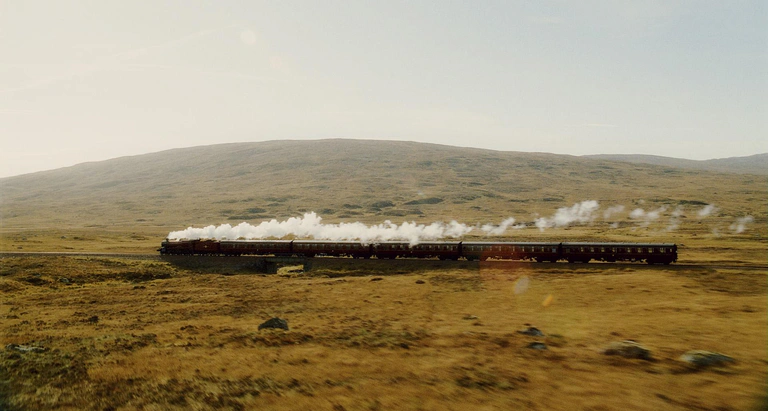
Hogwarts students were transported to and from the school on the Hogwarts Express, a train that departed from a magically hidden rail platform from King's Cross Station, London. Ministry cars could be used to get to King's Cross Station.
Creature transportation
Some magical creatures would afford wizards forms of transportation, in particular ones capable of flight.
During Hagrid's Care of Magical Creatures class in the 1993–1994 school year, Buckbeak allowed Harry to ride on his back.
A few members of Dumbledore's Army travelled on Thestrals to the Department of Mysteries in the 1995–1996 school year.
The trio escaped from Gringotts via Gringott's Dragon after their infiltration on 1 May 1998.
Very rarely, a centaur would allow a human to ride on its back. This was the most solemn of events, offered only to highly honoured riders.
Miscellaneous
Slowly, magnificently, the ship rose out of the water, gleaming in the moonlight. It had a strangely skeletal look about it, as though it were a resurrected wreck, and the dim, misty lights shimmering at its portholes looked like ghostly eyes. Finally, with a great sloshing noise, the ship emerged entirely, bobbing on the turbulent water, and began to glide toward the bank.
Durmstrang students travelled on a ship when visiting Hogwarts for the 1994 Triwizard Tournament. Even though it appeared from a whirlpool in the Hogwarts lake, there was still rowing involved. The ship probably acted like a boat on water but with anti-water spells of some sort to prevent water entering the boat.

A Vanishing Cabinet allowed objects, humans, and creatures to transport from one cabinet to the other.
The British Ministry of Magic used the Whitehall underground public toilets as the official way to gain entry to its headquarters.
Sources
Adapted from the original article, under CC BY-SA 3.0.